Tipos de Válvulas e Princípios de Funcionamento Como funciona uma válvula de segurança de baixa abertura? Uma válvula de segurança de baixa abertura abre quando a pressão de entrada supera a força calibrada da mola, mas o curso do disco é intencionalmente limitado. Este artigo explica como esse curso limitado controla o caminho do fluxo, quando um projeto de baixa abertura pode ser considerado, o que pode…

Tipos de Válvulas e Princípios de Funcionamento
Como Funciona uma Válvula de Segurança de Baixa Abertura?
Uma válvula de segurança de baixa abertura abre quando a pressão de entrada supera a força calibrada da mola, mas o curso do disco é intencionalmente limitado. Este artigo explica como esse curso limitado controla o caminho do fluxo, quando um projeto de baixa abertura pode ser considerado, o que pode dar errado se a capacidade for assumida pelo tamanho da conexão e quais dados operacionais devem ser confirmados antes da cotação ou substituição.
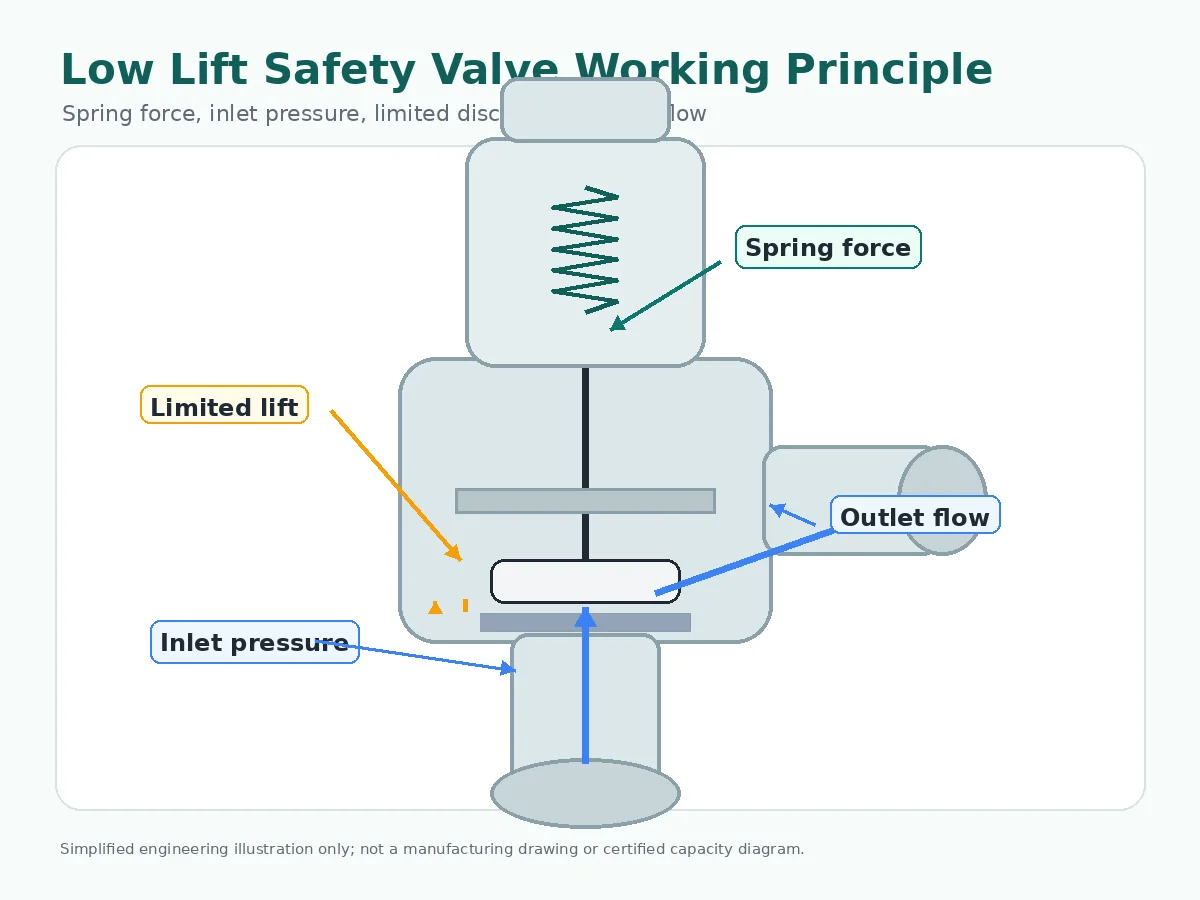
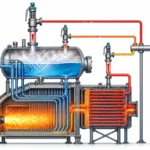
Ilustração simplificada de engenharia; não é um desenho de fabricação ou diagrama de capacidade certificado.
Resposta Rápida: Como Funciona uma Válvula de Segurança de Baixa Abertura
Uma válvula de segurança de baixa abertura funciona utilizando a pressão de entrada para superar a força calibrada de uma mola e levantar o disco do assento, mas o curso do disco é intencionalmente limitado. Quando a pressão do equipamento protegido atinge a pressão de ajuste, a força ascendente sob o disco começa a exceder a força de fechamento da mola. O disco então abre apenas para uma posição controlada de baixa abertura, permitindo que o fluido seja descarregado através do assento, bocal e caminho de saída.
Esta página ajuda os compradores a entender o princípio de funcionamento, não a concluir uma seleção final de válvula. Uma válvula de baixa abertura pode ser considerada onde a carga de alívio necessária é conhecida e o modelo selecionado pode documentar capacidade suficiente para o cenário de alívio governante. O principal risco é assumir que a pressão de ajuste, o tamanho nominal ou o tipo de conexão comprovam a capacidade. Antes da cotação, confirme o equipamento protegido, cenário de alívio, meio e fase, pressão de operação, MAWP ou pressão de projeto, pressão de ajuste, capacidade de alívio requerida, temperatura de alívio, contrapressão, conexão de entrada/saída, materiais, norma aplicável e documentos necessários.
Principais Partes Que Controlam a Operação de Baixa Abertura
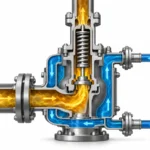
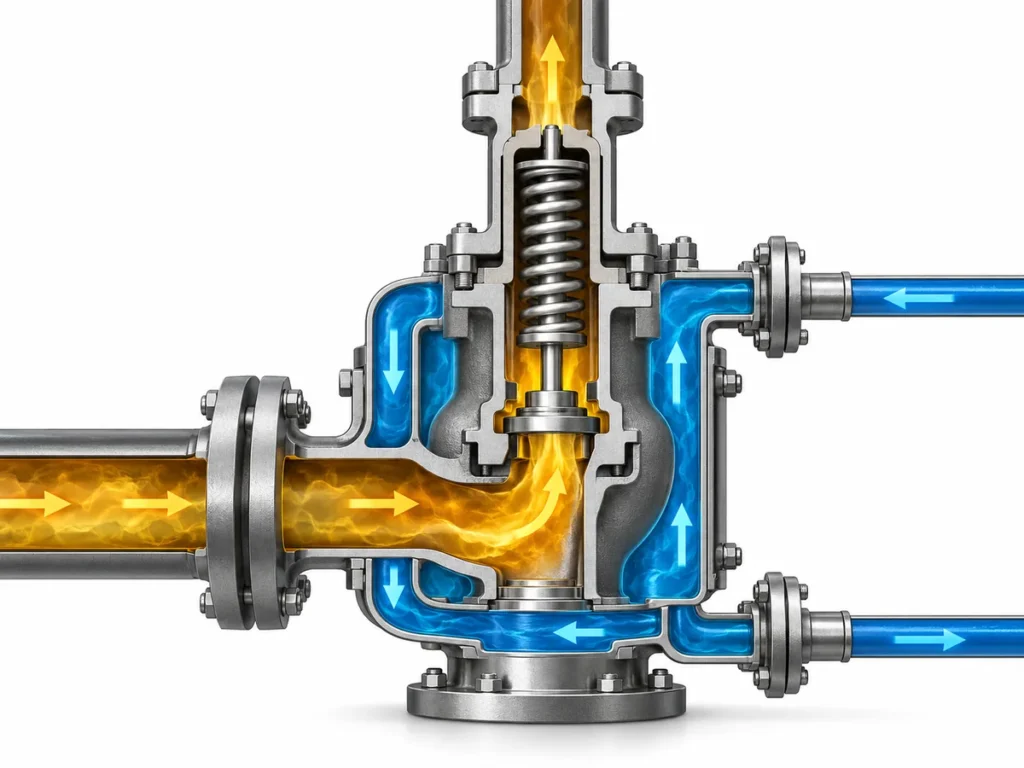
Uma válvula de segurança de baixa abertura é controlada por um conjunto de peças mecânicas que devem trabalhar juntas. A construção exata depende do modelo selecionado, condição de serviço e especificação do projeto, mas a lógica operacional básica geralmente envolve a entrada, bocal, assento, disco, guia, haste, mola, castelo ou tampa e saída.
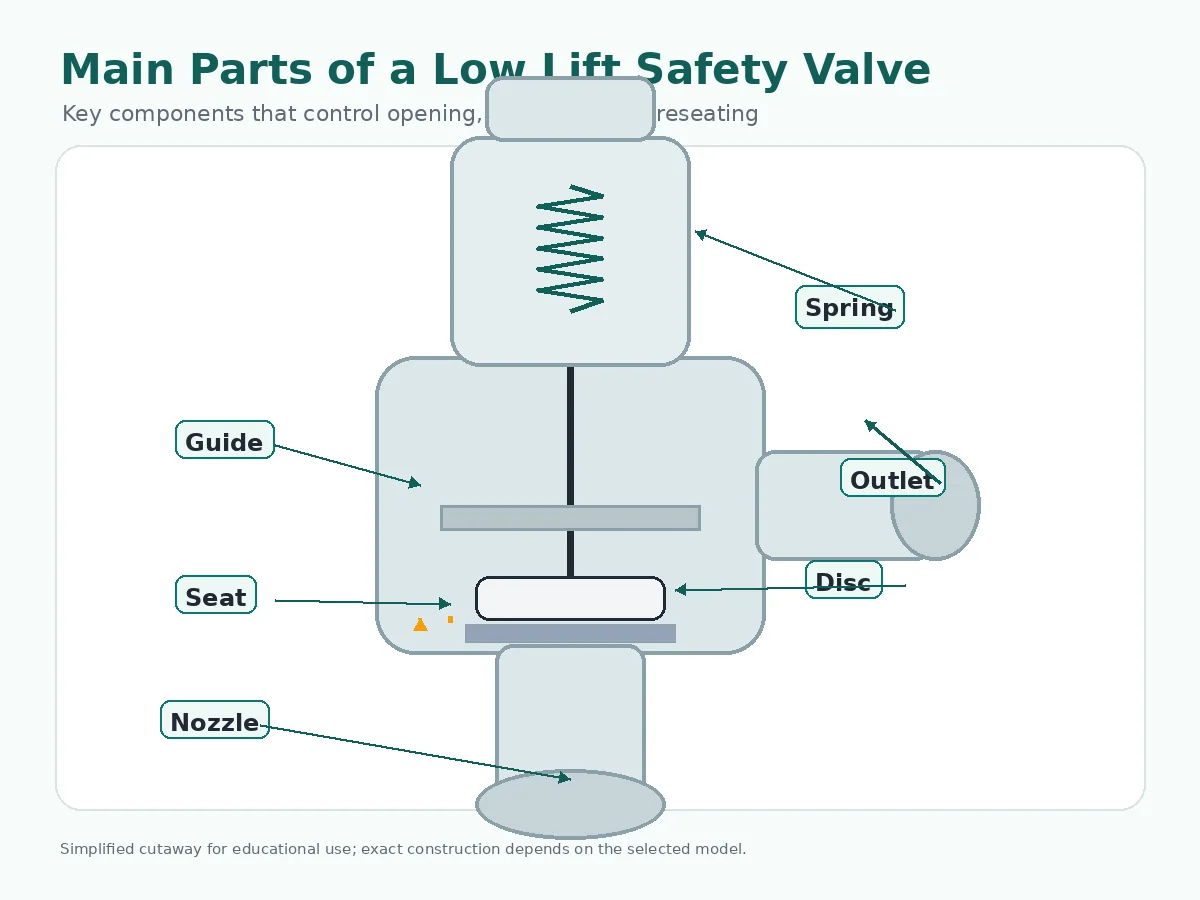
Corte simplificado para uso educacional; a construção exata depende do modelo selecionado.
Entrada, bico e sede
A entrada traz a pressão do equipamento protegido para a parte inferior do disco da válvula. O bico e a sede formam a primeira restrição crítica no caminho do fluxo. Quando a válvula está fechada, o disco veda contra a sede. Quando a força da pressão se torna alta o suficiente, o disco se levanta e o fluido começa a passar pela abertura da sede.
Disco, guia e haste
O disco é o elemento de fechamento móvel. Em um projeto de baixa abertura, o movimento do disco é limitado para que a válvula não abra tanto quanto em um projeto de abertura total. O guia ajuda a controlar o movimento do disco e da haste, reduzindo movimentos instáveis.
Mola, castelo e componentes de ajuste
A mola fornece a força de fechamento. A compressão da mola é definida durante a calibração para que a válvula comece a abrir na pressão de ajuste especificada. O ajuste em campo não deve ser considerado permitido, a menos que o projeto, as regras de vedação e os procedimentos do projeto o permitam.
Ponto de engenharia: Uma válvula de baixa abertura não é definida apenas pela forma do seu corpo. O diâmetro do assento, o batente de curso, a faixa da mola, a condição da guia, a geometria do disco e o caminho do fluxo de saída afetam o comportamento de abertura e a capacidade. Para uma explicação geral do mecanismo relacionado, consulte como funciona uma válvula de segurança com mola.
Sequência de Abertura Passo a Passo
A sequência de trabalho de uma válvula de segurança de baixa abertura pode ser entendida como um processo de controle de equilíbrio de forças e movimento. Pressão de ajuste, sobrepressão, acúmulo, blowdown e pressão de reajuste descrevem diferentes partes do comportamento de resposta à pressão e não devem ser usados de forma intercambiável.
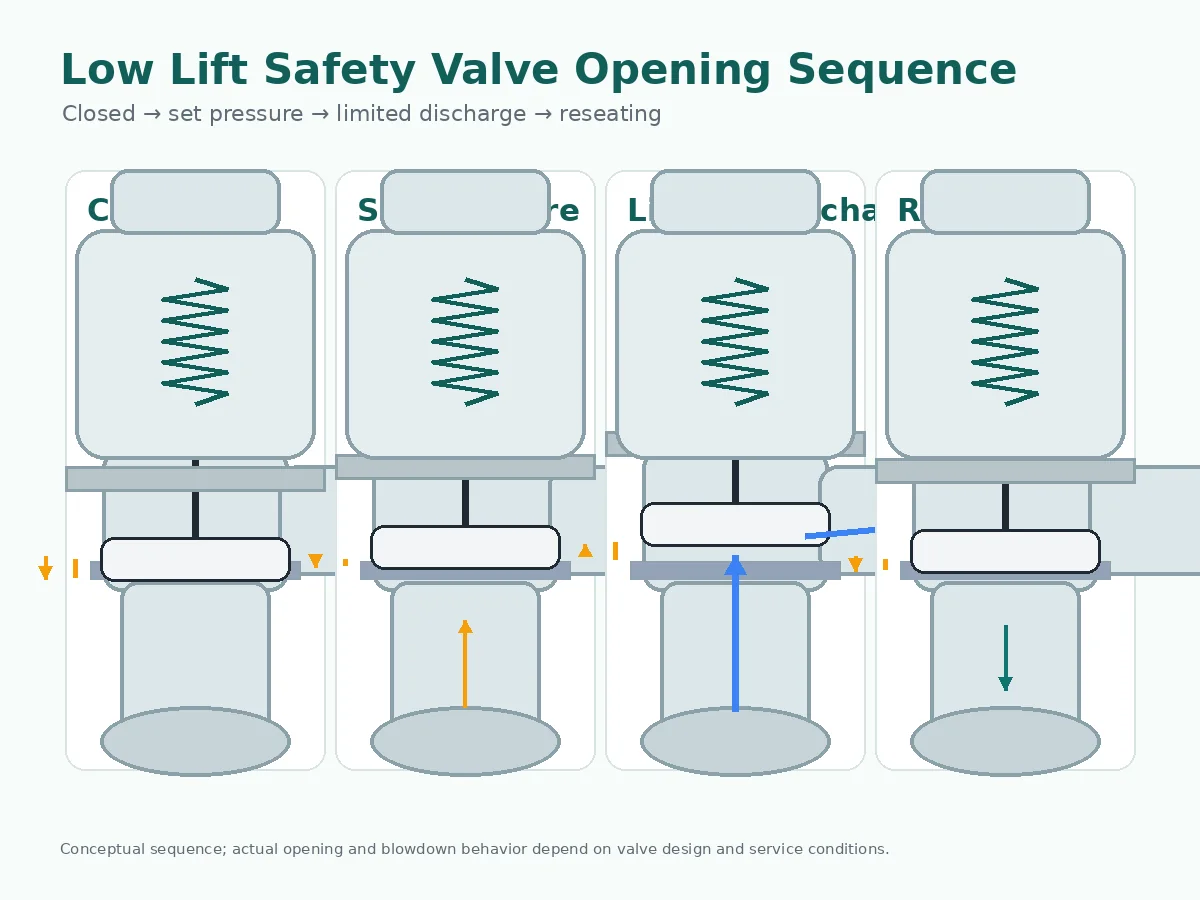
Sequência conceitual; o comportamento real de abertura e blowdown depende do projeto da válvula e da condição de serviço.
1. Abaixo da pressão de ajuste
Abaixo da pressão de ajuste, a força da mola é maior que a força de abertura gerada pela pressão de entrada. O disco permanece assentado e a válvula deve permanecer fechada sob condições normais de operação. A pressão operacional deve manter uma margem suficiente abaixo da pressão de ajuste para reduzir o risco de vazamento, borbulhamento e instabilidade.
2. Na pressão de ajuste
Na pressão de ajuste, a força da pressão sob o disco torna-se suficiente para iniciar o levantamento do disco do assento. Isso significa que a válvula começou a abrir; isso não prova que a válvula atingiu a capacidade de alívio necessária.
3. Durante a sobrepressão
À medida que a pressão sobe acima da pressão de ajuste, a válvula abre mais dentro do seu limite de baixa abertura e descarrega o fluido. O caminho de descarga disponível depende do assento, bico, posição do disco, limitação de curso e arranjo de saída.
4. Pressão de fechamento e de retanqueamento
Após o alívio da condição de sobrepressão, a pressão do sistema diminui. A válvula deve retornar para a sede e retanquear a uma pressão abaixo da pressão de ajuste. Um retanqueamento inadequado pode levar a vazamentos, perda de produto, risco de emissões e sobrecarga de manutenção.
| Termo | Significado Prático | Por que é importante para válvulas de baixa abertura |
|---|---|---|
| Pressão de operação | Pressão normal durante a operação do sistema. | Não deve ficar muito próxima da pressão de ajuste sem revisão. |
| Pressão Máxima de Trabalho / Pressão de projeto | Limite de pressão ou base de projeto do equipamento protegido, dependendo da terminologia do projeto. | Suporta a revisão de proteção de pressão e as decisões de ajuste de alívio. |
| Pressão de ajuste | Pressão na qual a válvula começa a abrir sob condições especificadas. | Não comprova a capacidade de alívio. |
| Sobrecarga / acúmulo | Aumento de pressão acima da pressão de ajuste ou acima do limite do equipamento, dependendo do código aplicável e da base do projeto. | Deve ser revisado pelo engenheiro responsável e pelas regras aplicáveis. |
| Blowdown / reajuste | Diferença de pressão e comportamento à medida que a válvula fecha após a descarga. | Afeta o risco de vazamento, estabilidade e manutenção. |
| Capacidade de alívio requerida | Vazão necessária para proteger o equipamento sob o cenário de controle. | Deve ser comparado com os dados de capacidade do fabricante. |
Por que a Abertura Limitada Afeta a Capacidade
A baixa abertura afeta a capacidade porque a elevação do disco faz parte da área de fluxo disponível. Em uma válvula de segurança, o fluxo não depende apenas da conexão de entrada ou saída. O fluido deve passar pelo bico, sede e pela abertura criada pelo disco elevado. Se a abertura for limitada, a área de descarga também pode ser limitada.
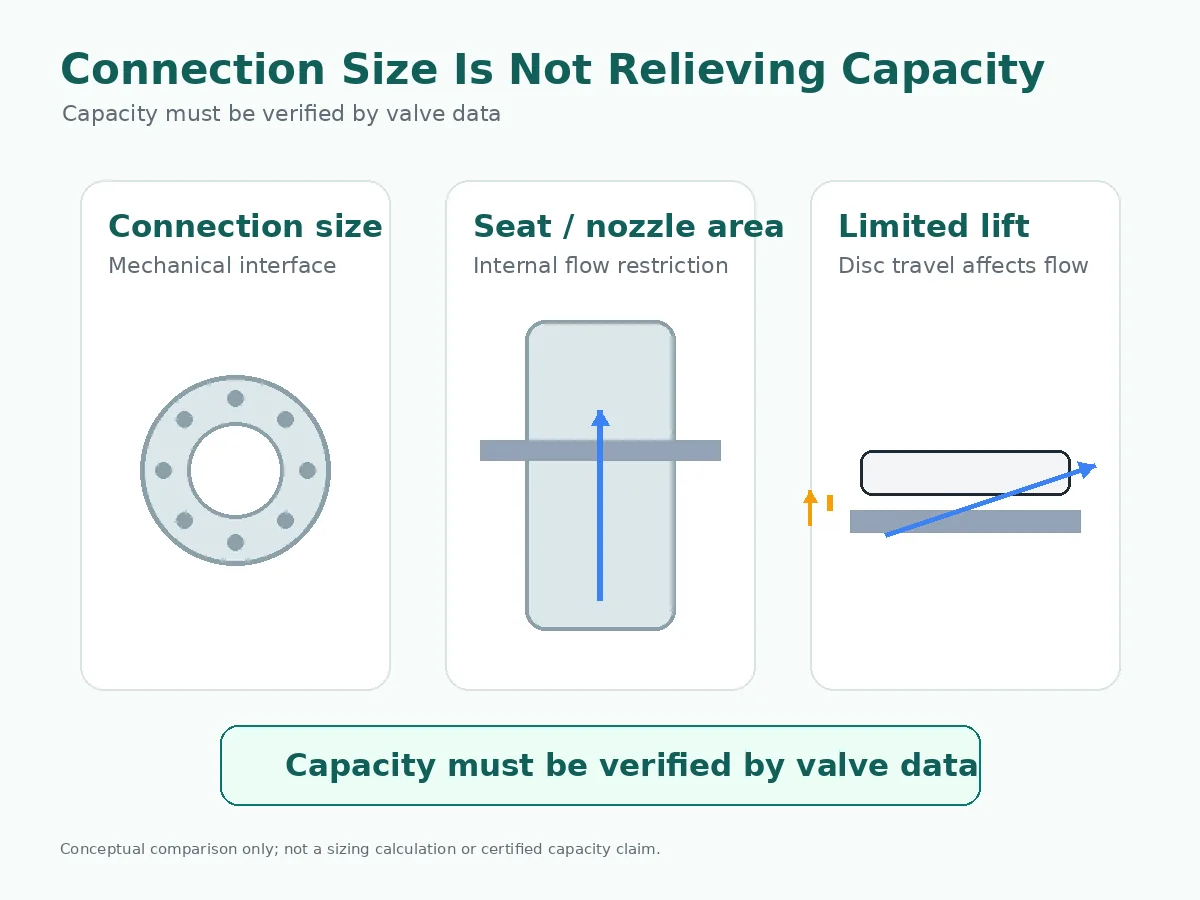
Comparação conceitual; não é um cálculo de dimensionamento.
A abertura faz parte da restrição de fluxo
Quando o disco se eleva da sede, ele cria uma abertura para o fluido escapar. Em um projeto de baixa abertura, essa abertura é intencionalmente controlada. A válvula pode ser projetada para tarefas de alívio específicas onde a abertura limitada é aceitável, mas não se deve presumir que ela forneça a mesma capacidade que uma válvula de abertura total do mesmo tamanho de conexão.
Em muitos projetos de baixa abertura, o caminho de descarga efetivo é fortemente influenciado pela área da cortina: a área de fluxo anular formada ao redor da sede à medida que o disco sobe uma distância limitada. Como essa área de descarga permanece controlada pela abertura, a capacidade de alívio da válvula deve ser verificada em relação aos dados documentados para o modelo selecionado, meio e base de serviço, em vez de ser inferida apenas pelo tamanho da conexão de entrada.
O tamanho da conexão não é capacidade
O tamanho da conexão é uma interface mecânica. A capacidade é um requisito de desempenho de alívio. Duas válvulas com o mesmo tamanho de entrada podem ter diferentes áreas de fluxo internas, limites de abertura, trims, molas, registros de capacidade e adequação de serviço. Para lógica de capacidade e revisão de capacidade documentada, consulte o guia de dimensionamento de válvulas de segurança e capacidade certificada.
A capacidade requerida deve ser verificada separadamente
A capacidade de alívio requerida deve ser definida a partir do equipamento protegido e do cenário de alívio. Uma saída bloqueada, caso de expansão térmica, caso de incêndio, falha de regulador ou distúrbio de processo podem criar diferentes cargas requeridas. A válvula selecionada deve então ser verificada em relação aos dados do fabricante e aos requisitos aplicáveis do projeto.
| Pergunta sobre Capacidade | O que os compradores às vezes assumem | O que deve ser confirmado |
|---|---|---|
| A válvula se encaixa na conexão? | Mesmo DN, NPS, tamanho de rosca ou flange significa desempenho equivalente. | O encaixe da conexão é apenas mecânico. A área do assento/bico, o curso e a base de capacidade ainda devem ser verificados. |
| A válvula abre na pressão de ajuste exigida? | Pressão de ajuste correta significa que a válvula está dimensionada corretamente. | A pressão de ajuste define apenas a pressão de abertura. A capacidade de alívio necessária deve ser confirmada separadamente. |
| A válvula de baixa abertura selecionada pode aliviar o caso de controle? | Uma válvula de baixa abertura é aceitável se parecer com a válvula antiga. | Compare a capacidade de alívio necessária, a pressão de alívio, o fluido, a temperatura e a contrapressão com os dados do fabricante. |
| A capacidade documentada é utilizável para esta aplicação? | Qualquer capacidade do catálogo se aplica a qualquer meio ou temperatura. | A base de capacidade, o meio, a fase, a pressão, a temperatura e a norma aplicável devem corresponder à revisão do projeto. |
Válvula de Segurança de Baixa Abertura vs. Abertura Total: O que Muda na Operação?
Abertura baixa e abertura total válvulas de segurança diferem principalmente no curso do disco e no caminho de fluxo resultante. Isso não significa que um seja sempre melhor. A escolha correta depende da capacidade requerida, condição de serviço, projeto da válvula, código aplicável e requisitos do projeto.
| Item | Válvula de Segurança de Baixa Abertura | Válvula de Segurança de Abertura Total | Verificação do Comprador |
|---|---|---|---|
| Curso do disco | Curso limitado a partir da sede. | Curso maior a partir da sede. | Confirmar o curso real e os dados do modelo. |
| Caminho de fluxo | Controlada e potencialmente menor. | Potencialmente maior. | Não infira apenas pelo tamanho da conexão. |
| Potencial de capacidade | Pode ser menor para o mesmo tamanho nominal. | Frequentemente selecionada para aplicações de maior capacidade. | Compare a capacidade requerida com a capacidade documentada. |
| Risco de seleção | Subdimensionamento se escolhida apenas pelo tamanho ou pressão de ajuste. | Aplicação incorreta se escolhida sem revisão do serviço. | Verifique o fluido, pressão, contrapressão, instalação e norma. |
| Risco de substituição | A aparência da válvula antiga pode não provar capacidade equivalente. | A mesma questão se aplica. | Use a placa de identificação, folha de dados e base de capacidade. |
Para contexto de família de produtos, revise as válvulas de segurança de baixa abertura. Este artigo permanece focado no princípio de funcionamento e na preparação de cotações (RFQ).
Matriz Preliminar de Adequação
A tabela abaixo é uma ferramenta de triagem preliminar, não uma regra de seleção final. Uma válvula de segurança de baixa abertura pode ser considerada apenas quando o equipamento protegido, o cenário de alívio e a capacidade requerida são definidos e a válvula selecionada pode ser verificada em relação aos dados do fabricante.
Para um fluxo de trabalho ponta a ponta mais amplo, utilize o guia de seleção de válvulas de segurança antes da seleção final do modelo.
| Situação do Projeto | Diretriz de Revisão para Baixa Abertura | Limite de Engenharia |
|---|---|---|
| Serviço de alívio com capacidade controlada e fluxo requerido conhecido | Pode ser considerada | A capacidade requerida deve ser menor ou igual à capacidade documentada para o modelo selecionado e base de serviço. |
| Substituição de uma válvula de baixa abertura existente com placa de identificação e datasheet completos | Pode ser considerada | Verificar pressão de ajuste, base de capacidade, conexão, materiais, meio de serviço, temperatura e documentos. |
| Cenário de alívio desconhecido ou capacidade requerida desconhecida | Não finalize a seleção | Defina o cenário de alívio dominante antes de selecionar por tamanho de válvula ou nome da válvula. |
| Alta capacidade de alívio requerida ou serviço bifásico incerto | Requer análise detalhada | Baixa abertura pode ser insuficiente; compare com abertura total ou outras configurações de válvula usando dados do projeto. |
| Contrapressão variável significativa ou cabeçalho de descarga complexo | Requer análise de contrapressão | Verifique se o comportamento convencional de baixa abertura permanece estável ou se outra configuração é necessária. |
| Serviço corrosivo, viscoso, sujo, polimerizante ou de alta temperatura | Requer análise de material e manutenção | O material do corpo sozinho não é suficiente; verifique o acabamento, sede, vedação, mola, depósitos e confiabilidade operacional. |
Quando não usar esta página como atalho de seleção: Não selecione uma válvula de baixa abertura apenas com base neste artigo se a capacidade de alívio necessária, fase do meio, temperatura de alívio, contrapressão, código aplicável ou dados de substituição originais estiverem ausentes. Essas informações faltantes devem ser confirmadas antes da seleção final da válvula.
Onde Válvulas de Segurança de Baixa Abertura Podem Ser Consideradas
Uma válvula de segurança de baixa abertura pode ser considerada quando uma ação de alívio controlada e de elevação limitada é apropriada e a capacidade necessária é verificada. A decisão real deve começar com o equipamento protegido e o cenário de alívio governante, não apenas com o nome da válvula.
Casos de alívio com capacidade controlada
Válvulas de baixa abertura podem ser revisadas quando a carga de alívio necessária estiver dentro da capacidade documentada da válvula selecionada e quando o meio, temperatura, pressão e arranjo de descarga forem adequados.
Revisão de substituição e manutenção
A substituição não deve depender de similaridade visual. Colete a placa de identificação existente, folha de dados, detalhes de conexão, pressão de ajuste, meio de serviço, histórico de inspeção e registros de capacidade, quando disponíveis.
Quando a baixa abertura pode não ser suficiente
Uma válvula de baixa abertura pode não ser apropriada se a capacidade de alívio necessária for maior do que a válvula selecionada pode documentar, ou se o meio, fase, contrapressão, perda de entrada ou requisitos de documentação excederem os limites do modelo selecionado.
O que pode dar errado se o princípio de funcionamento for mal compreendido
A incompreensão do princípio de funcionamento pode levar a erros de seleção inseguros ou caros. Uma válvula de segurança de baixa abertura não é simplesmente uma válvula menor, um substituto de baixo preço ou um item intercambiável com o mesmo tamanho de conexão. É um dispositivo de proteção de pressão que deve corresponder ao cenário de alívio.
Aviso de engenharia: A pressão de ajuste indica quando a válvula começa a abrir. Ela não indica quanta vazão a válvula pode aliviar. O tamanho da conexão indica como a válvula se conecta ao equipamento ou tubulação. Ela não comprova a área de fluxo interna ou a capacidade documentada.
| Erro Comum | Por que é arriscado | Verificação obrigatória |
|---|---|---|
| Seleção apenas pelo tamanho da conexão | A mesma conexão não prova a mesma área de fluxo ou capacidade. | Confirme os dados do assento/bico e a capacidade documentada. |
| Tratando a pressão de ajuste como capacidade | A pressão de ajuste é apenas a pressão de abertura. | Confirme a capacidade de alívio necessária e a base de cálculo da capacidade. |
| Substituindo pela aparência | Corpos de válvulas semelhantes podem ter internos, molas e curso diferentes. | Revise a placa de identificação, ficha técnica, modelo e dados de serviço. |
| Ignorando contrapressão | A pressão de saída pode afetar a estabilidade e a capacidade. | Verifique a contrapressão sobreposta e acumulada. |
| Ignorando a perda de entrada | Perda de entrada excessiva pode causar instabilidade ou desempenho reduzido. | Revise a tubulação de entrada, queda de pressão e layout de instalação. |
| Assumindo que a classe do material é suficiente | O material do corpo sozinho não confirma a adequação do acabamento, sede, mola ou vedação. | Confirme todos os materiais molhados e funcionais. |
Contrapressão, Perda de Admissão e Verificações de Instalação
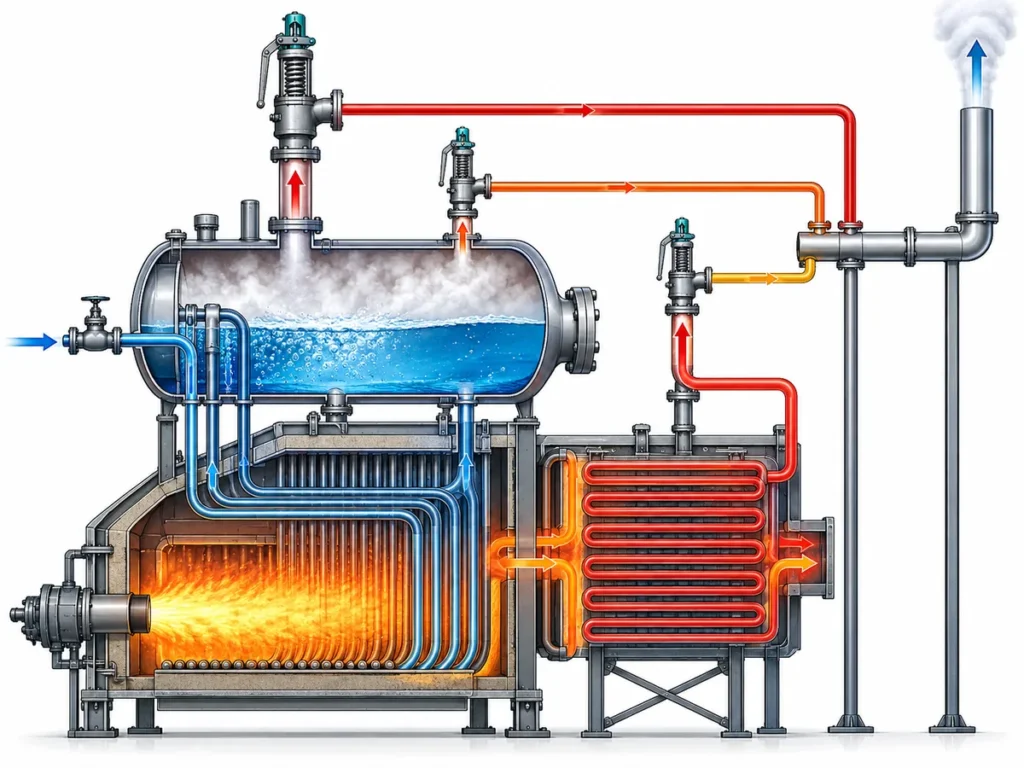
A operação de baixa abertura pode ser afetada pela tubulação ao redor da válvula. Uma válvula corretamente calibrada ainda pode operar mal se a perda de admissão for excessiva, a contrapressão de saída estiver fora do limite de projeto selecionado, a tubulação de descarga sobrecarregar o corpo da válvula ou o caminho de descarga for inseguro.
| Condição | Efeito Potencial | O que Confirmar |
|---|---|---|
| Perda excessiva de pressão de entrada | Pode reduzir a pressão na admissão da válvula durante o alívio e contribuir para uma operação instável. | Revisar tubulação de admissão, conexões, queda de pressão e requisitos de conexão curta e direta. |
| Contrapressão acumulada | Pode afetar a capacidade de descarga e a estabilidade da válvula durante o fluxo de alívio. | Verificar o dimensionamento da tubulação de saída, comprimento, curvas, pressão do coletor e rota de descarga. |
| Contrapressão sobreposta | Pode influenciar o comportamento de abertura antes que o evento de alívio comece. | Confirmar a contrapressão constante ou variável e se o projeto selecionado pode tolerá-la. |
| Tubulação de descarga sem suporte | Pode impor carga ao corpo da válvula e à conexão do bico. | Fornecer suporte de saída e considerar as forças de reação onde aplicável. |
| Direção de descarga insegura | Pode expor pessoal ou equipamento a descargas quentes, tóxicas, inflamáveis ou de alta velocidade. | Direcione a descarga para um local seguro de acordo com os requisitos do projeto. |
Os efeitos da instalação devem ser revisados em relação ao guia de instalação de válvulas de segurança. Os efeitos da pressão de saída devem ser revisados com Contrapressão e fole orientação antes de assumir que o tipo de válvula por si só resolve a condição de descarga.
Seleção de Fluido, Temperatura e Material
O mecanismo de baixa abertura não elimina a necessidade de confirmar a compatibilidade de material e serviço. Fase do fluido, temperatura, corrosão, depósitos e requisitos de sede podem alterar o risco de vazamento, o comportamento da mola, o intervalo de manutenção e a vida útil.
| Condição de Serviço | Por que Importa | Dados a Confirmar |
|---|---|---|
| Vapor ou vapor de alta temperatura | A temperatura afeta a mola, a sede, a classificação do corpo, o blowdown e a segurança da descarga. | Condição do vapor, temperatura de alívio, pressão de ajuste, capacidade de vapor requerida e documentos aplicáveis. |
| Gás ou vapor | O comportamento da capacidade, ruído, força de reação e roteamento da descarga podem ser críticos. | Peso molecular ou dados de gás onde necessário, pressão de alívio, temperatura e destino da descarga. |
| Serviço com líquido | A estabilidade de abertura, o risco de vibração e os efeitos hidráulicos podem diferir do serviço com vapor. | Densidade do fluido, viscosidade, vazão requerida, perda de entrada e arranjo de descarga. |
| Meio corrosivo | O material do corpo sozinho pode não proteger o disco, a sede, a mola, as vedações ou as superfícies de guia. | Composição do meio, concentração, temperatura, margem de corrosão e requisitos de material molhado. |
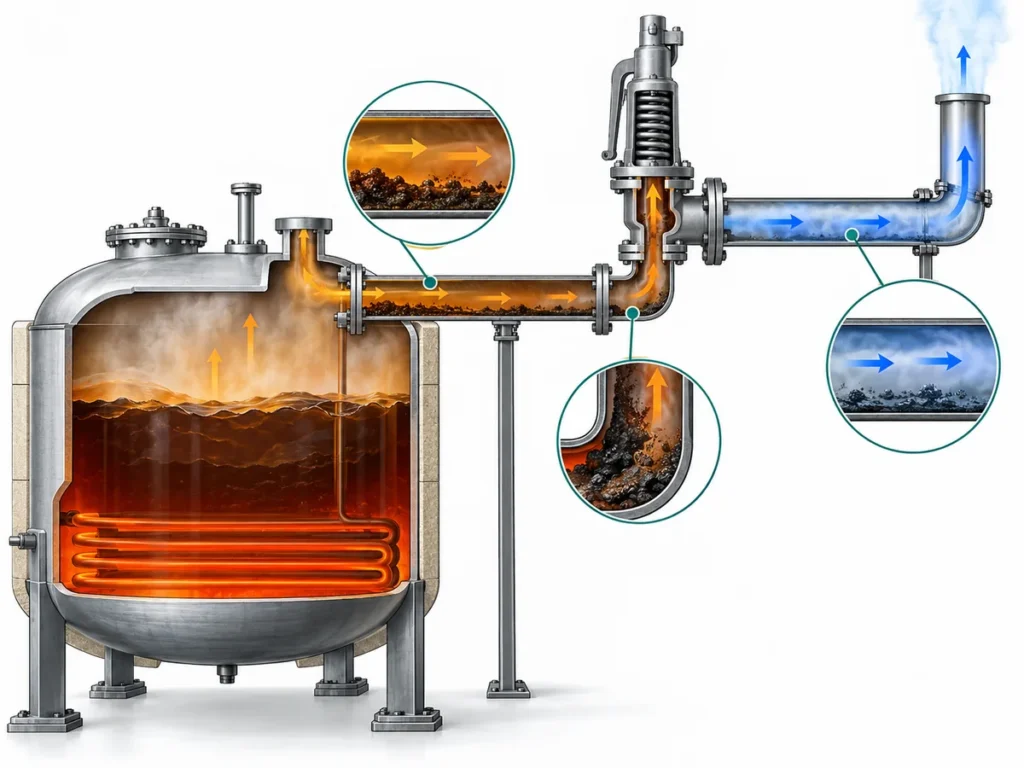
| Serviço com fluidos viscosos, sujos ou polimerizantes | Depósitos podem restringir o movimento do disco, afetar a vedação e alterar as necessidades de manutenção. | Viscosidade, sólidos, cristalização, risco de polimerização, método de limpeza e intervalo de inspeção. |
Dados a confirmar antes de selecionar ou substituir uma válvula de segurança de baixa abertura
Uma válvula de segurança de baixa abertura só pode ser avaliada corretamente quando os dados de operação e alívio estiverem claros. O RFQ não deve se limitar a tamanho, pressão e quantidade. Deve descrever o sistema protegido e a função de alívio requerida.
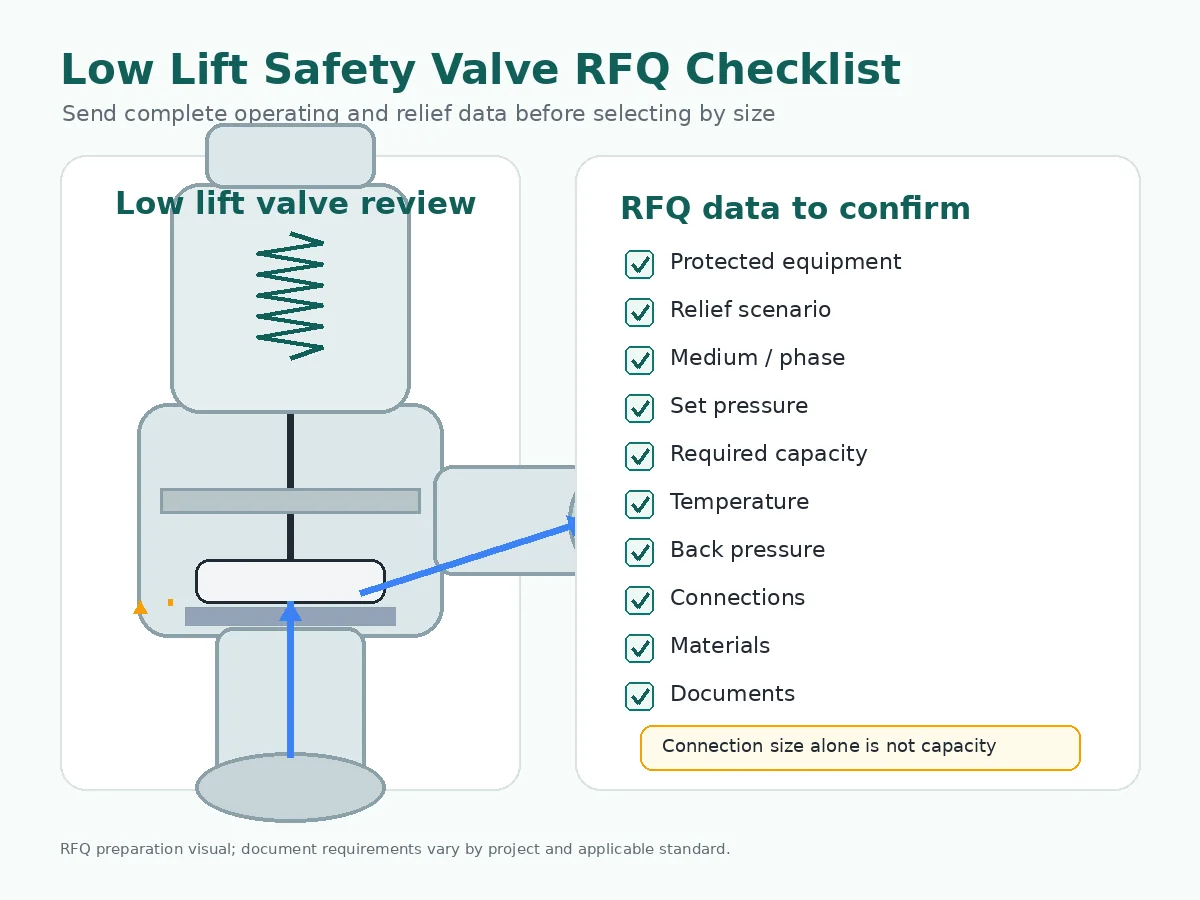
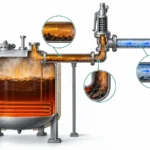
Visual de preparação de RFQ; os requisitos de documentação variam por projeto e norma aplicável.
Lista de verificação de dados para solicitação de orçamento
| Item de RFQ | O que fornecer | Por que Importa |
|---|---|---|
| Equipamento protegido | Caldeira, vaso, tanque, tubulação, compressor, skid ou outro equipamento. | Define a função de proteção. |
| Cenário de alívio | Saída bloqueada, expansão térmica, caso de incêndio, falha do regulador, distúrbio do processo ou outro caso. | Determina a carga de alívio necessária. |
| Meio e fase | Vapor, gás, vapor, líquido, duas fases, corrosivo, viscoso ou outro serviço. | Afeta o dimensionamento, materiais, vazamento e estabilidade. |
| Pressão de operação / MAWP / pressão de ajuste | Pressão normal do sistema, base de pressão do equipamento e pressão de abertura da válvula necessária. | Previne erros de terminologia de pressão. |
| Capacidade de alívio requerida | Taxa de fluxo e base de capacidade. | Deve ser compatível com os dados de capacidade do fabricante. |
| Temperatura de alívio | Temperatura durante o evento de alívio. | Afeta material, mola, sede e classificação. |
| Contrapressão | Contrapressão sobreposta e acumulada, se conhecida. | Afeta o tipo de válvula e a estabilidade da descarga. |
| Conexões e Materiais | Requisitos de tamanho, classe de pressão, norma, tipo de faceamento/rosca, corpo, assento, vedação e mola. | Confirma a compatibilidade mecânica e de serviço. |
| Norma aplicável e documentos | Especificação API, ASME, ISO, EN, GB ou de projeto, quando aplicável; folha de dados, relatório de teste, registro de material e base de capacidade. | Suporta a revisão de compras e de garantia de qualidade (QA). |
Fluxo de verificação de substituição
| Etapa | O que verificar | Não Assuma |
|---|---|---|
| 1. Identifique a válvula antiga | Placa de identificação, fotos, modelo, pressão de ajuste, tamanho, classe de pressão e padrão de conexão. | Não assuma que um formato de corpo semelhante significa desempenho equivalente. |
| 2. Confirme a aplicação original | Equipamento protegido, cenário de alívio, fluido, temperatura e base de capacidade requerida. | Não assuma que a instalação original foi dimensionada corretamente. |
| 3. Revise o histórico de operação | Vazamento, ruído (chatter), corrosão, depósitos, falhas em testes ou manutenção repetida. | Não repita um problema antigo copiando apenas o tamanho. |
| 4. Compare dados da válvula selecionada | Pressão de ajuste, capacidade documentada, materiais, sede, mola, conexão e documentos. | Não trate o título do catálogo ou o nome do tipo de válvula como prova final. |
| 5. Confirme a aceitação do projeto | Norma aplicável, escopo de inspeção, documentação e requisitos regulatórios locais. | Não faça o pedido antes que os requisitos de documentação estejam claros. |
Onde métodos de dimensionamento API são exigidos pela especificação do projeto, a RFQ deve ser revisada de acordo com a norma aplicável e os dados do fabricante. O guia da ZOBAI Dimensionamento de válvulas de segurança API 520 pode ajudar a traduzir perguntas de dimensionamento e seleção em entradas de RFQ sem substituir a revisão formal de cálculo.
Matriz de Testes, Inspeções e Documentos
Para aquisição e substituição, o escopo do documento deve ser acordado antes da colocação do pedido. O pacote exato depende do modelo selecionado, especificação do projeto, norma aplicável e requisitos de inspeção.
| Documento / Verificar | O que suporta | Limite Importante |
|---|---|---|
| Folha de dados da válvula | Confirma o tamanho selecionado, conexão, pressão de ajuste, materiais e base de serviço. | Deve corresponder às condições reais do projeto, não apenas a uma página genérica de catálogo. |
| Registro de calibração de pressão de ajuste | Exibe a verificação da pressão de ajuste para a válvula selecionada. | A calibração não comprova a capacidade de alívio requerida. |
| Registro do teste de estanqueidade da sede. | Suporta a revisão de aceitação de vazamento, quando necessário. | O método de teste e a base de aceitação devem corresponder aos requisitos do projeto. |
| Registro do teste de pressão da carcaça / corpo. | Suporta a verificação da peça que retém pressão. | Não substitui a revisão de capacidade ou compatibilidade de serviço. |
| Registros de materiais | Suporta a rastreabilidade de material para corpo, guarnição ou outras peças necessárias. | O grau do material por si só não comprova a adequação ao serviço. |
| Base de capacidade | Suporta a comparação entre a carga de alívio requerida e o desempenho da válvula selecionada. | Deve ser aplicável ao modelo selecionado, meio de processo e base do projeto. |
| Escopo de liberação / testemunho de inspeção | Suporta aceitação de QA e de projeto. | Deve ser acordado antes da fabricação ou da inspeção final, quando aplicável. |
Para contexto de aceitação de vazamento, revise o Teste de estanqueidade de sede API 527 guia antes de especificar a documentação de estanqueidade da sede na RFQ.
Nota sobre Normas e Seleção
Este artigo fornece apenas explicação de engenharia e orientação para preparação de RFQ. Ele não reproduz o texto da norma e não certifica que nenhum modelo de válvula específico esteja em conformidade com um código ou jurisdição particular. Os requisitos aplicáveis de API, ASME, ISO, EN, GB ou de projeto devem ser confirmados em relação ao modelo selecionado, documentação do fabricante, especificação do projeto e autoridade regulatória local, quando aplicável.
A seleção final depende do equipamento real a ser protegido, do cenário de alívio governante, do fluido e fase, da pressão operacional, da MAWP ou pressão de projeto, da pressão de ajuste, da capacidade de alívio requerida, da temperatura de alívio, da contrapressão, da tubulação de entrada e saída, dos requisitos de material, do modelo selecionado, dos dados do fabricante, da versão da norma aplicável e da especificação do projeto.
Referências Técnicas
As seguintes fontes oficiais são fornecidas apenas para orientação sobre normas. Elas não comprovam a conformidade de nenhum modelo de válvula ZOBAI específico e não substituem a folha de dados do modelo selecionado, a base de capacidade, a especificação do projeto ou a revisão regulatória local.
API 520 Parte I: Página oficial da norma API para procedimentos de dimensionamento e seleção de dispositivos de alívio de pressão. Ver página oficial da API.
Códigos e Padrões ASME: Fonte oficial de normas ASME para orientação de códigos e padrões. Ver página oficial da ASME.
Perguntas frequentes
Uma válvula de segurança de baixa abertura é o mesmo que uma válvula de segurança com mola?
Não exatamente. Uma válvula de segurança de baixa abertura pode ser com mola, mas “baixa abertura” descreve o curso limitado do disco e o comportamento de abertura. “Com mola” descreve como a força de fechamento é gerada. Os dois termos referem-se a diferentes aspectos do projeto da válvula.
Uma válvula de segurança de baixa abertura tem menor capacidade que uma válvula de abertura total?
Um projeto de baixa abertura geralmente tem uma abertura menor disponível do que um projeto de abertura total, portanto, a capacidade pode ser menor para o mesmo tamanho nominal de conexão. No entanto, a resposta correta depende do modelo selecionado e dos dados de capacidade do fabricante. Não presuma a capacidade apenas pelo nome da válvula.
Posso selecionar uma válvula de segurança de baixa abertura pelo tamanho da conexão?
O tamanho da conexão apenas confirma a interface mecânica. Não comprova a área do assento, o curso, o coeficiente de descarga ou a capacidade de alívio documentada. A capacidade requerida deve ser verificada separadamente.
Quais dados de pressão são necessários antes de solicitar orçamento?
Forneça a pressão de operação, MAWP ou pressão de projeto, pressão de ajuste, sobrepressão permitida ou base de acúmulo, quando aplicável, e a capacidade de alívio necessária. Estes termos não devem ser misturados.
Uma válvula de segurança de baixa abertura pode ser usada para serviço de vapor?
Pode ser considerada apenas se o projeto da válvula selecionada, materiais, pressão de ajuste, capacidade de vapor, temperatura, comportamento de blowdown, instalação e requisitos de documentação forem adequados para o projeto. O serviço de vapor não deve ser assumido apenas pelo tipo de válvula.
O que devo verificar ao substituir uma válvula de segurança de baixa abertura antiga?
Verifique a placa de identificação existente, a folha de dados, a pressão de ajuste, a base de capacidade, o fluido, a temperatura de alívio, o padrão de conexão, o material, a contrapressão, a condição de instalação e o histórico de testes. Uma válvula com aparência semelhante pode não ser um substituto equivalente.
Precisa revisar uma válvula de baixa abertura para RFQ ou substituição?
Envie o equipamento protegido, cenário de alívio, meio e fase, pressão de operação, MAWP ou pressão de projeto, pressão de ajuste, capacidade de alívio necessária, temperatura de alívio, contrapressão, conexão de entrada e saída, requisitos de material, norma aplicável e documentos. Para substituição, inclua a placa de identificação existente, fotos da válvula, datasheet, histórico de serviço e motivo da substituição.