LPG Relief Valve Selection Guide Propane vs Butane Relief Valve Selection Differences Propane and butane are both LPG-related services, but they should not be treated as interchangeable during relief valve selection. Vapor pressure behavior, temperature range, service phase, set pressure review, required relieving capacity, materials, back pressure and installation details can all change the valve …

LPG 泄压阀选型指南
丙烷与丁烷泄压阀选型差异
丙烷和丁烷都属于 LPG 相关工况,但在泄压阀选型时不应视为可互换。蒸气压特性、温度范围、工况相态、整定压力复核、所需泄放量、材质、背压及安装细节均可能改变阀门复核结果。
本指南说明在询价丙烷泄压阀、丁烷泄压阀或混合 LPG 泄压阀之前,买方应确认的实际工程差异。

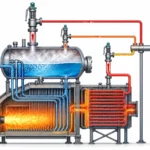
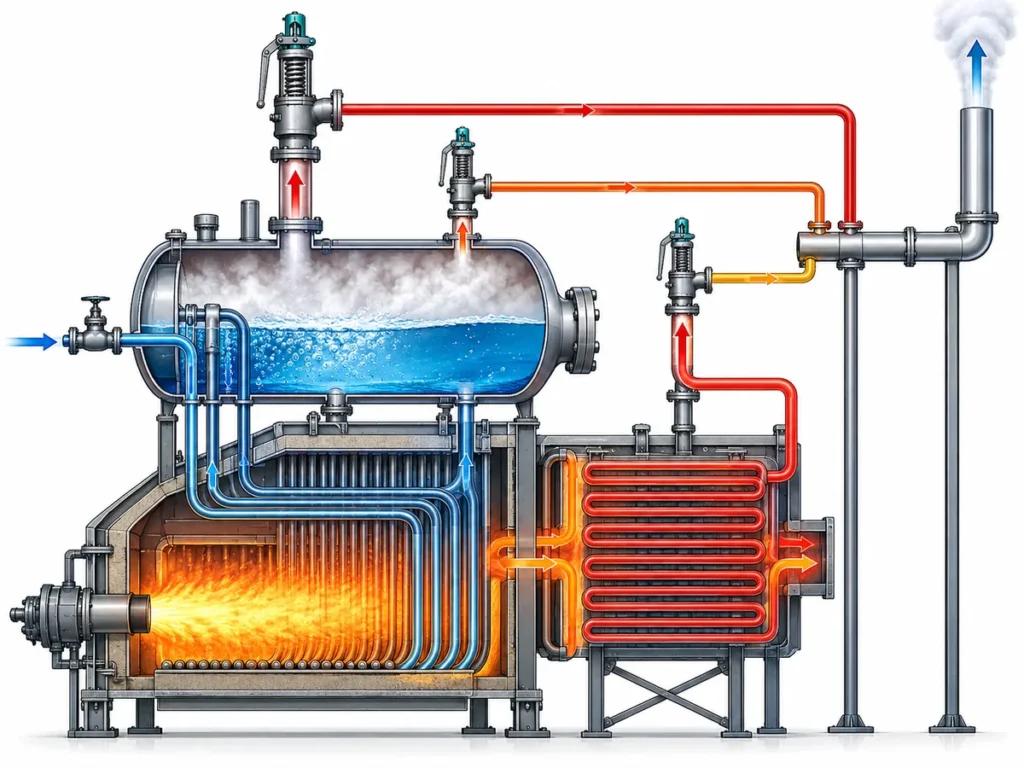
文章配图用工业应用示意图;最终阀门型号、安装细节及排量适用性须依据项目数据确认。
Quick Answer: Propane and Butane Need Different Relief Valve Review
From a pressure-protection perspective, propane and butane should not be treated as interchangeable services during relief valve selection. Both are LPG-related media, but their vapor pressure behavior, temperature sensitivity, operating pressure range and possible relieving phase can change how a propane relief valve or butane relief valve should be reviewed.
The main selection risk is assuming that the same connection size, set pressure or valve appearance proves suitability for both services. For a broader selection workflow, use this article together with the 安全阀选型指南.
For LPG valve families, applications and product-category coverage, use the LPG safety valves page; this comparison blog is limited to propane-versus-butane selection logic.
What can be compared here
Vapor pressure tendency, temperature influence, phase, relief scenario, set pressure margin, capacity basis, material screening, back pressure and RFQ data.
What cannot be decided here
Final model, certified capacity, exact material compatibility, code acceptance and replacement approval cannot be confirmed without project data and manufacturer review.
Selection Boundary: Start with Equipment and Relief Scenario, Not Fuel Name
A relief valve protects a specific piece of equipment against a specific overpressure scenario. The medium name helps define the fluid properties, but it does not define the complete valve specification. A propane storage tank, a butane filling skid, a mixed LPG vaporizer and a blocked-in liquid line can require different selection logic even when all are described as LPG service.
| Protected Item | Typical Relief Scenario to Confirm | Selection Impact | 询价前需要提供的数据 |
|---|---|---|---|
| LPG storage tank | Fire exposure, heat input, overfilling or vapor generation | Required capacity, set pressure basis, discharge arrangement and environmental exposure | Tank MAWP/design pressure, service composition, fire-case basis, set pressure, capacity basis |
| Skid-mounted vessel | Regulator failure, blocked outlet or process upset | Operating margin, valve configuration, materials and back pressure review | P&ID, operating pressure, design pressure, upstream source pressure, relief scenario |
| Vapor line or manifold | Blocked outlet or pressure regulator malfunction | Gas/vapor sizing basis and discharge piping review | Line pressure, flow source, set pressure, outlet routing, back pressure |
| Blocked-in liquid section | Thermal expansion of trapped liquid | Different duty from vapor-space tank protection; small valve does not mean simple selection | Line volume, isolation condition, temperature exposure, discharge destination |
Engineering review point:
If the RFQ only says “propane valve” or “butane valve,” the supplier still needs the protected equipment, relief scenario, phase, pressure values, capacity basis and installation details before confirming the valve direction.
Propane vs Butane Service Conditions That Affect Relief Valve Selection
The practical difference between propane and butane relief valve selection starts with service conditions, not with the product name. Propane commonly requires closer attention to vapor pressure under ambient temperature changes, while butane service may require careful review of low-temperature behavior, vapor generation assumptions and actual mixture composition.
In both cases, the engineer should confirm whether the valve is protecting vapor space, liquid-filled piping, a pressure vessel, a skid-mounted system or a storage tank.

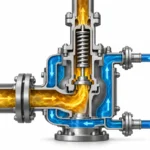
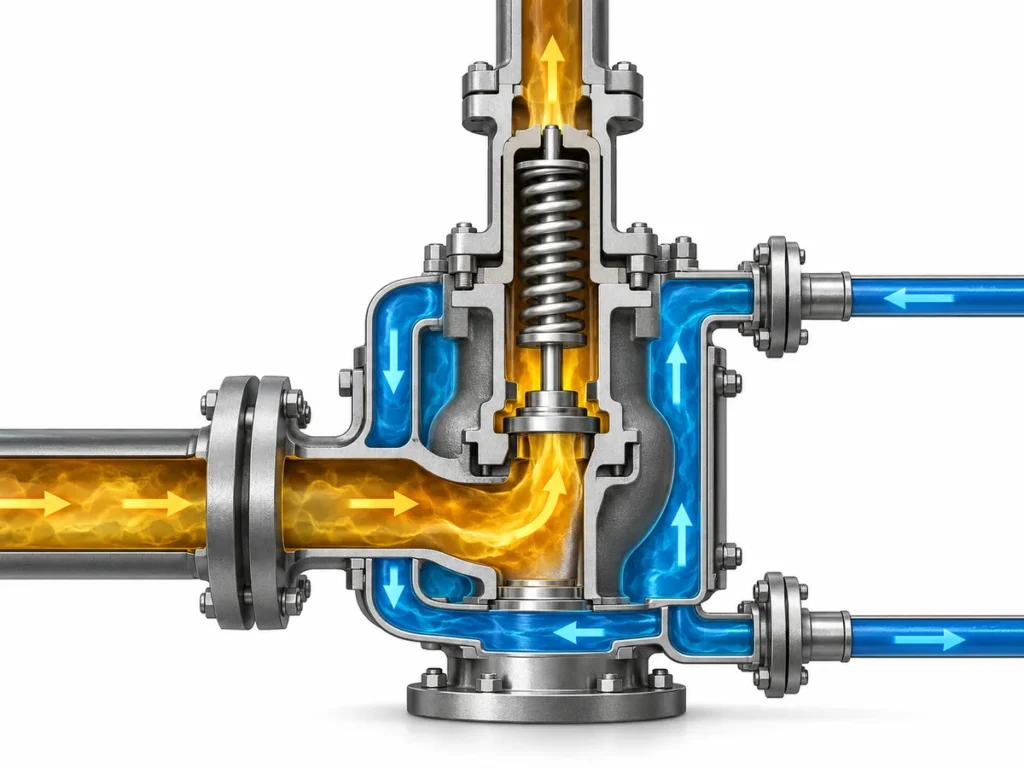
Industrial engineering visual for article context; it is not a formal sizing chart or certified valve selection document.
Vapor pressure and temperature range
Vapor pressure affects normal operating pressure and the margin between operating pressure and set pressure. If normal pressure can approach the set pressure during high ambient temperature or process heating, the valve may simmer, leak or become unstable. This does not mean the set pressure should be casually increased. Set pressure must be reviewed against the protected equipment MAWP or design pressure and the applicable code basis.
Vapor service, liquid service and possible two-phase relief
A vapor relief case, a liquid thermal expansion case and a possible two-phase relief case should not be sized or reviewed as the same service. A propane vapor relief valve on tank vapor space may have a different governing case from a butane thermal relief valve on a blocked-in liquid line.
Why LPG mixture composition matters
Many field requests use “LPG” without clarifying whether the service is mostly propane, mostly butane or a mixture. Mixed LPG composition can change vapor pressure, relieving temperature and capacity assumptions. If composition is uncertain, the selection should remain conditional until the design basis is clarified.
| 使用系数 | 重要性 | Propane Review Emphasis | Butane Review Emphasis | RFQ Evidence Needed |
|---|---|---|---|---|
| Actual composition | Fluid properties affect pressure and capacity assumptions | Confirm whether service is pure propane or LPG blend | Confirm whether service is pure butane or LPG blend | Composition range or design basis |
| 温度范围 | Temperature can change operating pressure and material/seat review | High ambient or heat exposure may reduce operating margin | Low-temperature behavior and vaporization assumptions may need attention | Minimum/maximum operating and relieving temperature |
| Phase at relief | Vapor, liquid and two-phase relief are different sizing problems | Do not assume vapor-only tank service without checking scenario | Do not assume liquid thermal relief is equivalent to vapor relief | Vapor/liquid/two-phase basis |
| System layout | Back pressure and inlet pressure loss depend on piping | Tank venting and discharge location may be critical | Skid or line relief may involve headers or compact piping | P&ID, inlet/outlet arrangement, discharge destination |
Set Pressure, MAWP and Operating Pressure: Where Selection Mistakes Start
Relief valve set pressure is one of the most common areas of misunderstanding in LPG service. Operating pressure, MAWP or design pressure, set pressure, overpressure and accumulation are related, but they are not the same. Treating them as interchangeable can lead to leakage, instability or unsafe overpressure protection.
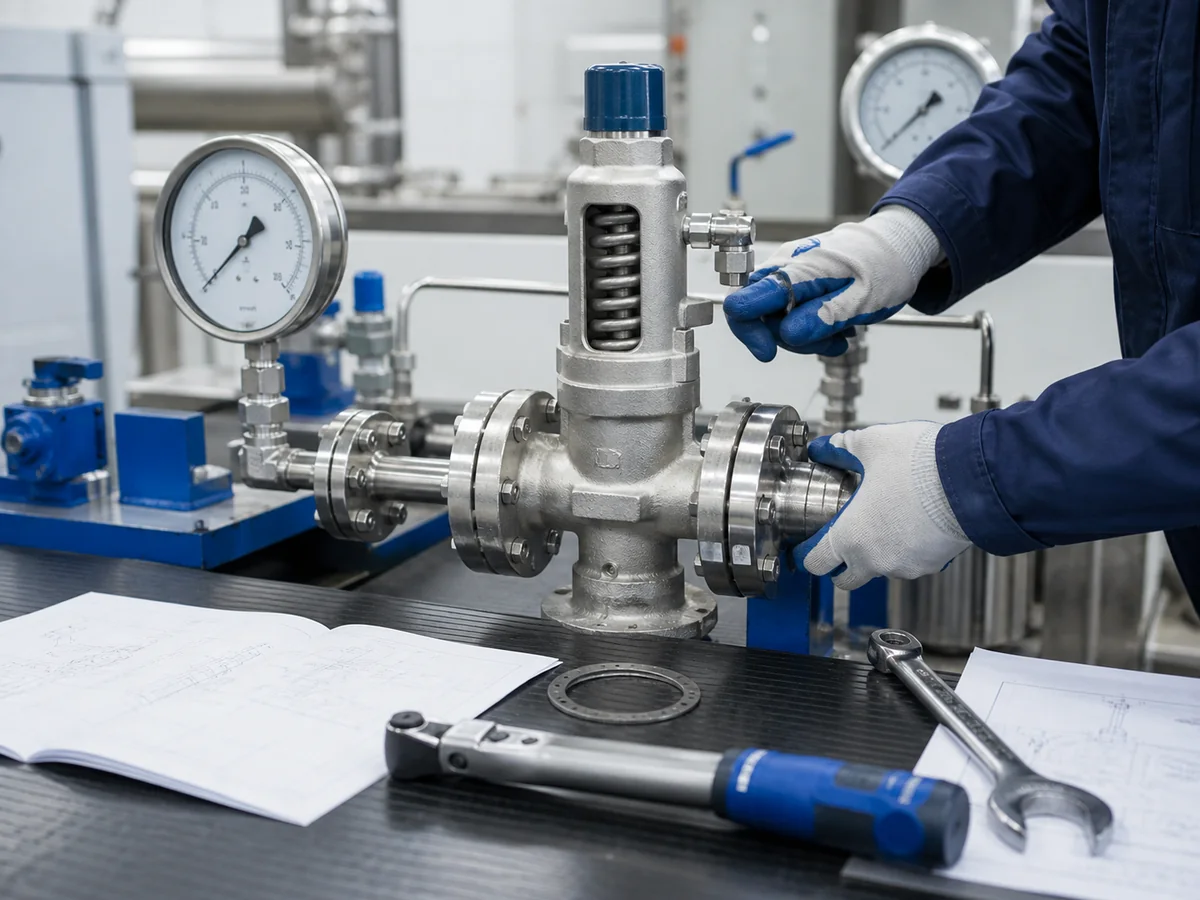
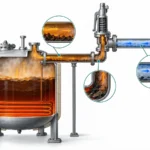
Industrial engineering visual for article context; it does not replace formal relief sizing or manufacturer capacity data.
| 术语 | Meaning in LPG Relief Valve Review | 重要性 | 常见错误 |
|---|---|---|---|
| 工作压力 | Normal system pressure during operation | Vapor pressure and temperature may move operating pressure closer to set pressure | Treating operating pressure as set pressure |
| MAWP / 设计压力 | 被保护设备的压力限值 | Set pressure must be reviewed against the protected equipment boundary | Treating MAWP as a valve capacity value |
| 整定压力 | Valve opening setting under specified conditions | Incorrect set pressure can create leakage, instability or unsafe protection | Changing set pressure to solve leakage without engineering review |
| 超压 / 压力积聚 | 泄放期间压力超过整定压力的升高值 | Must remain within the applicable equipment/code basis | Ignoring the allowable pressure rise during relief |
| 所需泄放量 | Required relieving load for the governing scenario | Capacity depends on relief case and fluid properties | Using connection size as proof of capacity |
Operating pressure is not set pressure
Operating pressure is the pressure at which the equipment normally runs. Set pressure is the pressure at which the valve is adjusted to begin opening under specified conditions. If the operating pressure is too close to the set pressure, the valve may not remain tight or stable.
Set pressure is not the same as MAWP
MAWP or design pressure belongs to the protected equipment. Set pressure must be selected in relation to that equipment limit and applicable code rules. The valve cannot be selected only from the fuel name.
Temperature-driven pressure rise and operating margin
For propane service, high ambient temperature or heat exposure can push system pressure upward. For butane service, low-temperature operation may affect vaporization and service assumptions. In both cases, the engineer should confirm the maximum and minimum service temperature, the expected relieving temperature and whether the valve will see stable gas/vapor service or changing phase conditions.
Required Relieving Capacity Is Not Proven by Connection Size
Connection size alone does not prove capacity. A valve with the same inlet and outlet connection may have a different orifice, lift, coefficient, capacity basis and certification or documentation status. For propane vs butane relief valve selection, the required relieving capacity must be determined from the governing relief scenario and fluid conditions.
For deeper capacity review, see 安全阀定径与认证排量 和 API 520 安全阀定径.
所需泄放量
The load the valve must relieve under the governing scenario.
选定的阀门规格
为满足所需泄放量而选定的阀门实体与孔径。
有据可查的排量
审核与更换所需的、由制造商支持的排量依据。
| 排量问题 | 正确的审核方向 | 买方应提供的资料 | 缺失风险 |
|---|---|---|---|
| 主导泄放工况是什么? | 识别火灾工况、出口堵塞、调节阀失效、热膨胀或其他工况 | 泄放工况说明、P&ID、工艺依据 | 错误的所需排量依据 |
| 所需泄放量是多少? | 将所需泄放量与阀门公称规格区分开 | 计算书或所需的以质量/体积流量为基准的数据(如有) | 安全阀选型过小或规格过大 |
| 泄放工况是什么? | 确认泄放时的压力、温度和相态 | 泄放压力、泄放温度、气相/液相/两相基准 | 流体物性错误与排量复核 |
| 需要哪些排量依据? | 对照制造商数据和项目文件要求进行复核 | 所需标准、数据表、旧铭牌、检验要求 | 更换无法验证 |
火灾工况、出口堵塞和热膨胀
LPG 储罐泄压阀可能受火灾暴露或蒸气生成工况控制。撬装系统或管段可能受出口堵塞、调节阀故障、泵憋压或封闭液体热膨胀控制。即使介质名称相似,这些工况也可能导致所需排量不同。
Why documented capacity matters
For RFQ and replacement, the buyer should provide the required capacity and its calculation basis where available. If only the old valve size is provided, the replacement review remains incomplete. The selected valve should be checked against manufacturer data and the required documentation for the project.
Valve Configuration: Conventional, Bellows or Pilot Operated?
Propane or butane service does not automatically require one valve configuration. Conventional spring loaded, balanced bellows and pilot operated designs can each be suitable in different conditions, but each has limits. Valve configuration should be selected after pressure margin, capacity, back pressure, service cleanliness, maintenance access and applicable code basis are reviewed.
For product-family routing after the configuration screen, compare 弹簧式安全阀, 波纹管平衡式安全阀 和 先导式安全阀 against the confirmed LPG service data before RFQ.

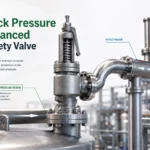
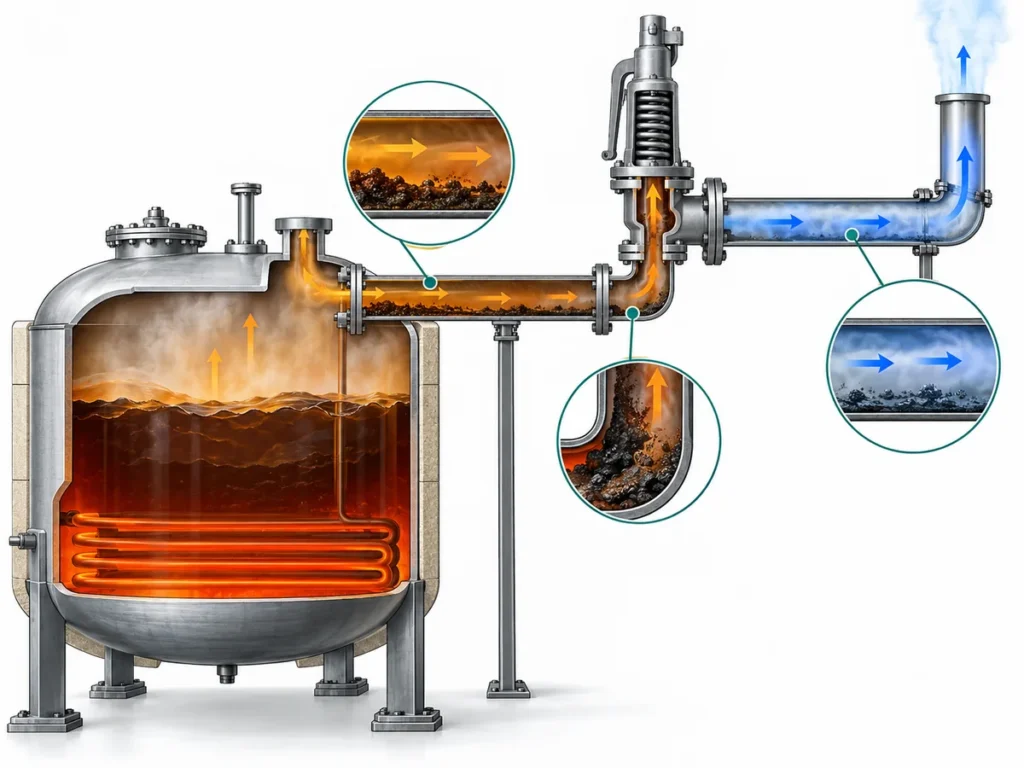
Industrial engineering visual for article context; final valve configuration depends on real service data and manufacturer review.
| 结构 | When to Review | Engineering Benefit | Important Limit |
|---|---|---|---|
| Conventional spring loaded | Discharge conditions are simple and back pressure is acceptable | Direct acting, familiar maintenance logic, common starting point for many LPG vapor duties | Back pressure, operating margin and seat tightness still require review |
| 平衡波纹管 | Built-up or variable back pressure may affect performance | Helps reduce back-pressure influence on the valve disc in suitable applications | Bellows design does not replace capacity, outlet piping, venting or material review |
| Pilot operated | Operating pressure is close to set pressure or tightness is a design concern | Can support tighter operating margin in selected clean services and approved designs | Service cleanliness, sensing line, maintenance, freezing/condensation risk and code basis must be checked |
Back pressure is not solved by naming a valve type alone. For deeper review, see the 背压与波纹管 指南。
Materials, Seats, Springs and Seals for LPG Service
Material grade alone does not prove service suitability. In LPG relief valve selection, material decisions should consider 压力-温度额定值, service temperature, medium composition, leakage expectation, corrosion risk, gasket and seal compatibility, and project specification.
| 部件 | 审查项目 | LPG-Specific Concern | Needs Confirmation |
|---|---|---|---|
| Body and trim | Pressure-temperature rating and project material requirement | Temperature exposure, pressure class and medium composition | 是 |
| 阀座 | Soft seat or metal seat | Seat tightness, temperature and medium compatibility | 是 |
| Spring and bonnet | Service environment and construction | Outdoor exposure, bonnet condition and corrosion risk | 是 |
| Bellows, if used | Back pressure service and bellows material | Bellows fatigue, venting and compatibility must be reviewed | 是 |
| Seal and gasket | 材料兼容性 | LPG composition, temperature and leakage expectation | 是 |
Buyer note:
Do not specify only “stainless steel” or “soft seat” without temperature, pressure, medium composition and leakage expectation. Those terms are not complete service suitability evidence.
Installation and Discharge Differences for LPG Tanks and Skids
A relief valve is not selected in isolation from its piping. Inlet pressure loss, outlet back pressure, discharge routing, drainage, venting, support and reaction force can affect valve performance and site safety. For broader piping review, see the 安全阀安装指南.
LPG storage tank relief valves
Confirm tank data, vapor space, governing relief scenario, set pressure basis, discharge path and environmental exposure.
Skid, vapor line and filling manifold valves
Confirm regulator failure, blocked outlet, pump deadhead or liquid thermal expansion where applicable.
| 安装检查 | 重要性 | RFQ / Review Input |
|---|---|---|
| 入口压力损失 | Excessive inlet loss can contribute to chatter and unstable operation | Inlet pipe size, length, fittings and vessel nozzle details |
| Outlet back pressure | Built-up or superimposed back pressure can affect lift and capacity | Discharge piping, header pressure, vent stack or flare connection |
| Safe discharge | LPG discharge must not be routed toward personnel or unsafe enclosed spaces | Discharge destination, site layout and local safety requirements |
| Support and reaction force | Heavy outlet piping should not load the valve body | Outlet support arrangement and piping layout |
| Drainage and venting | Accumulated liquid, blocked vents or improper drainage can affect reliability | Orientation, drain points, bonnet/vent requirements where applicable |
Unsafe shortcut to avoid:
Do not replace an LPG relief valve only by matching the visible connection size. Confirm set pressure, capacity basis, service phase, materials, back pressure and installation conditions.
Propane vs Butane Selection Matrix
This table is a screening tool for technical evaluation. It does not replace formal sizing calculation, manufacturer data or project/code review.
| 选型因素 | Propane Review Point | Butane Review Point | Data to Confirm Before RFQ | 忽略后的风险 |
|---|---|---|---|---|
| Vapor pressure | Often drives higher pressure concern under warm conditions | Review vapor generation and service temperature | Medium composition, operating temperature, pressure range | Wrong set pressure margin or unstable operation |
| 相态 | Vapor, liquid or two-phase must be confirmed | Same; do not assume vapor-only service | Vapor/liquid/two-phase basis | Wrong sizing basis |
| 整定压力 | Check against MAWP/design pressure and operating margin | Same, with actual service pressure range | MAWP, operating pressure, set pressure | Leakage, simmer or unsafe setting |
| 所需泄放量 | Depends on governing relief scenario | Same; capacity may differ by scenario | Required relieving rate and basis | Undersized or undocumented valve |
| 材料与密封座 | Review pressure-temperature rating and leakage expectation | Review temperature range and compatibility | Material, seat, seal, gasket and service temperature | Leakage, compatibility issue or project rejection |
| 背压 | Review outlet header or vent system | Same | 叠加背压与积聚背压 | Reduced capacity or unstable lift |
Composite Engineering Examples for LPG Relief Valve Review
The following examples are composite engineering scenarios for training. They are not customer cases, test results or proof of product performance. Relief scenario review may also require system-level references such as API 521 压力泄放系统.
Propane storage tank exposed to high ambient temperature
Review tank MAWP, normal operating pressure, proposed set pressure, heat exposure basis, required capacity and discharge arrangement.
Butane service with low ambient temperature concern
Review temperature range, vapor generation assumptions and whether the process changes between storage, transfer and vaporization.
Mixed LPG skid with uncertain composition
Clarify propane/butane ratio, maximum operating pressure, relieving temperature, relief scenario and capacity basis.
Blocked-in liquid line thermal relief
Review protected line volume, isolation conditions, temperature exposure and discharge destination.
Replacement Review: Why an Old Nameplate or Photo Is Not Enough
Maintenance teams and distributors often begin with an old valve photo, nameplate, connection size or set pressure. These details are useful, but they do not prove that the replacement valve is correct for propane, butane or mixed LPG service.
| Replacement Input | Useful For | Still Missing | 工程风险 |
|---|---|---|---|
| Old valve photo | Identifying approximate valve type, connection and installation context | Capacity, material, internal construction, service condition | Visual match may hide wrong capacity or material |
| 铭牌整定压力 | Understanding previous adjustment point | MAWP/design pressure, operating margin, code basis | Old setting may not match current equipment or service |
| 连接尺寸 | Fit-up review | Orifice, lift, coefficient and documented capacity | Same connection may not mean same relieving capacity |
| Old datasheet | Model, material, pressure and standard reference | Current service change, back pressure, installation modifications | Old datasheet may not reflect current operating condition |
RFQ Checklist for Propane or Butane Relief Valves
Before requesting quotation for a propane safety relief valve, butane safety relief valve or mixed LPG relief valve, provide the following data where available. More complete RFQ data helps the supplier review the correct valve family, pressure setting, capacity basis, materials, connection and documentation path.

Industrial RFQ visual for article context; final selection requires actual operating data, manufacturer data and project review.
| 询价文件(RFQ)字段 | 重要性 | Required Before Quote? | If Missing |
|---|---|---|---|
| 受保护设备 | Defines whether the valve protects a tank, skid, vessel, line or manifold | 是 | Selection sovereignty is unclear |
| 泄放工况 | Determines the governing capacity basis | 是 | Capacity cannot be responsibly reviewed |
| 介质及其成分 | Separates propane, butane and mixed LPG assumptions | 是 | Fluid property basis remains uncertain |
| 相态 | Vapor, liquid, flashing or two-phase relief changes sizing review | 是 | Wrong sizing basis may be used |
| 工作压力 / MAWP / 整定压力 | Needed to check operating margin and equipment boundary | 是 | Set pressure cannot be checked safely |
| 所需泄放量 | Needed to verify selected orifice and documented capacity | Yes, where available | Connection size may be wrongly treated as capacity |
| 泄放温度与背压 | Affects material, seat, capacity and valve configuration review | 是 | Material or configuration may be incorrectly selected |
| Existing datasheet or nameplate | Useful for replacement, but not sufficient alone | Recommended | Replacement review takes longer and remains conditional |
FAQ: Propane vs Butane Relief Valve Selection
同一泄压阀能否同时用于丙烷和丁烷工况?
有可能,但必须根据实际工作压力、整定压力、MAWP或设计压力、所需泄放量、泄放温度、相态、材料、背压及适用的项目要求进行核查。仅凭燃料名称是不够的。
为什么蒸气压对丙烷泄压阀选型很重要?
蒸汽压会影响正常工作压力和操作裕度。如果在环境温度或工艺温度变化下压力可能接近整定压力,则可能发生泄漏、前泄或不稳定。
整定压力与储罐最大允许工作压力(MAWP)相同吗?
MAWP或设计压力属于受保护设备。整定压力是阀门的调整点,必须对照设备限值及适用规范或项目规定进行审查。
连接尺寸越大,泄放能力就越高吗?
不。连接尺寸并不能证明流道面积、升程、排放系数或标定排量。所需排量必须根据制造商数据及适用的泄放工况进行校核。
液化石油气(LPG)工况下,何时应复核波纹管平衡式泄压阀?
当出口管道或排放总管产生的积聚背压或可变背压可能影响阀门性能时,可考虑采用波纹管平衡式设计。该设计不能替代定径或安装审查。
LPG储罐泄压阀询价需要提供哪些数据?
请提供储罐MAWP/设计压力、工作压力、整定压力、介质成分、气相或液相基准、泄放工况、所需泄放量、泄放温度、背压、连接方式、材质要求及适用文件。
ZOBAI能否仅凭照片或旧铭牌来选配丙烷或丁烷泄压阀?
照片或铭牌有助于识别现有阀门,但仅凭外观进行更换是不安全的。必须确认排量、整定压力、材质、连接方式、标准依据及安装条件。
Standards and Selection Boundary
This article explains engineering selection logic for propane, butane and mixed LPG relief valve inquiries. It does not reproduce standard text, perform formal sizing calculation or certify a valve for a specific project.
Final selection depends on protected equipment data, relief scenario, actual medium composition, manufacturer capacity data, selected valve model, applicable standard version, project specification and local regulatory requirements.
Technical References for Engineering Review
These references are listed to support engineering orientation only. They should not be treated as copied standard text, project approval, or proof that a specific valve is certified for a specific propane, butane or LPG service.
- API 520 第 I 部分 — reference direction for pressure-relieving device sizing, selection and installation. Use the applicable purchased standard and project specification for formal work.
- API 标准 521 — reference direction for pressure-relieving and vapor depressuring system review, including relief-scenario and system-level considerations.
- ASME 锅炉及压力容器规范 — reference direction for pressure equipment code context where applicable to the protected equipment and project jurisdiction.
- Applicable local pressure equipment regulations and owner specifications should be confirmed before final valve selection, documentation request or replacement approval.
Ask ZOBAI to Review Your LPG Relief Valve Conditions
If you are preparing an RFQ for propane, butane or mixed LPG service, send the protected equipment data, relief scenario, medium composition, phase, pressure values, required capacity, relieving temperature, back pressure, connection details, material preference, applicable standard and available datasheet or nameplate.
ZOBAI can review the inquiry direction and help clarify whether the request should be treated as tank relief, skid relief, vapor service, liquid thermal relief or replacement review.