氨制冷安全阀的选型应在泄放工况确定之后才能开始。仅凭已知的制冷剂、连接方式或预期整定压力,并不足以使候选产品进入工程评审阶段。受保护边界、所需泄放量、氨泄放状态、部件级兼容性、排放条件以及供应商证明文件均需相互匹配。在本……

氨制冷安全阀的选型应在泄放工况确定之后才能开始。
仅仅知道制冷剂、连接方式或预期的整定压力,并不意味着候选产品已具备工程审查条件。受保护边界、所需泄放量、氨的泄放状态、部件级兼容性、排放条件以及供应商证据均需相互匹配。
在本文中,“安全阀候选产品”是实际搜索用语中的简称,指针对特定氨制冷泄放工况进行评估的可复位压力泄放装置。确切的设备分类和最终验收仍以适用的项目工程依据为准。本页面不进行阀门定径、不建立泄放工况,也不设计制冷系统。其任务更为具体:判断候选产品是否具备足够的相关证据,以进入工程或询价审查阶段。
对于本文的候选筛选工程框架,评审以三种受控状态之一结束:
通过 当候选方案可进入进一步工程评审时,,
暂缓 当决策关键信息缺失时,或
拒绝 当已识别出已知不匹配时。
这些是本文中使用的评审状态,并非监管分类。PROCEED 不代表最终安装或项目批准。
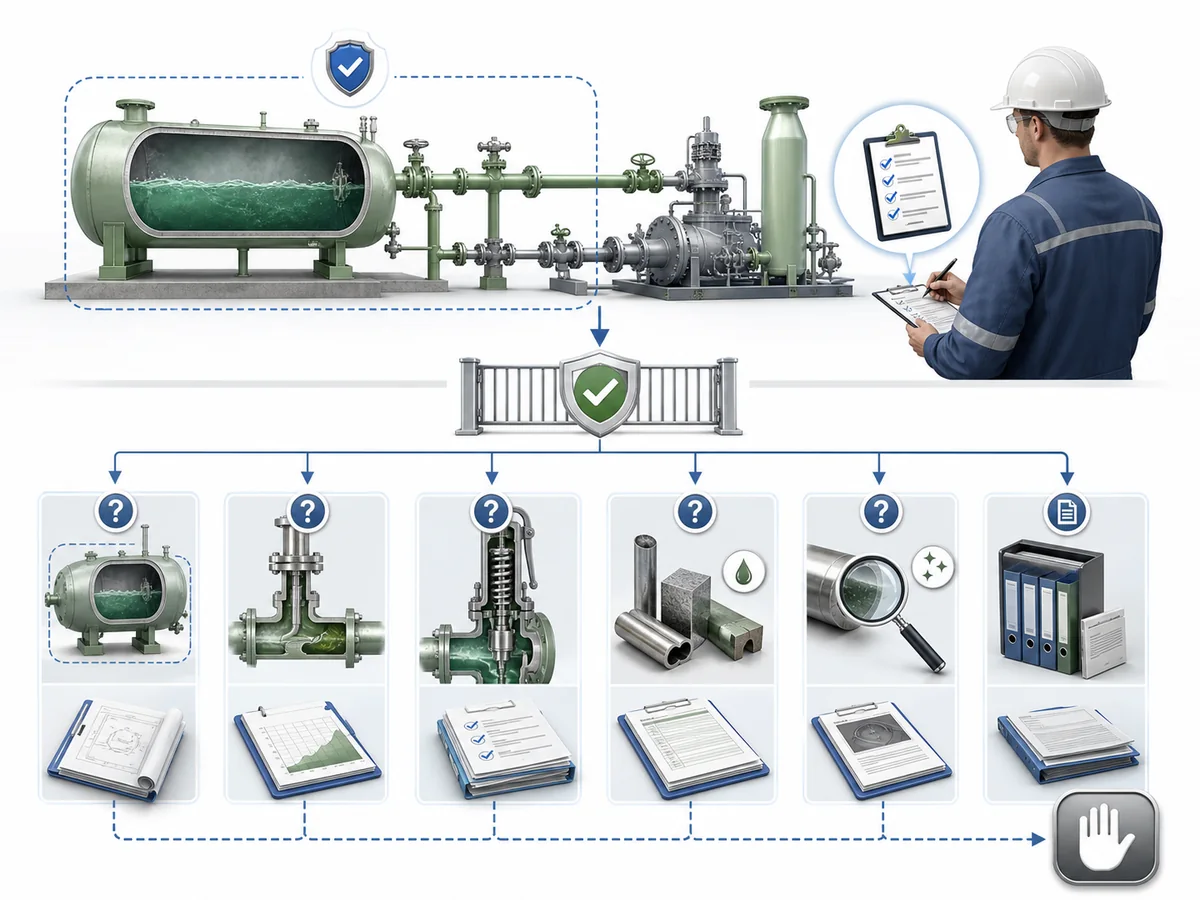
泄放工况是否已准备好进行安全阀选型?
在压力保护工况定义到足以评估候选阀门之前,不要比较候选阀门。
因此,首要问题不是购买哪种阀门,而是项目是否提供了使候选阀门选择具有意义的工程输入。
氨制冷系统可能包含不同的受保护边界和不同的泄放情况。压力容器保护、压缩机保护以及含有截留液体的隔离段的保护是不可互换的工况。产品搜索无法安全地弥补仍属于泄放工况定义的空白。
在候选阀门审查开始之前,项目基础应确定受保护的对象、控制评估的泄放条件以及设备预期提供的泄放性能。该要求必须来自系统或设备设计基础,而不是从标称连接尺寸或现有阀门推断而来。
在比较候选阀门之前使用就绪门禁
| 选择输入 | 准备审查时 | 若未解决 |
|---|---|---|
| 受保护边界 | 设备、容器、管段或其他压力边界已确定。 | 保持:候选阀门没有明确的保护目标。 |
| 泄放工况 | 主导工况已由负责的项目或系统基础确定。 | 注意:产品选型不能替代工况定义。 |
| 所需泄放性能 | 所需性能可作为工程输入提供。 | 注意:连接尺寸不是充分的替代条件。 |
| 泄放状态 | 相关氨的相态或状态已知,足以比较供应商证据。 | 注意:证据基础尚无法匹配。 |
| 项目验收依据 | 可根据已识别的项目要求集对候选产品进行审查。 | 注意:在依据未知的情况下,无法确定适用性。 |
这区分了两个不同的工程问题。
泄放工况定义确定了所需的保护要求。
候选选择检查特定阀门能否满足既定要求。
比较更多供应商数据并不能解决上游职责不完整的问题。
同样的区别也适用于整定与排量。支持整定或开启行为的证据本身并不能确定所需的泄放性能。同样,匹配的公称连接表明机械相似性,而非等效的泄放能力。
候选证据是否与氨泄放阶段和状态匹配?
“氨工况”并非完整的泄放条件描述。
供应商证据必须与既定泄放职责所评估的状态相对应,而非仅提及制冷剂名称。
氨制冷并非只有一种通用的泄放背景。与含蒸汽设备相关的职责并不自动等同于对含截留液体的隔离段的保护。尽管两种情况都涉及氨,但工程基础仍然不同。
泄放性能证据也与既定的测试或工况基准相关。阀门尺寸、制冷剂名称或一般应用说明本身不能确定所记录的绩效基准与项目职责相符。
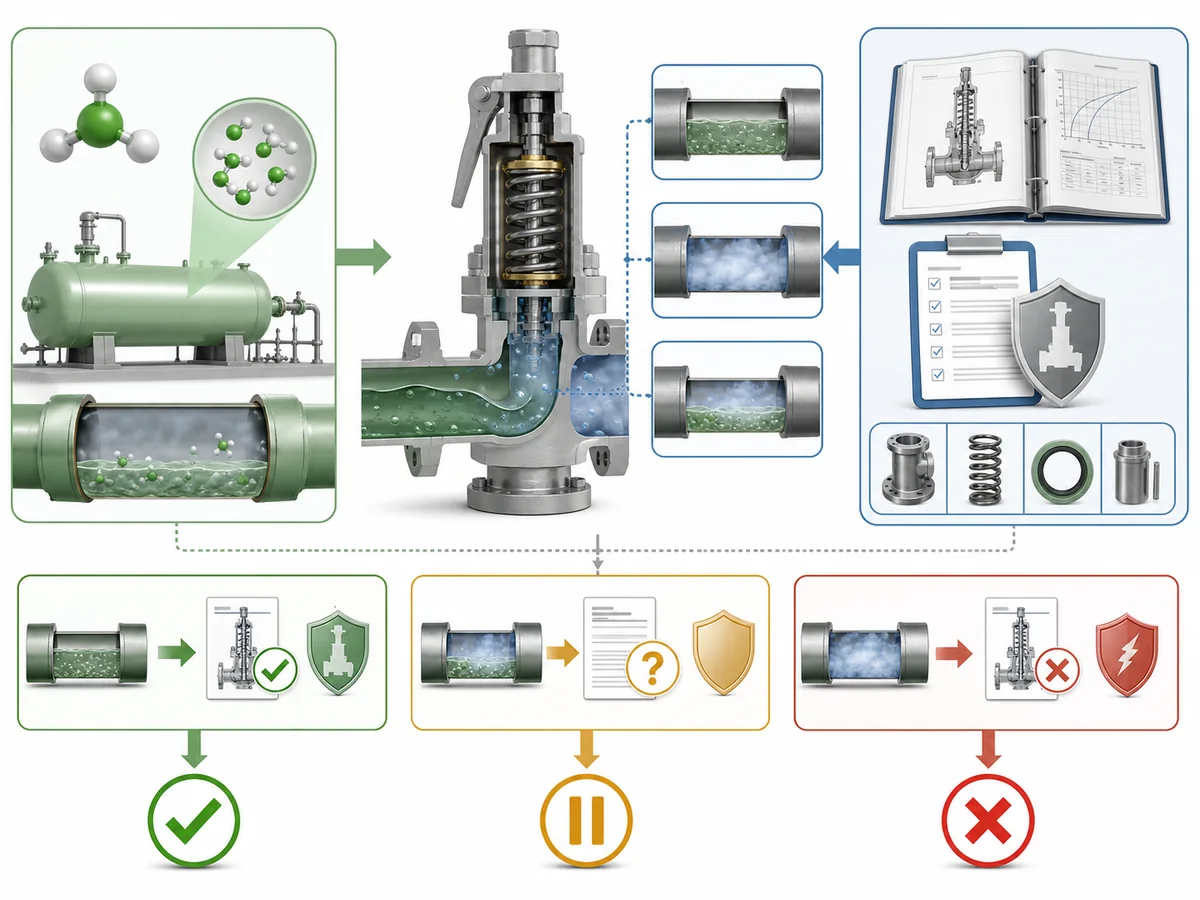
将定义的状态与供应商证据依据进行匹配
| 项目信息 | 供应商证据 | 评审结论 |
|---|---|---|
| 已定义泄放状态。 | 证据依据与该状态明显兼容。 | 继续下一项选型关卡。 |
| 已定义泄放状态。 | 证据依据不明确。 | 暂缓并请求澄清。 |
| 未定义泄放状态。 | 存在针对一个或多个工况的供应商证据。 | 因项目输入不完整而暂缓。 |
| 已定义泄放状态。 | 已记录的证据依据已知与所需工况冲突。 | 否决该证据依据或候选配置。 |
实际相态/状态证据排查
-
从已确定的项目工况入手。
在审查数据表之前,先确定候选阀门必须覆盖的泄放状态。 -
确定供应商的证据依据。
确定所记录的泄放性能实际代表何种使用工况。 -
对两者进行比较,不得以假设填补差距。
如果两者无法匹配,仅凭“氨工况”不足以完成审查。 -
对现有证据未涵盖的工况进行升级处理。
需要进行额外的工程验证,而不是采用无依据的换算或选型捷径。
因此,相态和状态作为候选阀门与证据的变量,而不是制冷热力学的附带课题。如果状态未确定,使用 HOLD。如果已知所记录的依据与所需工况不兼容,使用 REJECT 或寻求其他有依据支持的配置。
材料、阀座和密封件是否在部件层面得到验证?
氨兼容性应在相关阀门部件上逐一验证,而不能仅凭阀体材料推断。
所提议的组件可能在阀体、关闭件、接液内件、阀座、密封件及其他暴露的内部零件中采用不同材料。
ASHRAE 氨制冷指南为筛选氨相关材料兼容性问题提供了公开的工程依据。该通用指南有助于识别风险,但不能证明某一具体商用阀门组件适用。产品适用性仍取决于供应商所提议的实际部件和配置。
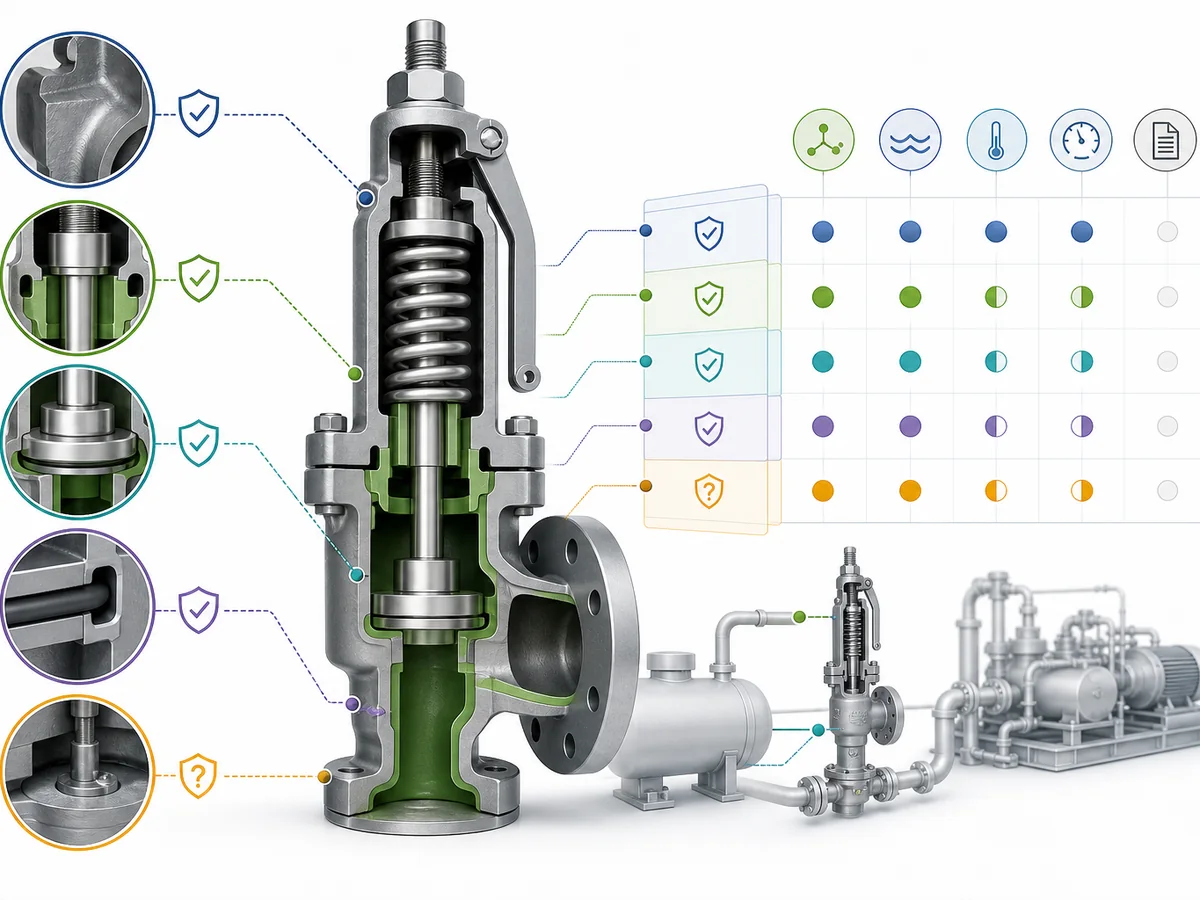
以证据链方式验证兼容性
| 部件区域 | 证据问题 | 应避免的假设 |
|---|---|---|
| 承压阀体 | 所提议配置适用哪一受控材料牌号? | 可接受的阀体材料即可证明整个组件适用。 |
| 接液内件和关闭件 | 哪些部件接触氨,实际规定了什么材料? | 阀内件自动采用与阀体相同的材料。. |
| 阀座 | 采用何种具体阀座结构,有何依据支持其适用性? | 通用的“软阀座”或“金属阀座”标签即可确立兼容性。. |
| 密封件及其他聚合物部件 | 安装的具体配置是什么,其适用范围是否有文件记录? | 通用兼容性图表即可证明成品阀门的适用性。. |
| 完整装配 | 是否有受控的制造商证据将完整配置与所需工况关联? | 各部件材料单独合格即可自动证明装配级适用性。. |
阀座与密封件证据还必须与泄漏证据分开。明确的阀座密封性结果可在其自身试验依据下支持泄漏相关问题,但不能确立泄放能力,也不应视为长期化学兼容性的证明。.
排查部件证据不完整的问题
-
阀体已记录,阀内件未知:
因部件兼容性链条不完整,采用 HOLD。. -
阀座或密封描述笼统:
请提供验证所需的准确结构或受控材料标识。. -
仅有通用材料指导:
仅用于初步筛选,不能作为拟用组件适用性的证明。. -
部件已识别,但使用适用性未确认:
现有证据描述了结构,但尚不足以支持 PROCEED。.
排放接口是否与候选阀门证据相符?
下游工况属于候选阀门审查的一部分,尽管完整的排放系统设计不在此范围内。.
阀门可能在机械安装上适配,但仍缺乏适用于实际出口或背压工况的证据。.
IIAR 氨泄放管道指南支持将进口和出口工况视为压力泄放系统审查中与性能相关的组成部分。并非所有阀门配置对下游压力的响应方式都相同。因此,有用的工程问题不是背压是否普遍重要,而是拟选候选阀门的文件化依据是否与已安装系统所施加的下游工况相匹配。.
当泄放路径不是独立排放布置时,这一点尤为重要。在适用的工程依据下,可能存在内部泄放路径或共用泄放系统,但其完整设计仍属于系统层面的责任。候选阀门选型仅需足够的下游信息,以确定阀门证据是否与实际安装相关。.
将候选阀门证据与泄放系统工程设计区分开
| 候选阀门审查 | 已安装泄放系统的责任 |
|---|---|
| 确定阀门技术文件所假设的出口工况。. | 确定已安装系统所产生的实际下游工况。. |
| 确定文件记载的行为或性能是否取决于背压。. | 确定由管道、集管或其他系统元件所产生的下游工况。. |
| 检查性能证据是否采用兼容的排放依据。. | 对完整泄放路径及任何共用排放布置进行工程设计。. |
| Verify the documented outlet configuration. | Confirm the final discharge destination and installed-system arrangement. |
Back-pressure evidence troubleshooting
-
Define the actual downstream condition.
If it has not been characterized, candidate review remains incomplete. -
Identify the candidate’s documented discharge basis.
Do not assume published performance applies to every outlet condition. -
Check configuration-specific assumptions or limits.
The actual valve construction matters. -
Compare evidence with the installation.
Marketing terminology is not a substitute for documented applicability.
The decision boundary is straightforward:
unknown downstream condition → HOLD;
known condition but incomplete candidate evidence → HOLD;
known documented conflict → REJECT;
compatible evidence → continue to engineering review.
This preserves the engineering boundary: valve suitability does not equal discharge-system approval, but the two cannot be reviewed as unrelated problems.
What Does Each Supplier Document Actually Prove?
Supplier evidence should be accepted claim by claim, not document by document.
A datasheet, test record, material record, or conformity document is useful only for the specific question it actually supports. None should be treated as automatic proof of complete ammonia-project suitability.
National Board and ASME pressure-relief-device certification and testing frameworks distinguish different evidence scopes, including setting-related performance and relieving-capacity evidence. A defensible review therefore builds an evidence chain: each document should be tied to the proposed configuration, the engineering claim it supports, its stated scope or basis, and the project condition against which it is being checked.
| 供应商证据 | 可支持的工况 | What it does not automatically prove |
|---|---|---|
| Controlled datasheet | Documented configuration, stated application, and published limits. | Suitability for every project condition. |
| 排量证据 | Relieving performance under its defined basis. | Material compatibility, installed discharge-system acceptance, or project approval. |
| Set-pressure or calibration evidence | Setting or opening performance under its defined test basis. | 所需泄放量。 |
| 阀座密封性证据 | Leakage or tightness result under its defined test basis. | Capacity, chemical compatibility, or service life. |
| Component material records | Material identity for the documented component or configuration. | Complete-valve ammonia suitability by themselves. |
| Manufacturer service statement | Declared applicability of the documented configuration within its stated scope. | Suitability for every relieving state, discharge condition, or project. |
| Conformity or certification document | The conformity or certification scope stated by that document. | Automatic acceptance under every jurisdiction, specification, or installed condition. |
| Drawing or bill of materials | Configuration and component identity. | Relieving performance. |
Trace each document through five questions
-
What claim is the document being used to support?
Capacity, component material, setting, seat tightness, service applicability, and conformity are separate questions. -
Which configuration does it describe?
Evidence for a different construction does not close the gap for the proposed candidate. -
What conditions or test basis limit the claim?
Keep the evidence scope attached to the result. -
Does that basis match the project duty?
A valid document can still be the wrong evidence for the current application. -
What remains unproven?
Build the package by closing individual engineering questions rather than expecting one document to prove everything.
Distinguish three evidence failures
| Evidence problem | 含义说明 | Review response |
|---|---|---|
| Missing evidence | The required document or controlled information has not been supplied. | HOLD and request it. |
| Scope mismatch | The evidence exists but does not cover the proposed configuration or duty basis. | HOLD and request evidence with the correct scope. |
| Known technical conflict | The documented limit or applicability conflicts with a mandatory requirement. | REJECT the candidate or configuration. |
Missing evidence and negative evidence are not the same thing. Treating both as a generic “not approved” result can cause either unnecessary rejection or premature acceptance.
- Seat tightness is not capacity evidence.
- Set-pressure evidence is not capacity evidence.
- A material record is not complete service-suitability evidence.
- A conformity document is not automatic project approval.
- A matching connection is not proof of equivalent relieving performance.
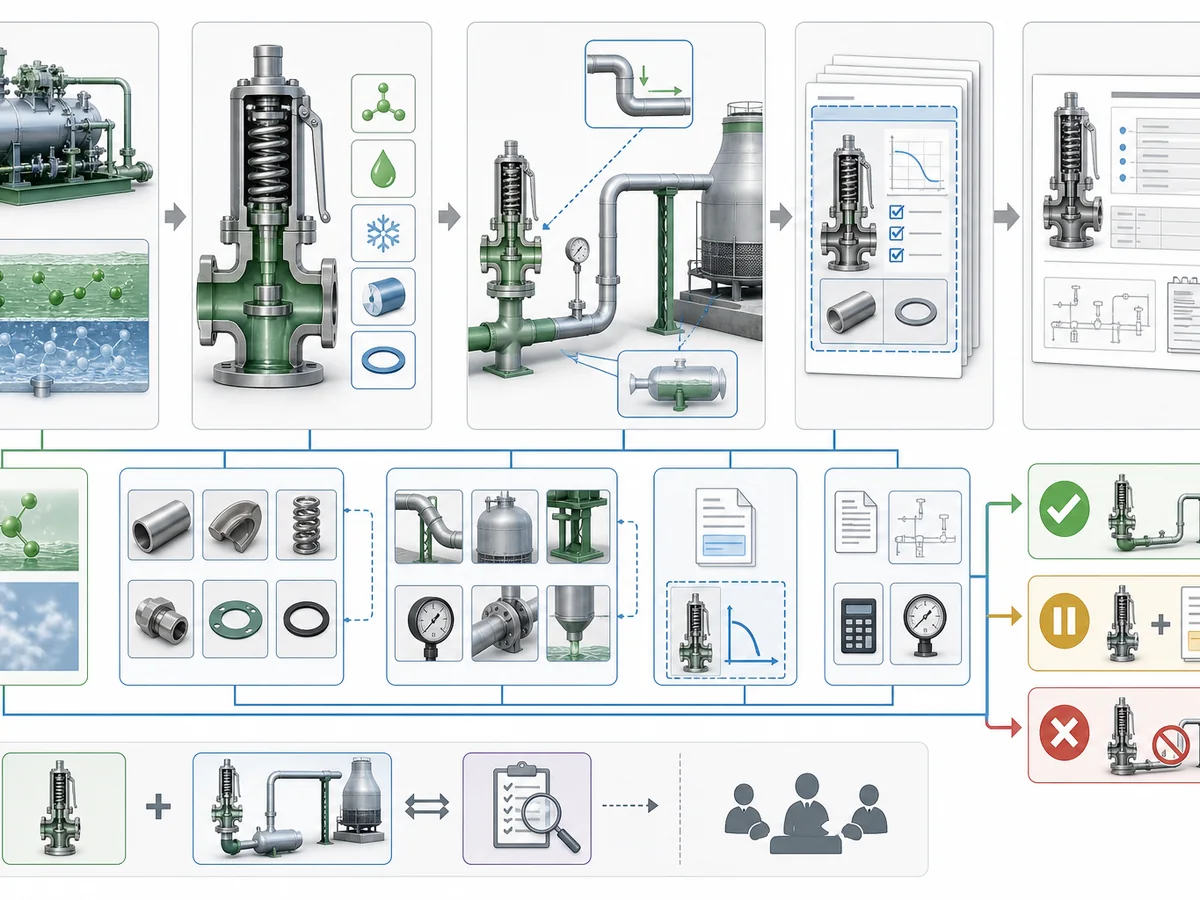
What Should Go Into the RFQ, and When Is the Candidate PROCEED, HOLD or REJECT?
A useful ammonia safety valve RFQ should connect each project input to a specific supplier response and evidence requirement.
It should not ask the supplier to infer an undefined relief duty or close missing system-design information.
Build the RFQ around the selection gates
| RFQ area | 项目输入 | Supplier response needed |
|---|---|---|
| Protected duty | Protected boundary and project-defined relief requirement. | Candidate performance evidence relevant to that duty. |
| Ammonia relieving state | Defined phase or state relevant to the duty. | Evidence showing that the proposed configuration and performance basis are applicable. |
| Materials and sealing | Relevant project compatibility requirements. | Controlled component, seat, seal, and configuration information needed for verification. |
| Discharge interface | Known downstream or back-pressure basis. | Documented outlet assumptions, limitations, and relevant performance basis. |
| Evidence package | Required project review documentation. | Documents tied to the proposed configuration and their stated scope. |
Request evidence by purpose, not by document count
- Controlled product or configuration datasheet
- Relieving-capacity evidence relevant to the proposed configuration and duty basis
- Component-level construction or material documentation where required
- Seat and seal construction or applicability evidence where relevant
- Set-pressure or calibration evidence required by the project
- Seat-tightness evidence where required
- Relevant conformity or certification documentation required by the project
- Configuration drawing or controlled identification needed to tie the evidence to the proposed candidate
Use this candidate-screening engineering framework from duty to RFQ
-
Duty gate:
Is the protected boundary and required relief duty defined? -
State gate:
Is the ammonia relieving phase or state known, and does the candidate evidence use a compatible basis? -
Compatibility gate:
Are the relevant body, trim, seat, seal, and exposed-component requirements supported by controlled evidence? -
Discharge gate:
Does the candidate’s documented downstream or back-pressure basis fit the installed-system condition? -
Evidence gate:
Do the supplied documents answer the engineering claims they are being used to support? -
Decision gate:
Is the remaining review state PROCEED, HOLD, or REJECT?
| 决策 | 在以下情况使用 | 所需后续措施 |
|---|---|---|
| 通过 | The relief duty is defined, the relieving-state basis is known, relevant compatibility evidence is available, the discharge interface is understood, and the supplier evidence is suitable for further review. | Continue to engineering and RFQ review. Do not treat this status as final installation or project approval. |
| 暂缓 | A decision-critical project input, evidence scope, or document is missing or unclear. | Resolve the specific project-data or evidence gap before making a suitability decision. |
| 拒绝 | A known mismatch exists between a mandatory requirement and the candidate’s documented service scope, performance basis, material configuration, discharge limitation, or another required condition. | Stop review of that candidate unless the mismatch is removed through a different supported configuration or new applicable evidence. |
Diagnose a HOLD before sending the RFQ
| Observed review problem | Likely evidence gap | Next question to resolve |
|---|---|---|
| A valve size is being discussed before the duty is established. | An upstream project input is missing. | What relieving duty must the candidate actually satisfy? |
| The supplier states ammonia suitability but the relieving state is unclear. | Application evidence cannot yet be matched to the duty. | What relieving state does the project require, and what basis does the supplier evidence represent? |
| Body material is listed but seat or seal construction is absent. | Component-level compatibility evidence is incomplete. | What exact wetted and sealing components are used in the proposed configuration? |
| Performance data exists but outlet assumptions are unclear. | Discharge-interface evidence is incomplete. | Under what downstream or back-pressure basis does the documented performance apply? |
| Multiple documents are supplied but suitability remains unclear. | Evidence has not been mapped to individual selection claims. | Which document supports performance, materials, setting, tightness, service applicability, and conformity for the proposed configuration? |
Within this article’s candidate-screening framework, keep HOLD and REJECT distinct. Missing evidence does not automatically make a candidate technically unsuitable; it means the decision cannot yet be closed. REJECT is appropriate only when a known incompatibility or documented mismatch exists.