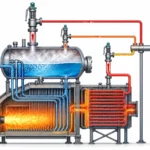
Обогрев выходного трубопровода для предохранительных клапанов с рубашкой обогрева — решение, зависящее от конкретных условий эксплуатации. Предохранительный клапан с рубашкой обогрева может поддерживать температуру корпуса клапана в требуемом диапазоне, но это автоматически не означает, что подключённый выходной трубопровод находится под тем же температурным контролем. Рубашка защищает только ту физическую зону, которую она фактически охватывает. Как только рабочая среда выходит …

Обогрев выходного трубопровода для предохранительных клапанов с рубашкой обогрева — решение, зависящее от конкретных условий эксплуатации. Предохранительный клапан с рубашкой обогрева может поддерживать температуру корпуса клапана в требуемом диапазоне, но это автоматически не означает, что подключённый выходной трубопровод находится под тем же температурным контролем. Рубашка защищает только ту физическую зону, которую она фактически охватывает. Как только рабочая среда выходит за пределы этой обогреваемой зоны, путь сброса подвергается собственному воздействию окружающих условий, изоляции, геометрии трубопровода и любой отдельной системы обогрева выходного трубопровода или линии сброса.
Это различие имеет значение только тогда, когда температура может существенно изменить поведение среды или состояние пути сброса. В некоторых случаях охлаждение может увеличить вязкость, вызвать замерзание или затвердевание, способствовать кристаллизации или осаждению, либо оставить материал, который не сливается легко. В других случаях такое же охлаждение может практически не влиять на процесс. Именно поэтому обогрев выходного трубопровода следует рассматривать как решение о тепловой границе, зависящее от условий эксплуатации, а не как автоматический аксессуар для каждого предохранительного клапана с рубашкой обогрева.
Ключевой инженерный вопрос не просто: “Есть ли у клапана рубашка обогрева?” Он таков:
Где фактически должно заканчиваться поддержание температуры для этой среды, этого сценария сброса давления и этой схемы сброса?
Обогрев выходного трубопровода для предохранительных клапанов с рубашкой обогрева: раздельные тепловые границы
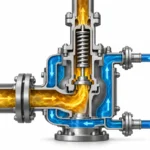
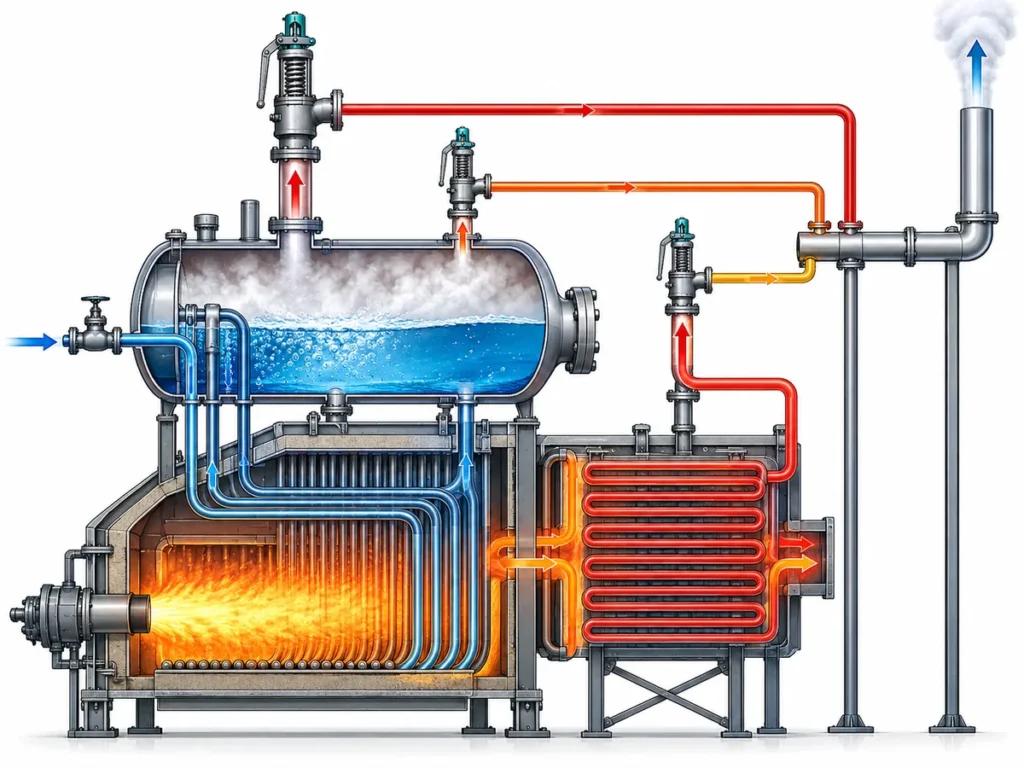
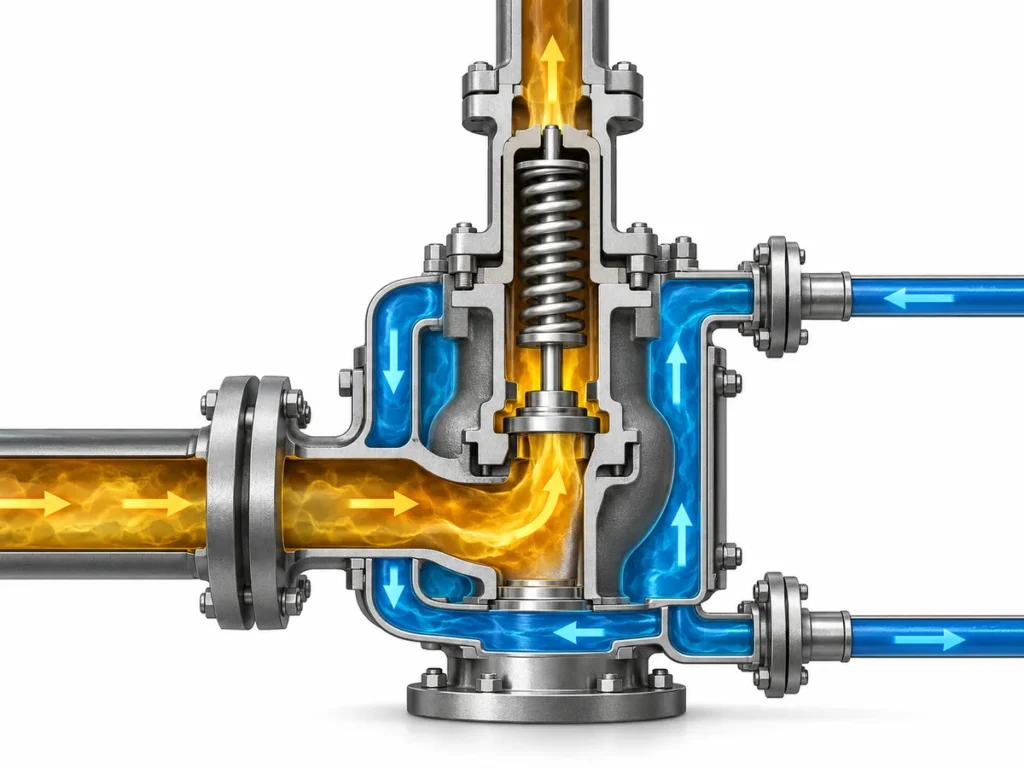
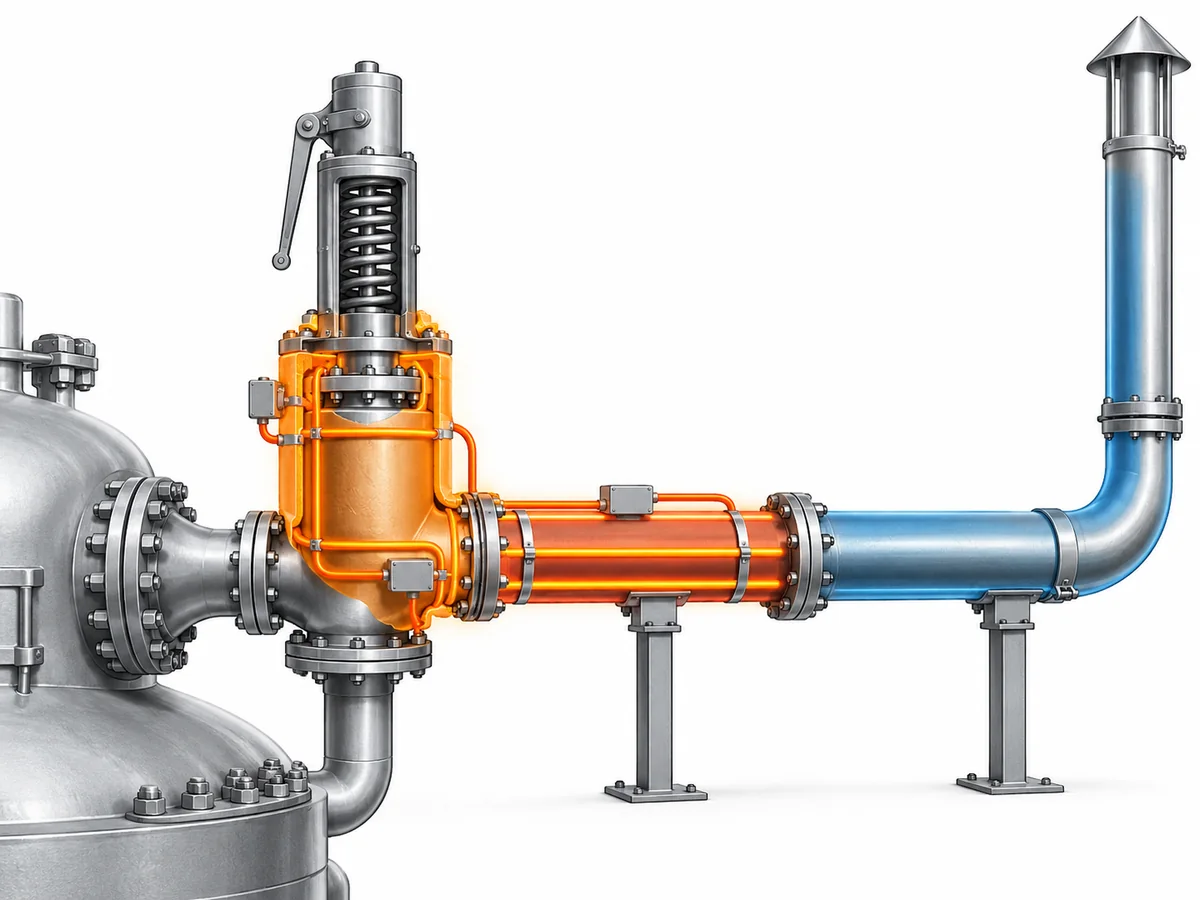
A предохранительный клапан с рубашкой обогрева обычно выбирается потому, что контроль температуры вокруг самого клапана важен для данной среды. В зависимости от конструкции рубашка может охватывать корпус клапана и распространяться на другие части клапана, но точная обогреваемая граница зависит от изделия и должна подтверждаться по соответствующему чертежу или данным изделия.
Трубопровод после клапана создаёт другую тепловую задачу. Как только среда перемещается в участок, который больше не обогревается рубашкой, на её температуру влияют материал и диаметр трубы, открытая длина, изоляция, окружающие условия, фитинги, местные теплопотери и любая отдельная система обогрева. Короткий изолированный участок внутри тёплой технологической зоны может вести себя совсем иначе, чем более длинная линия сброса, подверженная низкой температуре окружающей среды.
Конец рубашки обогрева клапана — это граница изделия. Это не автоматически конец требования поддержания температуры для процесса.
Наличие рубашки обогрева у клапана автоматически не означает, что выходной трубопровод должен быть обогрет. Если сбрасываемая среда остаётся приемлемо текучей и стабильной во всех соответствующих условиях после клапана, дополнительное поддержание температуры может не требоваться по этой тепловой причине. Решение об обогреве зависит от того, что изменение температуры фактически делает с данной средой.
Что может измениться при охлаждении выходного трубопровода
Само по себе охлаждение не является механизмом отказа. Важно понять, переходит ли среда при охлаждении в такой диапазон температур, где её физическое поведение меняется настолько, что это влияет на путь сброса.
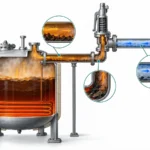
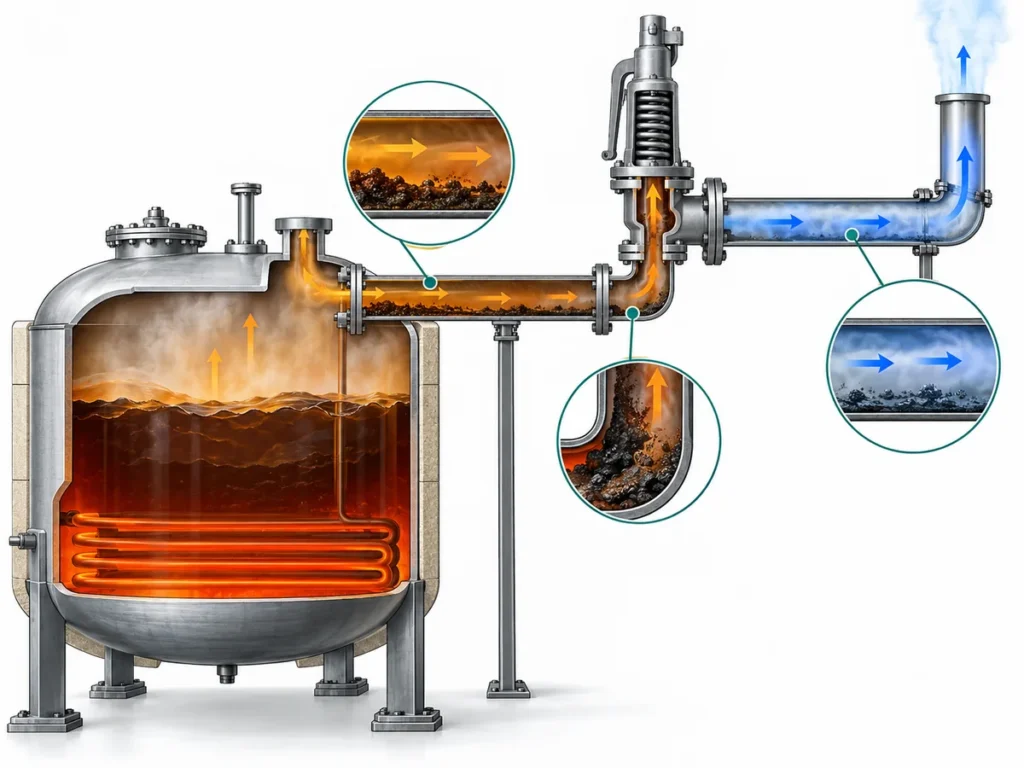
Для термочувствительной жидкости снижение температуры может значительно увеличить вязкость. В другой среде охлаждение может пересечь границу замерзания или затвердевания. Другие среды могут кристаллизоваться, выделять твёрдые осадки, конденсироваться или образовывать отложения при определённых сочетаниях температуры, состава и давления. Эти механизмы не взаимозаменяемы, и ни один из них не следует предполагать без данных о конкретной среде.
Охлаждение выходного трубопровода может быть вызвано не только потерями тепла в окружающую среду
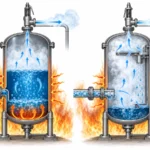
Воздействие окружающей среды — один из источников охлаждения выходного трубопровода, но не единственный. В некоторых средах снижение давления, вскипание или расширение газа на пути сброса также могут снижать температуру жидкости. Этот эффект автоохлаждения может иметь значение там, где среда способна замерзать, образовывать гидраты, конденсироваться или выделять твёрдые осадки при более низкой температуре.
По этой причине соответствующая температура на выходе должна определяться фактическим сценарием сброса и зимними условиями эксплуатации, а не только нормальной температурой технологического потока выше по системе. Важность этого механизма зависит от состава среды, фазового поведения, изменения давления и схемы сброса.
Оценка начинается со среды: изменение температуры → реакция среды, а не с клапана.
Если среда остаётся полностью текучей в ожидаемом диапазоне температур, необогреваемый участок на выходе может не создавать тепловой проблемы. Если же охлаждение приводит к тому, что материал становится высоковязким, образует твёрдые частицы или накапливается в нижних точках, состояние downstream-участка требует гораздо более внимательного анализа.
Изменение свойств среды ещё не означает ограничение расхода
Даже если охлаждение изменяет вязкость или приводит к образованию твердых частиц, это автоматически не означает, что сбросной трубопровод стал гидравлически ограниченным. Имеют значение количество задержанного продукта, доступная площадь проходного сечения, геометрия трубопровода, расход при сбросе и фактические свойства среды.
Только когда возникшее условие существенно увеличивает сопротивление по пути сброса, это становится проблемой потери давления.
Изменение поведения среды само по себе не создает проблему противодавления: охлаждение на выходе ≠ накопленное противодавление.
охлаждение на выходе
→ может изменить поведение среды
→ может создать накопление или ограничение
→ если ограничение существенно увеличивает потери давления, накопленное противодавление может возрасти
→ может изменить поведение среды
→ может создать накопление или ограничение
→ если ограничение существенно увеличивает потери давления, накопленное противодавление может возрасти
В терминологии ISO 4126-7 накопленное противодавление — это давление на выходе, создаваемое потоком через предохранительный клапан и его сбросную систему. То, насколько увеличение этого давления существенно изменяет работу предохранительного клапана, зависит от конфигурации клапана, величины и изменчивости противодавления, ограничений производителя и применимой расчетной базы системы сброса давления.
Не следует предполагать, что непрослеженный выход делает клапан неустойчивым или вызывает конкретную проблему с характеристиками. Гидравлические последствия должны устанавливаться отдельно.
Определяющим тепловым условием может быть не сброс при полном расходе
Температура при максимальном расходе сброса не всегда является определяющим тепловым условием.
Using the maximum relieving-flow temperature as the sole thermal basis may be appropriate in some systems, but it is not universal. A discharge line can experience different thermal states during startup, shutdown, standby, ambient exposure, smaller relief events and after a relief event when material remains in part of the piping.
A credible leakage, simmering or other small-flow case can also govern the thermal review. A small intermittent or continuous leak can enter an outlet that has cooled toward the winterizing temperature, and some project practices specifically check whether that leaking fluid would freeze, congeal or become excessively viscous under those conditions. This case should be evaluated where it is credible; it should not be assumed for every valve or service.
Consider a system that is normally hot but has long standby periods. The valve body may remain heated by its jacket while the connected outlet section approaches ambient temperature. If a temperature-sensitive fluid enters that cold section during a later event, the initial pipe condition can matter even though the flowing medium itself is hot.
In another service, continuous or repeated flow may keep the outlet sufficiently warm without separate tracing. The controlling condition has to be identified from the actual process rather than assumed from one operating point.
What Determines Whether the Outlet Actually Needs Tracing
The tracing decision becomes much clearer when it is treated as a set of engineering variables instead of a yes-or-no rule attached to the valve type.
| Критерий выбора | Почему это важно | Что следует проверить |
|---|---|---|
| Поведение среды | Determines whether cooling changes viscosity, phase, solubility or solids formation | Relevant temperature-property data and composition |
| Required temperature condition | Defines the temperature range needed to maintain acceptable flow behavior | Project or process maintain-temperature basis |
| Температура сброса | Establishes the temperature entering the discharge path during the applicable relief case | Relief calculation / process data |
| Режимы резервирования, пуска и останова | Наиболее холодные или наиболее ограничительные условия могут возникать вне нормальной работы | Соответствующие рабочие состояния |
| Минимальная температура окружающей среды | Влияет на теплопотери и условия холодного пуска | Проектные данные площадки |
| Зона покрытия рубашкой | Определяет, где фактически заканчивается обогрев со стороны клапана | Чертёж клапана или данные изделия |
| Геометрия выходного патрубка | Длина, диаметр, фитинги и открытая поверхность влияют на теплопотери и гидравлическое поведение | Фактическая компоновка трубопровода |
| Изоляция | Снижает теплопотери, но не создаёт тепло | Тип, толщина и непрерывность |
| Дренаж и нижние точки | Оставшийся материал может подвергаться длительному охлаждению | Компоновка трубопроводов и дренажи |
| Место назначения сброса | Давление в коллекторе и условия на выходе влияют на работу системы сброса в целом | Открытый сброс, закрытая система или данные по коллектору |
| Основание для обогрева | Определяет, может ли предлагаемая система поддерживать требуемую температуру | Расчет теплопотерь и проектирование обогрева |
| Требования проекта | Может предъявлять дополнительные требования к проектированию или документации | Применимая проектная спецификация |
Ни один отдельный пункт в этой таблице не решает вопрос сам по себе.
For example, knowing that a product begins to crystallize below a certain temperature still does not establish the tracing design. The engineer also needs to know whether the relevant outlet section can actually reach that temperature, how long it remains there, whether insulation is present, whether material remains in the pipe and what temperature the tracing system is expected to maintain.
Likewise, knowing that the site has a low minimum ambient temperature does not prove that tracing is required. If the medium is not sensitive to that temperature or the relevant section remains adequately warm for other reasons, the design conclusion may be different.
A four-step tracing decision path
- Screen the medium. Determine whether, within a credible temperature range, it can become unacceptably viscous, freeze, solidify, crystallize, condense, form hydrates or otherwise create a restriction.
- Screen the outlet temperature. Determine whether the outlet can actually reach that range during relief, leakage or simmering, standby, startup, shutdown or post-relief conditions, including ambient heat loss and any relevant expansion or flashing cooling.
- Check passive heat retention. Determine whether the actual pipe geometry, retained process heat and insulation are sufficient to keep the outlet above the required maintain-temperature basis without active tracing.
- Design and verify separately. If active temperature maintenance is still required, perform the heat-loss and tracing design, then separately verify drainage, outlet hydraulics, back pressure, supports and safe discharge.
Use this sequence for screening and specification. The project heat-loss calculation and relief-system hydraulic analysis remain separate requirements.
There is no universal tracing length
A fixed instruction such as “trace the first one metre after the valve” is not a reliable general rule.
Required tracing coverage depends on the thermal duty. Pipe diameter, length, material, ambient temperature, insulation, fittings, equipment surfaces and the required maintain temperature all influence heat loss. A short uninsulated metallic outlet can present a different duty from a longer, well-insulated discharge line.
The maintain temperature also should not be chosen simply because the valve or upstream process operates at a particular temperature. The relevant target is the temperature needed to keep the medium within an acceptable condition for the actual service, while also respecting any product or material temperature limits.
Типовой инженерный сценарий
Consider a jacketed safety valve protecting equipment that contains a temperature-sensitive liquid. The valve jacket maintains the valve region at the required process condition, but the outlet piping leaves the heated area and passes through a colder location.
The decision should not be reduced to: jacketed valve → trace the outlet.
A more reliable sequence is:
- Confirm where the valve jacket actually ends.
- Determine the temperature-sensitive behavior of the medium.
- Identify the relevant thermal condition during standby, startup, relieving and post-relief periods.
- Estimate or calculate the temperature condition of the outlet section.
- Determine whether that condition could create unacceptable viscosity, phase change or solids behavior.
- If temperature maintenance is needed, design the tracing and insulation for that thermal duty.
- Independently verify the outlet hydraulics, drainage and back-pressure conditions.
This sequence is illustrative, not a recorded customer case or a universal tracing specification.
What Outlet Tracing Cannot Fix
Outlet tracing can address a thermal problem. It cannot convert an otherwise unsuitable discharge system into an acceptable one.
If the discharge piping is undersized, unnecessarily restrictive or connected to a system with excessive downstream pressure, heat tracing does not correct the hydraulic design. If the piping traps liquid because of poor drainage or unsuitable low points, tracing does not eliminate the need to review the piping arrangement . It also does not establish that reaction forces, supports or safe discharge requirements have been addressed.
Different controls solve different problems
| Контроль | What it does | Что это не заменяет |
|---|---|---|
| Heat tracing | Adds heat to maintain a required temperature condition where the thermal duty justifies it. | Does not correct undersized or overly restrictive discharge piping and does not by itself prove acceptable back pressure. |
| Изоляция | Reduces heat loss and helps preserve available process or tracing heat. | Does not generate heat and does not correct retained liquid, poor drainage or an unsuitable piping layout. |
| Slope and drainage | Reduce the opportunity for liquid or residual material to remain in low points and cool for extended periods. | Do not maintain temperature and do not replace tracing where active heat input is actually required. |
| Outlet hydraulic design | Addresses piping size, layout, pressure loss and the resulting back-pressure condition for the relief system. | Does not keep a temperature-sensitive medium warm or prevent phase change and solids behavior by itself. |
The same boundary applies to safety-valve capacity. Adding heat tracing does not increase or prove the valve’s certified relieving capacity. Capacity remains dependent on the selected valve, orifice or flow area, service conditions and the applicable manufacturer or certification basis.
Противодавление must also remain a separate check. If a temperature-related deposit reduces the effective flow path enough to increase pressure loss, built-up back pressure may rise. But the size of that effect cannot be inferred from the presence of deposits alone. It requires the actual relieving flow, outlet geometry, fluid properties and downstream pressure conditions.
Similarly, the resulting effect on the safety valve depends on the design being used. A conventional spring-loaded valve, a balanced bellows design and a pilot-operated valve do not have identical back-pressure behavior or limitations. Outlet tracing therefore should never be presented as a substitute for selecting and verifying the correct relief-device configuration.
What to Verify Before Specifying Outlet Tracing
A useful tracing specification should begin with service information rather than with a standard tracing temperature or a fixed length of pipe.
Before deciding the outlet treatment, confirm the following.
Medium and thermal behavior
Identify the medium, phase and composition closely enough to understand the temperature-dependent behavior that matters to the discharge path. Depending on the service, the relevant concern may be viscosity, freezing, solidification, crystallization, precipitation, condensation or another documented limitation.
Only properties that can change the tracing decision need to be established.
Relevant temperatures and operating states
Confirm the normal operating temperature and the relieving temperature, but also consider the conditions that may leave the outlet cold before a relief event. Minimum ambient temperature, startup, shutdown and standby conditions may be important where the process is intermittent.
A tracing design also needs a defined maintain-temperature basis. That temperature should come from the process requirement and validated medium behavior, not from a generic rule for jacketed valves.
Valve and piping boundary
Confirm the actual jacket coverage from the applicable product information. Then review the outlet diameter, length, material, fittings, insulation, exposed sections, low points, drainage and discharge destination.
This establishes where separate thermal control may be needed and provides the information required for a heat-loss or tracing design.
Relief-system conditions
Confirm the discharge arrangement and relevant back-pressure conditions independently of the tracing decision.
If the valve discharges into a closed header, existing superimposed back pressure and the additional built-up back pressure during relieving may both be relevant. If a thermal restriction is considered credible, its potential hydraulic consequence must be evaluated rather than assumed.
Tracing and insulation design
If the assessment shows that the outlet requires temperature maintenance, the tracing system should be designed for the actual thermal duty.
That normally means considering the required maintain temperature, minimum ambient condition, pipe geometry, insulation, heat loss, startup requirement and any equipment or fitting allowances. The choice between steam tracing and electric heat tracing should follow the project conditions and available utilities; neither method should be treated as universally preferable.
The final specification should also make the responsibility boundary clear. The valve manufacturer may need to confirm the jacket configuration and product temperature limits, while the process, piping or heat-tracing engineer may own the downstream thermal and piping design. Project responsibilities should be defined rather than assumed.
Pre-Specification Checklist
Before releasing the tracing requirement, verify that the project has enough information to answer these questions:
- What medium and phase can enter the discharge line?
- What temperature-dependent behavior creates the thermal concern?
- What is the relevant operating or relieving temperature?
- What are the important startup, shutdown or standby conditions?
- What minimum ambient condition applies?
- Where does the valve jacket actually end?
- What outlet piping remains outside that heated region?
- Is that piping insulated?
- Can material remain in low points or poorly drained sections?
- Куда сбрасывает клапан?
- What back-pressure conditions apply?
- What temperature must the downstream piping actually maintain?
- Has the tracing duty been checked against the real pipe and insulation arrangement?
- Which requirements come from the process design, valve manufacturer and project specification?
If those questions cannot yet be answered, do not assign a tracing temperature or length. Close the missing engineering inputs first.
Граница безопасности и соответствия нормам
API 520 Часть II addresses pressure-relief-device installation, while API 521 addresses pressure-relieving and depressuring systems, including disposal-system engineering. ISO 4126 provides additional safety-device terminology and technical framework. Those scopes are relevant to the wider relief-system review, but their names alone do not establish a universal requirement to heat-trace the outlet of every jacketed safety valve.
The applicable edition, project specification, process conditions and valve/manufacturer data still have to be confirmed.
Final design still requires the project relief calculation, piping review, manufacturer data and the applicable jurisdiction-specific code assessment.
Часто задаваемые вопросы
Does every jacketed safety valve need outlet heat tracing?
No. A jacketed valve only establishes the heated boundary of the valve itself. Separate outlet tracing is justified when the actual service and downstream conditions show that temperature loss could make the medium unacceptably viscous, cause phase change or solids formation, or otherwise create a credible restriction in the discharge path.
Where should outlet tracing start and stop?
There is no universal fixed length. The required coverage depends on where the valve jacket ends, the outlet geometry, insulation, ambient condition, the medium’s temperature-dependent behavior and the maintain-temperature basis for the service. The tracing boundary should come from the thermal duty rather than from a generic distance after the valve.
Can insulation replace heat tracing on the outlet?
Not when active heat input is required. Insulation reduces heat loss, but it does not generate heat. In some services, insulation and retained process heat may be sufficient to keep the outlet within the required temperature range; in others, active tracing is still needed.
Can outlet cooling increase built-up back pressure?
It can contribute only through a conditional chain. Cooling may change the medium, that change may create deposits, retained material or another restriction, and the restriction must materially increase discharge-line pressure loss before built-up back pressure increases. Cooling by itself is not the same as a back-pressure problem.
Can outlet tracing correct undersized or poorly arranged discharge piping?
No. Tracing addresses temperature maintenance. It does not correct an undersized or overly restrictive outlet, poor drainage, unsuitable low points, excessive downstream pressure, support problems or an otherwise unacceptable relief-system layout. Those issues require separate piping and hydraulic verification.
What information should be confirmed before specifying outlet tracing?
Confirm the process medium and phase, relevant temperature-dependent behavior, normal and relieving temperatures, minimum ambient condition, startup/shutdown/standby cases, actual valve-jacket coverage, outlet piping geometry, insulation, drainage and low points, discharge destination, back-pressure conditions, and the required maintain temperature. Those inputs determine whether tracing is needed and, if it is, the thermal duty it must satisfy.
Need help reviewing the outlet thermal boundary?
For an engineering review, provide the process medium and phase, normal and relieving temperatures, minimum ambient condition, set pressure and relevant relief scenario, the jacketed-valve configuration, available jacket drawing, outlet piping arrangement, discharge destination, insulation and any existing tracing or project requirements.
With those inputs, the discussion can focus on the actual question: where temperature maintenance needs to continue, and which parts of the relief-system design still require separate verification.
Задать вопрос инженеру