Типы клапанов и принципы работы Как работает малоподъемный предохранительный клапан? Малоподъемный предохранительный клапан открывается, когда давление на входе превышает калиброванное усилие пружины, но ход диска намеренно ограничен. В этой статье объясняется, как ограниченный ход контролирует поток, когда может рассматриваться малоподъемная конструкция, что …

Типы клапанов и принципы работы
Как работает малоподъемный предохранительный клапан?
Малоподъемный предохранительный клапан открывается, когда давление на входе превышает калиброванное усилие пружины, но ход диска намеренно ограничен. В этой статье объясняется, как ограниченный ход контролирует поток, когда может рассматриваться малоподъемная конструкция, что может пойти не так, если производительность предполагается по размеру присоединения, и какие эксплуатационные данные должны быть подтверждены перед запросом ценового предложения или заменой.
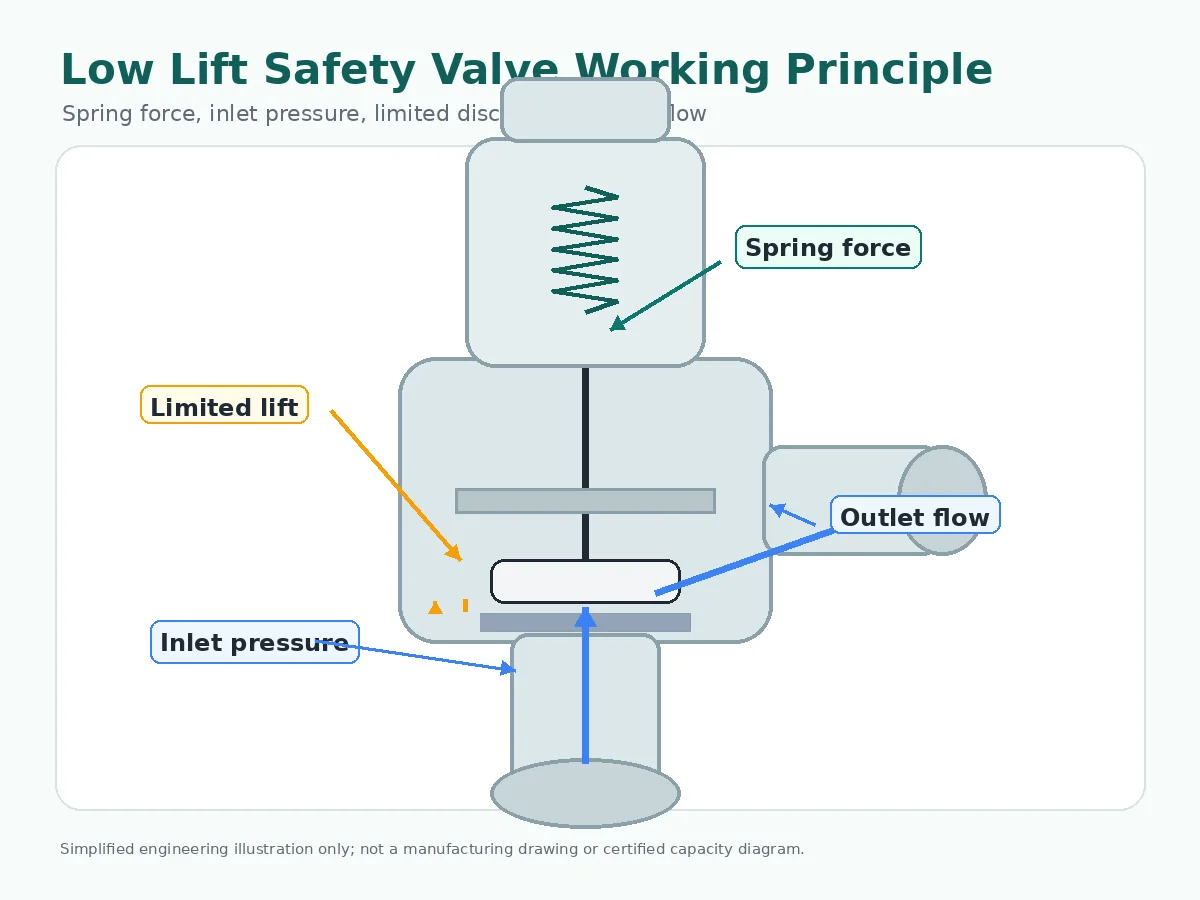
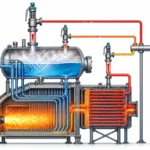
Упрощенная инженерная схема; не является производственным чертежом или сертифицированной диаграммой производительности.
Быстрый ответ: Как работает малоподъемный предохранительный клапан
Низкоподъемный предохранительный клапан работает за счет использования входного давления для преодоления усилия калиброванной пружины и подъема тарелки с седла, однако ход тарелки намеренно ограничен. Когда давление в защищаемом оборудовании достигает заданного давления срабатывания, сила, действующая на тарелку снизу, начинает превышать силу закрытия от пружины. Тарелка затем открывается только до контролируемого положения низкого подъема, позволяя среде проходить через седло, сопло и выходной патрубок.
Эта страница помогает покупателям понять принцип работы, а не завершить окончательный выбор клапана. Низкоподъемный клапан может рассматриваться в случаях, когда известна требуемая пропускная способность сброса, и выбранная модель может документально подтвердить достаточную производительность для определяющего сценария сброса. Основной риск заключается в предположении, что заданное давление, номинальный размер или тип присоединения обеспечивают необходимую производительность. Перед запросом цены подтвердите: защищаемое оборудование, сценарий сброса, среду и ее фазу, рабочее давление, максимальное допустимое рабочее давление (MAWP) или расчетное давление, заданное давление срабатывания, требуемую пропускную способность сброса, температуру сброса, противодавление, входной/выходной патрубок, материалы, применимый стандарт и необходимые документы.
Основные части, контролирующие работу низкоподъемного клапана
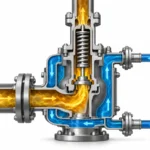
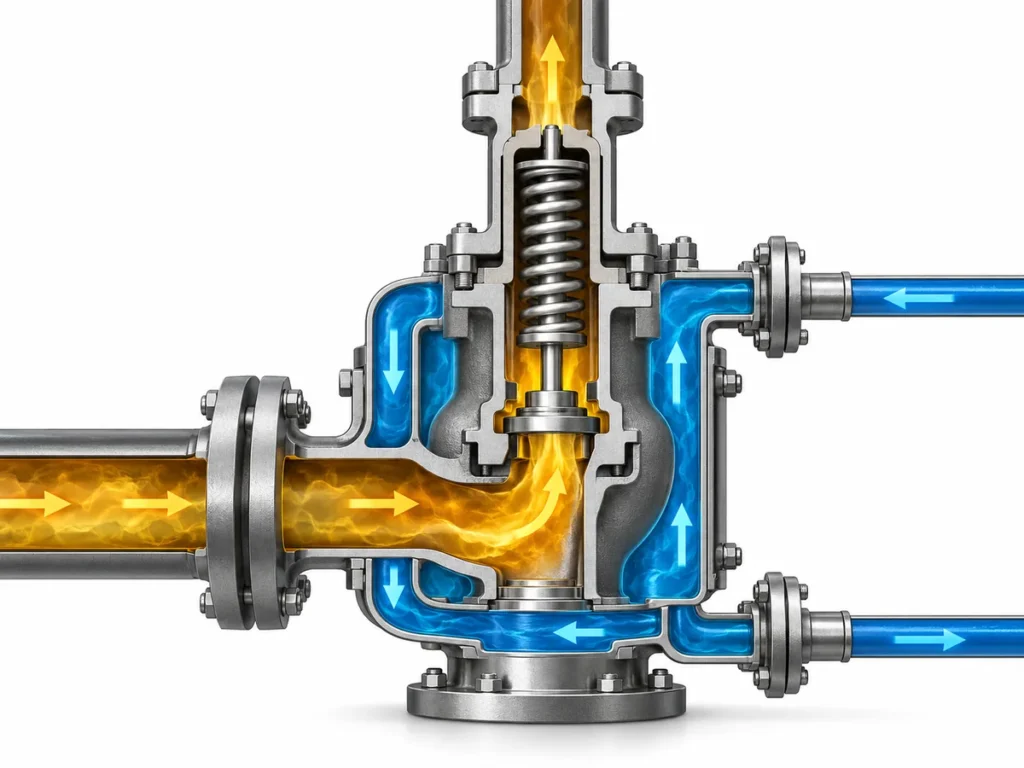
Низкоподъемный предохранительный клапан управляется группой механических частей, которые должны работать совместно. Точная конструкция зависит от выбранной модели, условий эксплуатации и спецификации проекта, но основная логика работы обычно включает в себя вход, сопло, седло, тарелку, направляющую, шток, пружину, крышку или колпак и выход.
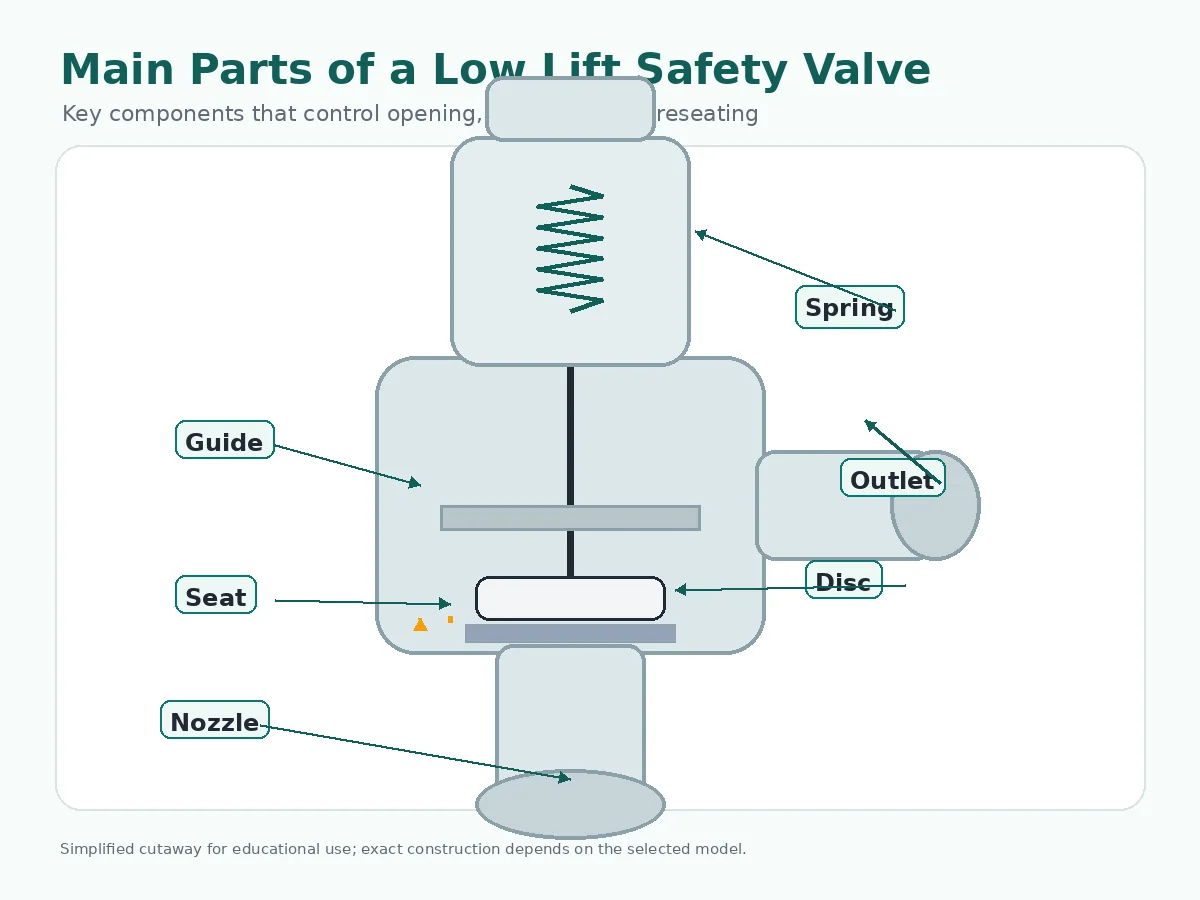
Упрощенный разрез для образовательных целей; точная конструкция зависит от выбранной модели.
Вход, сопло и седло
Вход подает давление от защищаемого оборудования на нижнюю сторону тарелки клапана. Сопло и седло образуют первое критическое сужение в потоке. Когда клапан закрыт, тарелка герметично прилегает к седлу. Когда сила давления становится достаточно высокой, тарелка поднимается, и среда начинает проходить через отверстие седла.
Тарелка, направляющая и шток
Тарелка является подвижным запорным элементом. В низкоподъемной конструкции движение тарелки ограничено, поэтому клапан открывается не так широко, как в полноподъемной конструкции. Направляющая помогает контролировать движение тарелки и штока, уменьшая нестабильные колебания.
Пружина, крышка и регулировочные компоненты
Пружина обеспечивает силу закрытия. Сжатие пружины устанавливается во время калибровки таким образом, чтобы клапан начинал открываться при заданном давлении срабатывания. Полевая регулировка не должна предполагаться разрешенной, если конструкция, правила пломбирования и процедуры проекта этого не допускают.
Инженерный момент: Клапан малой подъёмности определяется не только формой корпуса. Диаметр седла, ограничитель подъёма, диапазон настройки пружины, состояние направляющих, геометрия диска и выходной поток влияют на поведение при открытии и пропускную способность. Для объяснения соответствующего общего механизма ознакомьтесь с как работает пружинный предохранительный клапан.
Пошаговая последовательность открытия
Рабочая последовательность клапана малой подъёмности может рассматриваться как процесс баланса сил и управления движением. Установочное давление, избыточное давление, накопление, сброс и давление закрытия описывают различные части поведения в зависимости от давления и не должны использоваться взаимозаменяемо.
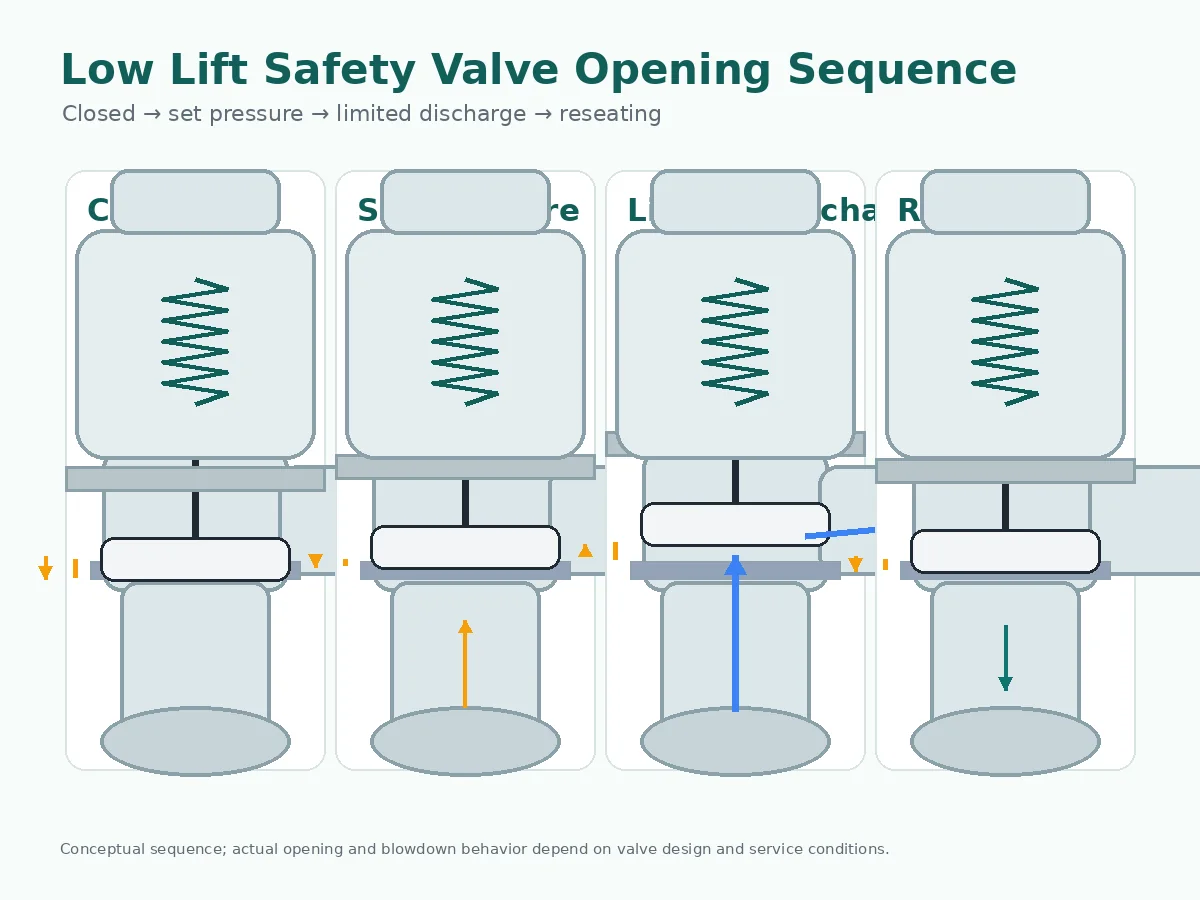
Концептуальная последовательность; фактическое поведение при открытии и сбросе зависит от конструкции клапана и условий эксплуатации.
1. Ниже установочного давления
Ниже установочного давления сила пружины превышает силу открытия, создаваемую входным давлением. Диск остается на седле, и клапан должен оставаться закрытым при нормальных условиях эксплуатации. Рабочее давление должно поддерживать достаточный запас ниже установочного давления, чтобы снизить риск утечек, шипения и нестабильности.
2. При установочном давлении
При установочном давлении сила давления под диском становится достаточной, чтобы начать подъём диска от седла. Это означает, что клапан начал открываться; это не доказывает, что клапан достиг требуемой пропускной способности для сброса.
3. При избыточном давлении
По мере роста давления выше установочного, клапан открывается дальше в пределах своего ограничения малой подъёмности и сбрасывает среду. Доступный путь сброса зависит от седла, сопла, положения диска, ограничения подъёма и конфигурации выхода.
4. Перепад давления при закрытии и посадка клапана
После снятия условия избыточного давления давление в системе падает. Клапан должен вернуться к седлу и закрыться при давлении ниже давления настройки. Плохая посадка может привести к утечкам, потерям продукта, риску выбросов и увеличению нагрузки на техническое обслуживание.
| Термин | Практическое значение | Почему это важно для малоподъемных клапанов |
|---|---|---|
| Рабочее давление | Нормальное рабочее давление в системе. | Не следует устанавливать слишком близко к давлению настройки без проверки. |
| Максимальное допустимое рабочее давление / расчетное давление | Предел давления или расчетная база защищаемого оборудования, в зависимости от терминологии проекта. | Поддерживает рассмотрение вопросов защиты от давления и принятие решений по настройке сброса. |
| Давление настройки | Давление, при котором клапан начинает открываться при заданных условиях. | Не подтверждает пропускную способность при сбросе. |
| Перенапряжение / накопление давления | Повышение давления выше давления настройки или выше предельного давления оборудования, в зависимости от применимого стандарта и базы проекта. | Должно быть рассмотрено ответственным инженером и соответствующими правилами. |
| Сброс давления / повторное закрытие | Разница давлений и поведение клапана при закрытии после сброса. | Влияет на утечки, стабильность и риск обслуживания. |
| Требуемая пропускная способность | Расход, необходимый для защиты оборудования в соответствии с заданными условиями. | Должно соответствовать данным производителя по производительности. |
Почему ограниченный подъем влияет на производительность
Низкий подъем влияет на производительность, поскольку подъем тарелки является частью доступной площади потока. В предохранительном клапане поток зависит не только от входного или выходного соединения. Жидкость должна проходить через сопло, седло и отверстие, создаваемое поднятой тарелкой. Если подъем ограничен, площадь прохода также может быть ограничена.
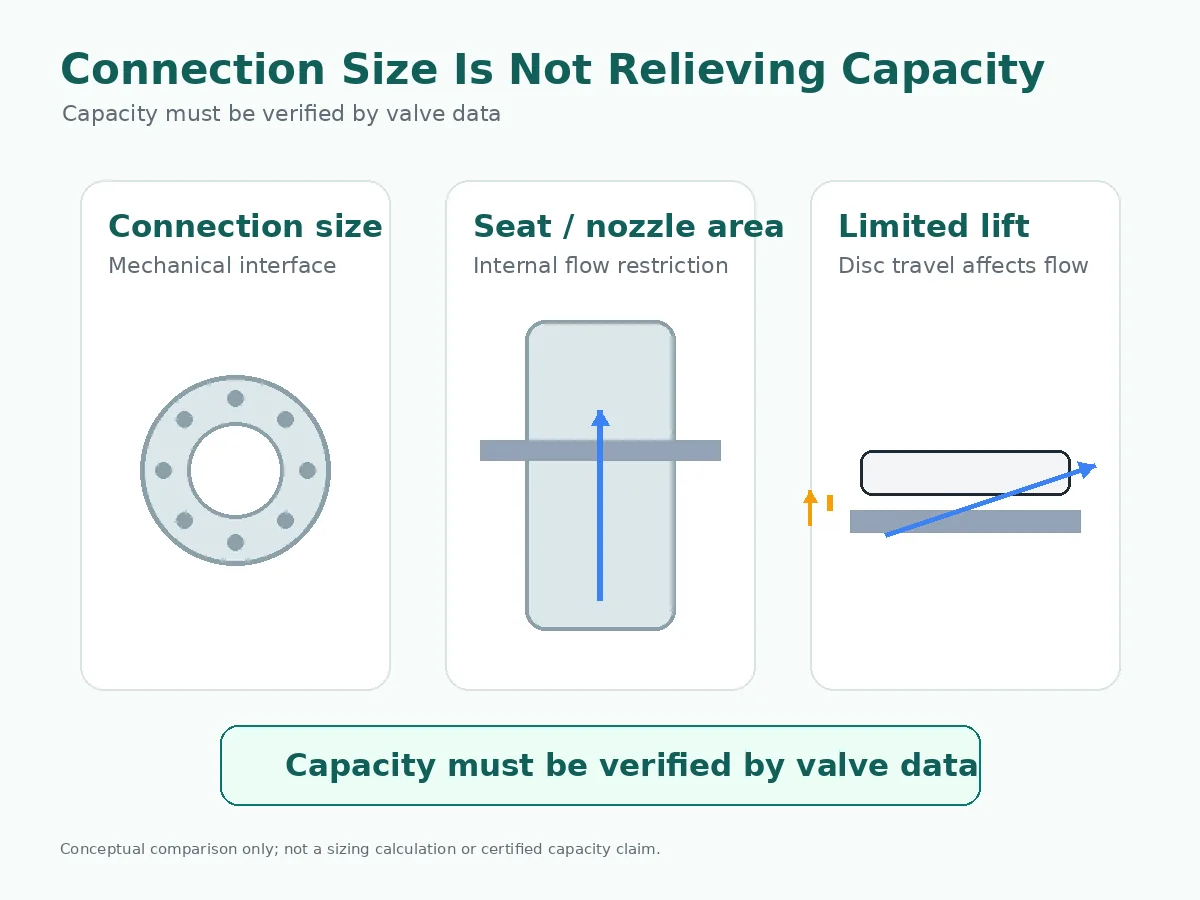
Концептуальное сравнение; не расчет размера.
Подъем является частью ограничения потока
Когда тарелка поднимается с седла, она создает отверстие для выхода жидкости. В конструкции с низким подъемом это отверстие намеренно контролируется. Клапан может быть разработан для конкретных задач сброса, где ограниченный подъем допустим, но не следует предполагать, что он обеспечивает такую же производительность, как клапан с полным подъемом того же размера соединения.
Во многих конструкциях с низким подъемом эффективный путь сброса сильно зависит от площади затвора: кольцевой площади потока, образованной вокруг седла при подъеме тарелки на ограниченное расстояние. Поскольку эта площадь сброса остается контролируемой подъемом, производительность клапана при сбросе должна проверяться по документированным данным для выбранной модели, среды и условий эксплуатации, а не выводиться только по размеру входного соединения.
Размер соединения — это не производительность
Размер соединения — это механический интерфейс. Производительность — это требование к эффективности сброса. Два клапана одного входного размера могут иметь разные внутренние площади потока, ограничения подъема, комплектации, пружины, записи о производительности и пригодность к эксплуатации. Для логики расчета производительности и проверки документированной производительности см. руководство по расчетом предохранительных клапанов и сертифицированной производительностью.
Требуемая производительность должна проверяться отдельно
Требуемая производительность сброса должна определяться по защищаемому оборудованию и сценарию сброса. Заблокированный выход, случай теплового расширения, пожарный случай, отказ регулятора или нарушение технологического процесса могут создавать различные требуемые нагрузки. Затем выбранный клапан должен быть проверен по данным производителя и применимым требованиям проекта.
| Вопрос о производительности | Что иногда предполагают покупатели | Что необходимо подтвердить |
|---|---|---|
| Соответствует ли клапан присоединению? | Одинаковые DN, NPS, размер резьбы или фланца означают эквивалентную производительность. | Соответствие присоединения является только механическим. Площадь седла/сопла, ход и основа для расчета производительности все равно должны быть проверены. |
| Открывается ли клапан при требуемом давлении настройки? | Правильное давление настройки означает, что клапан правильно подобран по размеру. | Давление настройки определяет только давление открытия. Требуемая пропускная способность для сброса должна быть подтверждена отдельно. |
| Может ли выбранный малоподъемный клапан обеспечить сброс для критического случая? | Малоподъемный клапан приемлем, если он выглядит так же, как старый клапан. | Сравните требуемую пропускную способность для сброса, давление сброса, среду, температуру и противодавление с данными производителя. |
| Применима ли документированная производительность для данного применения? | Любая каталожная производительность применима к любой среде или температуре. | Производительность, среда, фаза, давление, температура и применимый стандарт должны соответствовать проектной документации. |
Предохранительный клапан с малым подъемом против полноподъемного: что меняется в работе?
Малоподъемные и полноподъемные предохранительные клапаны отличаются в основном ходом тарелки и результирующим потоком. Это не означает, что один лучше другого. Правильный выбор зависит от требуемой производительности, условий эксплуатации, конструкции клапана, применимых норм и требований проекта.
| Элемент | Малоподъемный предохранительный клапан | Полноподъемный предохранительный клапан | Проверка покупателя |
|---|---|---|---|
| Ход тарелки | Ограниченный подъем от седла. | Больший подъем от седла. | Подтвердите фактический ход конструкции и данные модели. |
| Потоковый путь | Управляемый и потенциально меньший. | Потенциально больший. | Не следует делать выводы только по размеру присоединения. |
| Потенциальная производительность | Может быть ниже для того же номинального размера. | Часто выбирается для задач с большей производительностью. | Сравните требуемую производительность с заявленной производительностью. |
| Риск выбора | Недостаточный размер при выборе только по размеру или давлению настройки. | Неправильное применение при выборе без анализа условий эксплуатации. | Проверьте среду, давление, противодавление, установку и стандарты. |
| Риск замены | Внешний вид старого клапана может не подтверждать эквивалентную производительность. | Та же проблема применима. | Используйте данные таблички, спецификации и расчет производительности. |
Для контекста семейства продуктов ознакомьтесь с малоподъемными предохранительными клапанами. Данная статья посвящена принципу работы и подготовке запроса на коммерческое предложение (RFQ).
Предварительная матрица пригодности
Приведенная ниже таблица является предварительным инструментом отбора, а не окончательным правилом выбора. Предохранительный клапан малоподъемного типа может рассматриваться только при условии определения защищаемого оборудования, сценария сброса и требуемой производительности, а также при возможности проверки выбранного клапана по данным производителя.
Для более широкого сквозного рабочего процесса используйте руководство по выбору предохранительных клапанов перед окончательным выбором модели.
| Ситуация по проекту | Направление рассмотрения малоподъемного клапана | Инженерные границы |
|---|---|---|
| Регулируемая производительность сброса с известным требуемым расходом | Может рассматриваться | Требуемая производительность должна быть ниже или равна документированной производительности для выбранной модели и условий эксплуатации. |
| Замена существующего малоподъемного клапана с полным наименованием и техническим паспортом | Может рассматриваться | Проверить давление настройки, основу производительности, присоединение, материалы, рабочую среду, температуру и документацию. |
| Неизвестный сценарий сброса или неизвестная требуемая производительность | Не завершайте выбор | Определите доминирующий случай сброса перед выбором по размеру клапана или названию клапана. |
| Высокая требуемая производительность сброса или неопределенная двухфазная среда | Требует детального рассмотрения | Малый подъем может быть недостаточным; сравните с полным подъемом или другими конфигурациями клапанов, используя данные проекта. |
| Значительное переменное противодавление или сложный напорный коллектор | Требует анализа противодавления | Проверьте, остается ли стабильным поведение клапана с малым подъемом, или требуется другая конфигурация. |
| Коррозионностойкая, вязкая, загрязненная, полимеризующаяся среда или среда при высоких температурах | Требует анализа материалов и технического обслуживания | Материала корпуса недостаточно; проверьте седельно-клапанную пару, уплотнение, пружину, отложения и надежность эксплуатации. |
Когда не следует использовать эту страницу как шпаргалку для выбора: Не выбирайте малоподъемный клапан только на основании этой статьи, если отсутствуют данные о требуемой пропускной способности, фазовом состоянии среды, температуре сброса, противодавлении, применимом кодексе или данные об оригинальной замене. Эти недостающие входные данные должны быть подтверждены перед окончательным выбором клапана.
Когда могут рассматриваться малоподъемные предохранительные клапаны
Малоподъемный предохранительный клапан может рассматриваться в случаях, когда целесообразно контролируемое действие с ограниченным подъемом для сброса давления и подтверждена требуемая пропускная способность. Окончательное решение должно основываться на защищаемом оборудовании и сценарии сброса давления, а не только на названии клапана.
Случаи сброса давления с контролируемой пропускной способностью
Малоподъемные клапаны могут быть рассмотрены, если требуемая нагрузка сброса находится в пределах документированной пропускной способности выбранного клапана, а среда, температура, давление и схема выпуска подходят.
Обзор замены и технического обслуживания
Замена не должна основываться на визуальном сходстве. Соберите данные с заводской таблички, технического паспорта, детали соединения, давления настройки, рабочей среды, истории инспекций и записей о пропускной способности, если они доступны.
Когда малоподъемного клапана может быть недостаточно
Малоподъемный клапан может быть непригодным, если требуемая пропускная способность превышает документированную для выбранного клапана, или если среда, фазовое состояние, противодавление, потери на входе или требования документации превышают пределы выбранной модели.
Что может пойти не так при неправильном понимании принципа работы
Неправильное понимание принципа работы может привести к небезопасным или дорогостоящим ошибкам при выборе. Малоподъемный предохранительный клапан — это не просто меньший по размеру клапан, недорогой заменитель или взаимозаменяемый элемент того же размера соединения. Это устройство защиты от повышения давления, которое должно соответствовать сценарию сброса давления.
Инженерное предупреждение: Уставка давления определяет, когда клапан начинает открываться. Она не указывает, какой объем среды клапан может сбросить. Размер присоединения определяет, как клапан подключается к оборудованию или трубопроводу. Он не подтверждает внутреннюю площадь прохода или заявленную производительность.
| Распространенная ошибка | Почему это рискованно | Обязательная проверка |
|---|---|---|
| Выбор только по размеру присоединения | Одинаковое присоединение не гарантирует одинаковую площадь прохода или производительность. | Проверьте данные седла/сопла и заявленную производительность. |
| Рассмотрение давления настройки как пропускной способности | Уставка давления — это только давление открытия. | Подтвердите требуемую производительность сброса и основу для расчета производительности. |
| Замена по внешнему виду | Похожие корпуса клапанов могут иметь разную комплектацию, пружины и подъем. | Проверьте паспорт, технические данные, модель и условия эксплуатации. |
| Игнорирование противодавления | Давление на выходе может влиять на стабильность и производительность. | Проверьте наложенное и нарастающее противодавление. |
| Игнорирование потерь на входе | Чрезмерные потери на входе могут вызвать нестабильность или снижение производительности. | Проверьте входной трубопровод, перепад давления и схему установки. |
| Предполагая, что марки материала достаточно | Материал корпуса сам по себе не подтверждает пригодность седелки, пружины или уплотнения. | Подтвердите все смачиваемые и функциональные материалы. |
Противодавление, потери на входе и проверки при установке
Работа при малом подъеме может зависеть от трубопровода вокруг клапана. Клапан, который правильно откалиброван, все равно может работать плохо, если потери на входе чрезмерны, противодавление на выходе выходит за пределы выбранных проектных границ, напорный трубопровод нагружает корпус клапана или напорный путь небезопасен.
| Условие | Возможное влияние | Что подтвердить |
|---|---|---|
| Чрезмерная потеря давления на входе | Может снизить давление на входе клапана во время сброса и способствовать нестабильной работе. | Проверьте входной трубопровод, фитинги, перепад давления и требования к короткому, прямому подключению. |
| Противодавление, создаваемое потоком сброса | Может повлиять на пропускную способность и стабильность клапана во время потока сброса. | Проверьте размер, длину, изгибы напорного трубопровода, давление в коллекторе и маршрут сброса. |
| Наложенное противодавление | Может влиять на поведение при открытии до начала события сброса. | Подтвердите постоянное или переменное противодавление и может ли выбранная конструкция его выдерживать. |
| Неподдерживаемый напорный трубопровод | Может создавать нагрузку на корпус клапана и соединение сопла. | Обеспечьте поддержку выходного патрубка и учитывайте реактивные силы, где это применимо. |
| Небезопасное направление сброса | Может подвергнуть персонал или оборудование воздействию горячей, токсичной, легковоспламеняющейся или высокоскоростной струи. | Направьте струю в безопасное место в соответствии с требованиями проекта. |
Влияние установки должно быть рассмотрено в соответствии с руководство по установке предохранительного клапана. Влияние давления на выходе должно быть рассмотрено с противодавление и сильфон руководством, прежде чем предполагать, что один только тип клапана решает проблему сброса.
Подбор по среде, температуре и материалу
Низкоподъемный механизм не устраняет необходимость подтверждения совместимости материалов и условий эксплуатации. Фаза среды, температура, коррозия, отложения и требования к седлу могут изменить риск утечки, поведение пружины, интервал обслуживания и срок службы.
| Условие эксплуатации | Почему это важно | Данные для подтверждения |
|---|---|---|
| Пар или высокотемпературный пар | Температура влияет на пружину, седло, номинальное давление корпуса, сброс и безопасность сброса. | Параметры пара, температура сброса, установочное давление, требуемая паропроизводительность и применимые документы. |
| Газ или пар | Характеристики производительности, шум, реактивная сила и направление сброса могут иметь решающее значение. | Молекулярная масса или данные по газу, где это необходимо, давление срабатывания, температура и место сброса. |
| Жидкостная среда | Устойчивость при открытии, риск вибрации и гидравлические эффекты могут отличаться от эксплуатации с парами. | Плотность среды, вязкость, требуемый расход, потери на входе и схема сброса. |
| Агрессивная среда | Один лишь материал корпуса может не защищать диск, седло, пружину, уплотнения или направляющие поверхности. | Состав среды, концентрация, температура, припуск на коррозию и требования к материалам мокрых частей. |
| Вязкие, загрязненные среды или среды с риском полимеризации | Отложения могут ограничивать движение диска, влиять на герметичность и изменять потребности в техническом обслуживании. | Вязкость, наличие твердых частиц, кристаллизация, риск полимеризации, метод очистки и интервал технического обслуживания. |
Данные для подтверждения перед выбором или заменой малоподъемного клапана
Малоподъемный предохранительный клапан может быть правильно оценен только при наличии четких данных по эксплуатации и сбросу. Запрос на коммерческое предложение (RFQ) не должен ограничиваться размером, давлением и количеством. Он должен описывать защищаемую систему и требуемую производительность сброса.
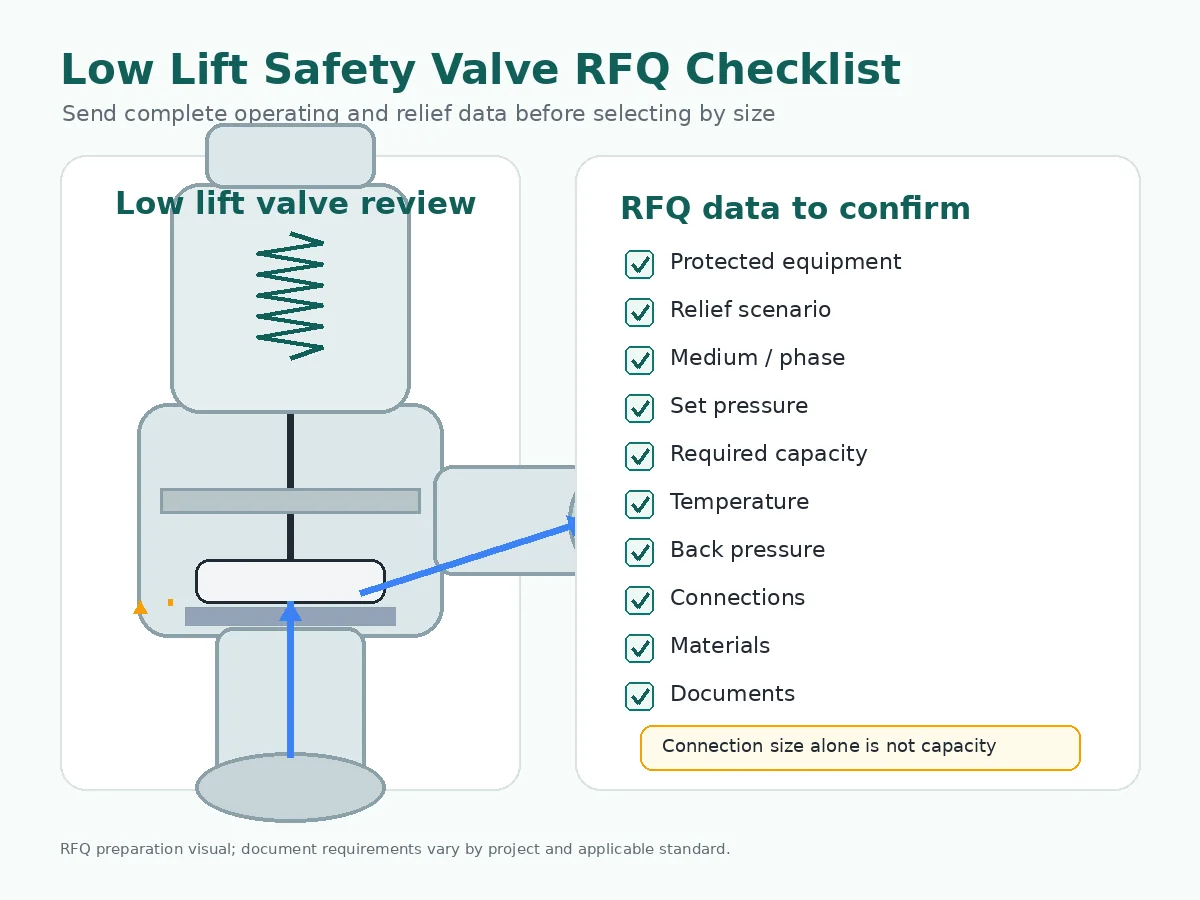
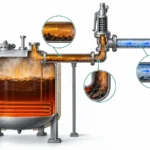
Визуализация подготовки RFQ; требования к документации варьируются в зависимости от проекта и применимого стандарта.
Чек-лист данных для запроса коммерческого предложения
| Позиция запроса коммерческого предложения | Что предоставить | Почему это важно |
|---|---|---|
| Защищаемое оборудование | Котлы, сосуды, резервуары, трубопроводы, компрессоры, установки (скиды) или другое оборудование. | Определяет режим защиты. |
| Сценарий сброса давления | Заблокированный выход, тепловое расширение, пожарный случай, отказ регулятора, нарушение технологического процесса или другой случай. | Определяет требуемую нагрузку сброса. |
| Среда и фаза | Пар, газ, пар, жидкость, двухфазный поток, коррозионно-активная среда, вязкая среда или другое применение. | Влияет на расчет размера, материалы, герметичность и устойчивость. |
| Рабочее давление / Максимальное рабочее давление / давление настройки | Нормальное системное давление, базовое давление оборудования и требуемое давление открытия клапана. | Предотвращает ошибки в терминологии давления. |
| Требуемая пропускная способность | Скорость потока и основа для расчета производительности. | Должно соответствовать данным производителя по производительности. |
| Температура сброса | Температура во время события сброса давления. | Влияет на материал, пружину, седло и номинальные характеристики. |
| Противодавление | Наложенное и нарастающее противодавление, если известно. | Влияет на тип клапана и стабильность сброса. |
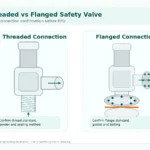
| Типы присоединений и материалы | Требования к размеру, классу давления, стандарту, типу присоединения/резьбы, корпусу, комплектации, седлу, уплотнению и пружине. | Подтверждает механическую совместимость и пригодность для эксплуатации. |
| Применимый стандарт и документы | Спецификация API, ASME, ISO, EN, GB или проекта, где применимо; технический паспорт, отчет об испытаниях, запись о материалах и основа для расчета производительности. | Поддерживает процесс закупки и проверку качества. |
Процесс проверки замены
| Шаг | Что проверить | Не предполагайте |
|---|---|---|
| 1. Определите старый клапан | Паспортная табличка, фотографии, модель, давление срабатывания, размер, класс давления и стандарт присоединения. | Не предполагайте, что аналогичная форма корпуса означает эквивалентную производительность. |
| 2. Подтвердите исходные условия эксплуатации | Защищаемое оборудование, сценарий сброса давления, среда, температура и требуемая основа для расчета производительности. | Не предполагайте, что исходная установка была правильно рассчитана. |
| 3. Проанализируйте историю эксплуатации | Утечки, вибрация, коррозия, отложения, неудачи при испытаниях или повторное техническое обслуживание. | Не повторяйте старую проблему, копируя только типоразмер. |
| 4. Сравните данные выбранных клапанов | Давление срабатывания, документированная производительность, материалы, седло, пружина, присоединение и документация. | Не считайте наименование в каталоге или тип клапана окончательным доказательством. |
| 5. Подтвердите приемку проекта | Применимый стандарт, объем инспекции, документация и местные нормативные требования. | Не размещайте заказ до тех пор, пока требования к документации не будут четко определены. |
Если в спецификации проекта требуются методы расчета по API, запрос (RFQ) должен быть рассмотрен в соответствии с применимым стандартом и данными производителя. Руководство ZOBAI может помочь в переводе вопросов по расчету и выбору в входные данные для запроса (RFQ) без замены формальной проверки расчета. Расчет предохранительных клапанов по API 520 Руководство ZOBAI может помочь в переводе вопросов по расчету и выбору в входные данные для запроса (RFQ) без замены формальной проверки расчета.
Матрица испытаний, инспекций и документации
Для закупки и замены объем документации должен быть согласован до размещения заказа. Точный пакет зависит от выбранной модели, спецификации проекта, применимого стандарта и требований к инспекции.
| Документ / Проверка | Что поддерживается | Важная граница |
|---|---|---|
| Технический паспорт клапана | Подтверждает выбранный размер, тип присоединения, давление настройки, материалы и условия эксплуатации. | Должно соответствовать фактическим условиям проекта, а не только общим данным из каталога. |
| Протокол калибровки давления настройки | Показывает проверку давления настройки выбранного клапана. | Калибровка не подтверждает требуемую пропускную способность. |
| Запись испытания на герметичность седла | Поддерживает проверку соответствия клапана требованиям по утечкам, где это необходимо. | Метод испытаний и критерии приемки должны соответствовать требованиям проекта. |
| Запись испытания корпуса клапана на прочность | Поддерживает проверку деталей, удерживающих давление. | Не заменяет проверку пропускной способности или совместимости с условиями эксплуатации. |
| Материалы | Поддерживает прослеживаемость материалов корпуса, плунжера или других требуемых деталей. | Марка материала сама по себе не доказывает пригодность для эксплуатации. |
| Основа расчета производительности | Поддерживает сравнение требуемой нагрузки сброса и характеристик выбранного клапана. | Должно применяться к выбранной модели, среде и на основе проекта. |
| Контроль выпуска / объем свидетельствования | Поддерживает обеспечение качества и приемку проекта. | Должно быть согласовано до производства или окончательной инспекции, где применимо. |
Для контекста приемки по герметичности ознакомьтесь с Испытание на герметичность седел API 527 руководством перед указанием документации по герметичности седла в запросе предложения (RFQ).
Примечания по стандартам и выбору
Эта статья предоставляет только инженерное объяснение и руководство по подготовке запроса предложения (RFQ). Она не воспроизводит текст стандарта и не удостоверяет, что какая-либо конкретная модель клапана соответствует определенному кодексу или юрисдикции. Применимые требования API, ASME, ISO, EN, GB или проекта должны быть подтверждены в отношении выбранной модели, документации производителя, спецификации проекта и местных регулирующих органов, где это применимо.
Окончательный выбор зависит от реального защищаемого оборудования, управляющего сценария сброса, среды и фазы, рабочего давления, максимального рабочего давления (MAWP) или расчетного давления, давления настройки, требуемой производительности сброса, температуры сброса, противодавления, входного и выходного трубопроводов, требований к материалам, выбранной модели, данных производителя, применимой версии стандарта и спецификации проекта.
Технические ссылки
Следующие официальные источники предоставляются только для ознакомления со стандартами. Они не доказывают соответствие какой-либо конкретной модели клапана ZOBAI и не заменяют технический паспорт выбранной модели, основу расчета производительности, спецификацию проекта или обзор местных нормативных требований.
API 520 Часть I: Официальный стандарт API для процедур расчета размеров и выбора устройств сброса давления. Перейти на официальную страницу API.
Нормы и стандарты ASME: Официальный источник стандартов ASME для ориентации по кодам и стандартам. Перейти на официальную страницу ASME.
Часто задаваемые вопросы
Является ли малоподъемный предохранительный клапан тем же, что и пружинный предохранительный клапан?
Не совсем так. Малоподъемный предохранительный клапан может быть пружинным, но “малоподъемный” описывает ограниченный ход тарелки и характер открытия. “Пружинный” описывает, как генерируется сила закрытия. Эти два термина относятся к разным аспектам конструкции клапана.
Имеет ли малоподъемный предохранительный клапан меньшую пропускную способность, чем полноподъемный клапан?
Конструкция с малым подъемом часто имеет меньшее доступное отверстие, чем конструкция с полным подъемом, поэтому производительность может быть ниже при том же номинальном размере присоединения. Однако правильный ответ зависит от выбранной модели и данных производителя о производительности. Не следует предполагать производительность только по названию клапана.
Могу ли я выбрать малоподъемный предохранительный клапан по размеру присоединения?
Размер присоединения по номеру подтверждает только механический интерфейс. Он не подтверждает площадь седла, ход, коэффициент расхода или задокументированную пропускную способность. Требуемая пропускная способность должна проверяться отдельно.
Какие данные о давлении необходимы перед отправкой запроса на коммерческое предложение?
Укажите рабочее давление, максимальное допустимое рабочее давление (MAWP) или расчетное давление, давление срабатывания, допустимое избыточное давление или основу накопления (где применимо), а также требуемую пропускную способность. Эти термины не следует смешивать.
Можно ли использовать малоподъемный предохранительный клапан для паровой среды?
Он может быть рассмотрен только в том случае, если выбранная конструкция клапана, материалы, давление настройки, паропроизводительность, температура, поведение при сбросе давления, требования к установке и документации соответствуют проекту. Паровая среда не должна предполагаться только по типу клапана.
Что следует проверить при замене старого малоподъемного предохранительного клапана?
Проверьте существующую табличку, паспорт, давление настройки, основу производительности, среду, температуру сброса, стандарт присоединения, материал, противодавление, условия установки и историю испытаний. Внешне похожий клапан может не являться эквивалентной заменой.
Нужно рассмотреть клапан с низким подъемом для запроса на коммерческое предложение (RFQ) или замены?
Отправьте информацию о защищаемом оборудовании, сценарии сброса, среде и фазе, рабочем давлении, максимальном допустимом рабочем давлении (MAWP) или расчетном давлении, давлении настройки, требуемой пропускной способности, температуре сброса, противодавлении, входном и выходном присоединении, требованиях к материалам, применимом стандарте и документах. Для замены приложите данные существующей таблички, фотографии клапана, технический паспорт, историю эксплуатации и причину замены.