Safety Valve Connection Selection Guide Threaded or Flanged Safety Valve? Confirm the Connection Before RFQ A threaded safety valve uses a threaded connection on the inlet, outlet or both sides. A flanged safety valve uses a bolted flange connection with a gasket, flange facing and bolting arrangement. The choice is not only a matter of …

安全阀连接方式选型指南
螺纹还是法兰安全阀?询价前先确认连接方式
螺纹安全阀的进口、出口或两侧采用螺纹连接。法兰安全阀采用带垫片、法兰密封面和螺栓配置的螺栓法兰连接。选择不仅取决于尺寸或外观。买方必须确认阀门能否实际连接、正确密封、适应安装空间、匹配压力温度条件并满足项目规格要求。
本指南帮助工程师、采购团队和维护人员在向 ZOBAI 询价前比较螺纹和法兰连接要求。应结合被保护设备实际情况、泄放工况、介质、工作压力、MAWP 或设计压力、整定压力、所需泄放量、泄放温度、材质、安装空间和文件要求使用。
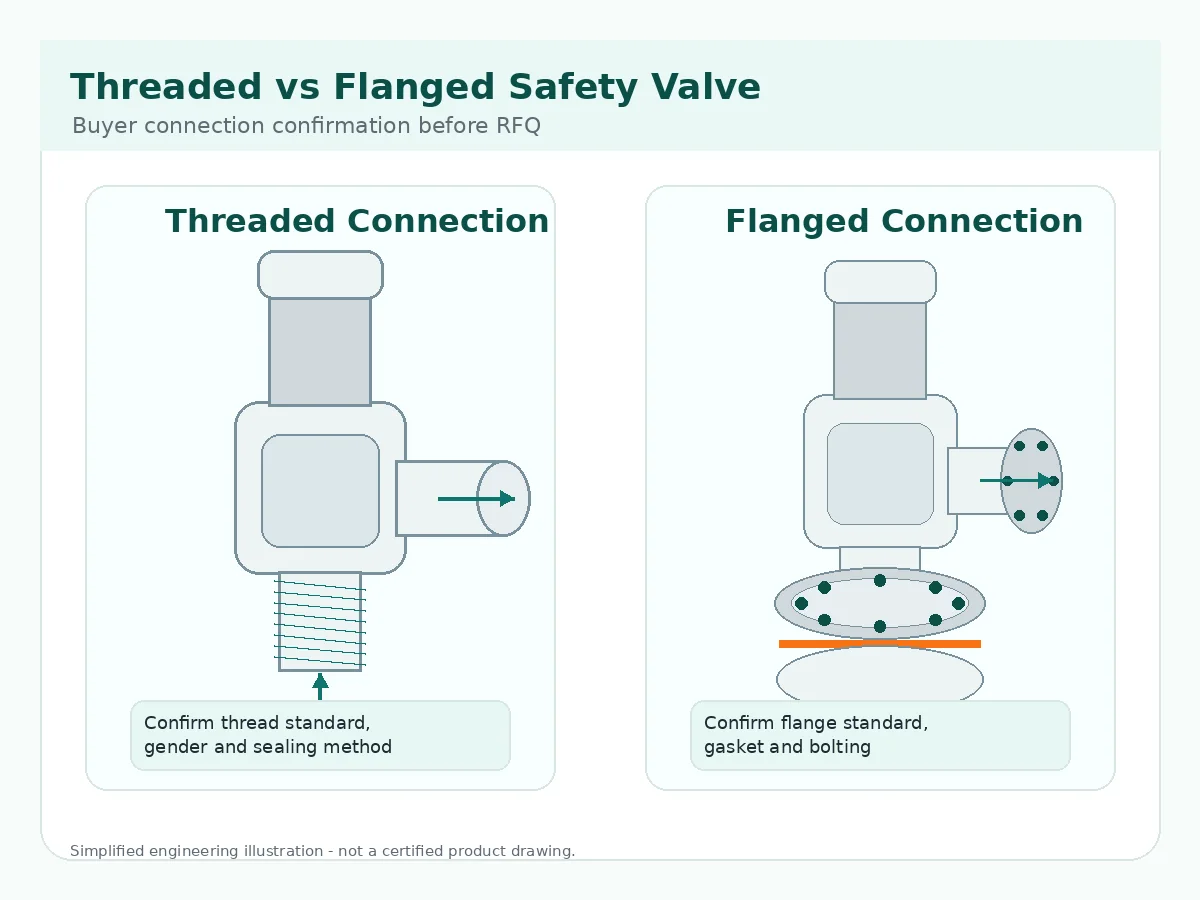
快速解答:螺纹与法兰安全阀
当设备或管道接口为螺纹连接,且工况条件、安装空间和项目要求允许时,可考虑选用螺纹安全阀。当现场管道采用法兰连接、项目规范要求法兰标准,或买方需要螺栓装配、垫片控制及更清晰的维护通道时,可能需要选用法兰安全阀。
仅凭连接型式不足以构成完整的安全阀选型规格。买方仍需确认被保护设备、泄放工况、介质及相态、工作压力、MAWP 或设计压力、整定压力、所需泄放量、泄放温度、材质、进口和出口布置、进口压力损失风险、出口管道、背压(如适用)以及所需文件。
Why Buyers Cannot Select by Connection Type Name Alone
A common RFQ problem is that buyers describe only the connection style. They may write “threaded safety valve” or “flanged safety valve” without providing the actual connection standard, rating, sealing method or installation layout. This creates quotation uncertainty and can lead to wrong parts, repeated clarification, installation delay or leakage during pressure test.
A safety valve connection must be treated as part of the complete pressure protection system. The connection must fit the equipment or piping, but the valve must also meet the required safety duty. A valve that fits mechanically may still be wrong if the set pressure, required capacity, medium, temperature or material is incorrect.
Connection Name Does Not Define the Standard
“Threaded” does not tell the supplier whether the connection uses a specific thread standard, size, gender or sealing method. “Flanged” does not tell the supplier whether the flange follows ASME, EN, DIN, JIS or another project standard. It also does not confirm pressure class, PN rating, facing type, bolt pattern, gasket or bolting requirements.
Connection Size Does Not Prove Relieving Capacity
Connection size is not the same as required relieving capacity. A safety valve with a larger connection does not automatically provide the correct capacity, and a valve with the same nominal inlet size does not automatically have the same flow performance. Capacity selection depends on the relief scenario, fluid properties, relieving pressure, relieving temperature, selected valve design and manufacturer data.
Installation Space and Maintenance Access Can Change the Decision
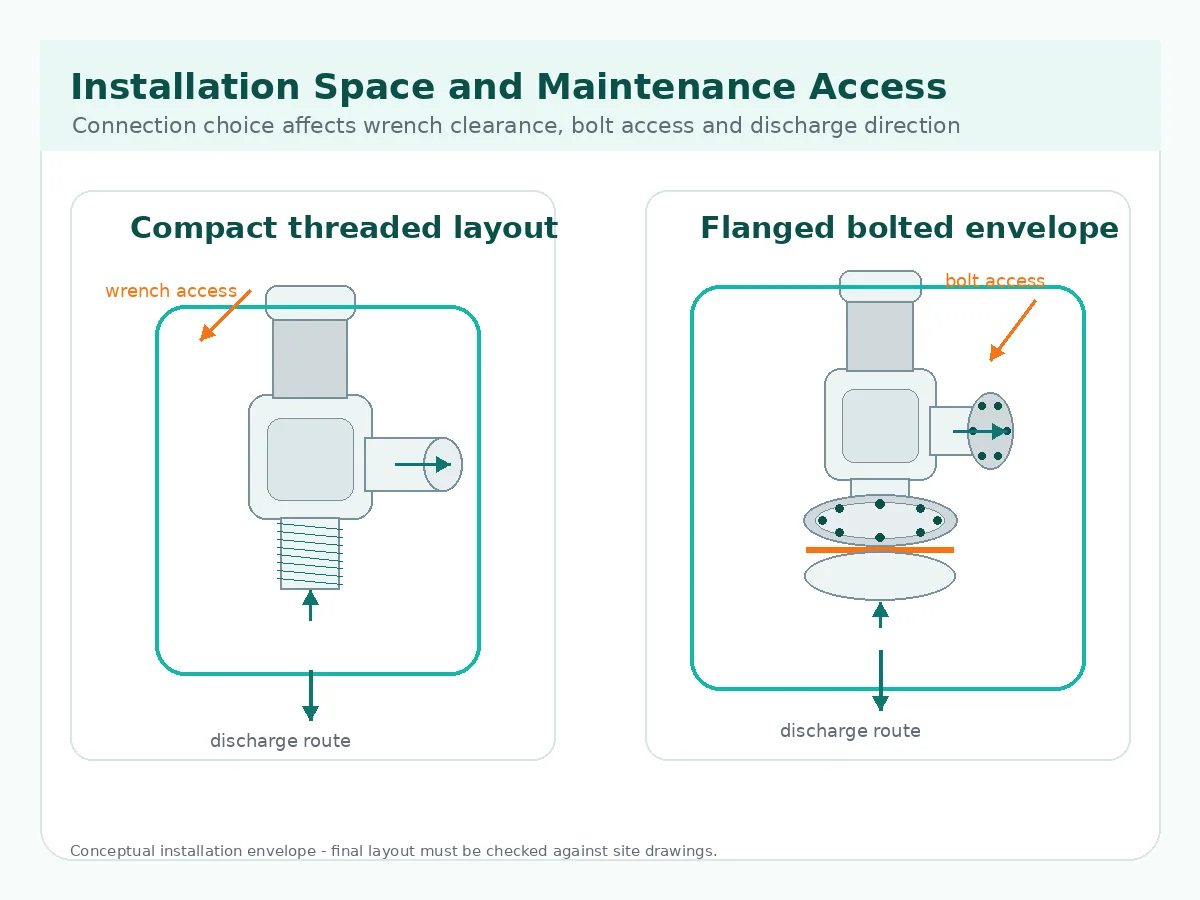
A threaded connection may appear compact, but it still needs wrench access, thread engagement space, outlet orientation and safe discharge routing. A flanged connection may require a larger installation envelope, but it can provide clear bolting, gasket replacement and disassembly access. For broader site-fit issues, see ZOBAI’s 安全阀选型指南.
Preliminary Connection Decision Matrix
The matrix below is a buyer-side screening tool. It does not replace project engineering review. It helps identify which connection direction may be more practical before the RFQ is finalized.
| Buyer Condition | Threaded Safety Valve May Be Considered When | Flanged Safety Valve May Be Considered When | Data Still Required Before Selection |
|---|---|---|---|
| Existing site connection | The protected equipment or piping has a confirmed threaded port. | The piping specification uses mating flanges. | Photos, drawings, connection standard, inlet/outlet details. |
| 安装空间 | Compact space is available but wrench access and thread engagement are still possible. | Enough envelope exists for flange diameter, bolts, nuts, gasket and maintenance tools. | Installation layout, surrounding equipment, discharge direction. |
| Maintenance approach | Replacement is infrequent and thread damage risk can be managed. | Bolted removal, gasket replacement or easier disassembly is preferred. | Maintenance access, lifting/support plan, spare gasket/bolting requirements. |
| Connection sealing | The thread standard and sealing method are confirmed and suitable for the medium. | The gasket, facing and bolting method are defined by the project. | Seal material, gasket material, temperature, medium compatibility. |
| Project documentation | The project accepts the threaded connection and its inspection scope. | The project requires a defined flange standard, rating/class and document package. | Applicable standard, test records, material certificates, inspection scope. |
选型边界: This matrix only supports preliminary RFQ direction. Final valve selection still depends on the actual protected equipment, relief scenario, medium, operating pressure, MAWP/design pressure, set pressure, required relieving capacity, relieving temperature, materials, manufacturer data, applicable standard version, project specification and local regulatory requirements.
什么是螺纹安全阀?
A threaded safety valve is a safety valve supplied with threaded inlet, threaded outlet or threaded inlet and outlet connections. It is selected when the protected equipment, piping or skid connection requires a threaded interface. The key buyer issue is not only whether the valve is threaded, but which thread standard, size, gender and sealing method are required.
Thread Standard, Size and Male / Female Connection
A complete threaded safety valve RFQ should specify the thread standard, nominal thread size and male or female connection. The inlet and outlet should be confirmed separately. The inlet connection is especially important because it connects the valve to the protected equipment or pressure source.
Thread Sealant, Tape, Gasket or O-Ring?
Threaded connections may seal in different ways depending on the thread type and design. Some threaded connections may use a project-approved thread sealant or tape. Others may require a gasket, O-ring, washer, bonded seal or sealing face. The sealing material must be compatible with the medium, pressure, temperature and project specification.
When Threaded Safety Valves Need Extra Verification
Extra verification is needed when the existing valve has no clear datasheet, the field connection is old or modified, the valve is installed with adapters, the thread standard is not shown on the nameplate, or the project requires specific documents or inspection records.
什么是法兰安全阀?
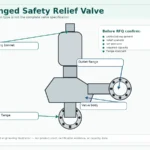
A flanged safety valve is a safety valve supplied with flanged inlet, flanged outlet or flanged inlet and outlet connections. The valve connects to the piping system through a bolted flange joint, typically involving a mating flange, gasket, bolting and a defined flange facing.
Flange Standard, Size and Pressure Class
A flanged safety valve RFQ should specify the flange standard, nominal size, pressure class or PN rating and mating flange requirement. A buyer should not only say “DN50 flanged valve” or “2 inch flange.” The supplier needs to know the standard and rating basis used by the project. For flanged pressure-relief valve RFQ context, see ZOBAI’s API 526 法兰安全阀 指南。
Gasket, Facing and Bolting Are Part of the Connection
A flanged connection is a sealing system, not only a metal flange. The gasket type, gasket material, flange facing and bolting requirements affect whether the joint can seal correctly. The buyer should confirm whether the project requires raised face, flat face, ring-type joint or another facing type, depending on the piping specification and service condition.
Why Flanged Safety Valves Usually Need More Space
法兰安全阀通常比螺纹安全阀需要更大的安装空间,因为必须考虑法兰直径、螺栓、螺母、垫片对中以及工具操作空间。维护团队还需要空间来拆卸螺栓、更换垫片,并安全地起吊或支撑阀门。.
螺纹安全阀与法兰安全阀对比表
下表为采购方对比参考,并非最终选型规则,用于明确在 ZOBAI 审核询价单(RFQ)前必须确认的信息。.
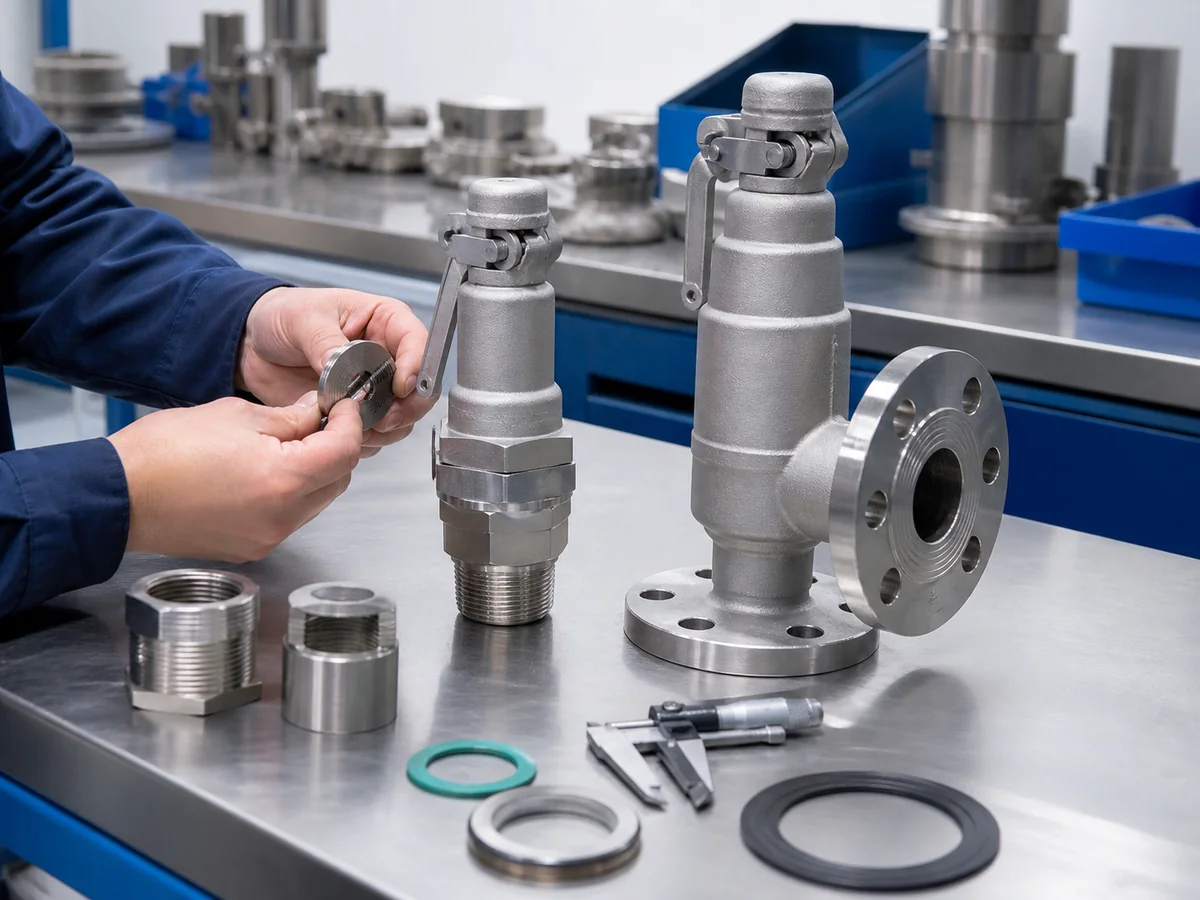
| 对比项目 | 螺纹安全阀 | 法兰安全阀 | 采购方须确认 | 缺失风险 |
|---|---|---|---|---|
| 连接方式 | 螺纹进口、出口或两端均为螺纹 | 法兰进口、出口或两端均为法兰 | 现场是否需要螺纹或法兰连接 | 物理接口不匹配 |
| 连接细节 | 螺纹标准、尺寸、外螺纹/内螺纹、进口/出口 | 法兰标准、尺寸、Class/PN、密封面、螺栓孔布置 | 完整连接规格 | 不匹配、泄漏或反复澄清 |
| 密封方式 | 根据设计选用螺纹密封剂、生料带、垫片、O 形圈或项目指定方法 | 垫片、密封面与螺栓布置 | 密封方式与材料相容性 | 安装或压力试验期间泄漏 |
| 安装空间 | 通常结构紧凑,但需扳手操作空间和螺纹啮合 | 外形尺寸较大,需螺栓操作空间和法兰对中 | 安装空间、方位与操作空间 | 无法安全安装或维护 |
| 替换风险 | 螺纹或性别错误会导致无法安装 | 法兰标准、压力等级、密封面或螺栓孔布置错误会导致无法装配 | 铭牌、图纸、照片和旧采购记录 | 更换阀选型错误 |
| 压力-温度额定值 | 必须核对阀门设计、材质和工况 | 必须核对法兰等级、材质和工况 | 工作压力、温度、阀体材质、等级依据 | 压力-温度选型不当 |
| 排量与安全职责 | 连接尺寸不能证明排量 | 法兰尺寸不能证明排量 | 所需泄放量及依据 | 阀门可能安装合适但无法保护设备 |
常见连接错误及后果
大多数与连接相关的询价错误,源于将可见的连接特征当作完整的阀门规格。下表列出常见错误及采购方应确认的内容。.
| 常见错误 | 可能后果 | 采购方正确确认内容 | ZOBAI 审核触发条件 |
|---|---|---|---|
| 仅要求“螺纹安全阀” | 螺纹标准错误、公母接头错误或密封方式错误 | 螺纹标准、尺寸、公母接头、进口/出口及密封方式 | 螺纹未知或更换时无数据表 |
| 仅要求“法兰安全阀” | 法兰标准、压力等级、密封面或螺栓孔布置错误 | 法兰标准、尺寸、Class/PN、密封面、垫片与螺栓连接 | 配对法兰不明或项目管道规格要求严格 |
| 以连接尺寸作为排量依据 | 阀门可能安装得上,但无法满足所需泄放工况 | 所需泄放量及排量基准 | 排量数据缺失或泄放工况未定义 |
| 忽视安装空间限制 | 阀门无法安全紧固、螺栓连接、拆卸或排放 | 布置图、照片、检修空间与排放路径 | 撬装、紧凑式装置或空间受限的更换场景 |
| 误以为连接标准即可证明认证 | 文件资料可能不满足项目审批要求 | 适用阀门标准、检验范围及文件清单 | 项目要求证书、试验报告或见证检验 |
连接数据与安全阀选型数据
螺纹连接与法兰连接属于连接方式的选择,而安全阀选型则属于压力保护决策。采购方应将询价文件分为三组:连接数据、工况数据和文件数据。.
连接数据确认安装配合与密封
连接数据用于确认阀门能否实际安装并实现密封。对于螺纹连接阀门,包括螺纹标准、螺纹尺寸、外螺纹或内螺纹连接、进出口布置及密封方式。对于法兰连接阀门,包括法兰标准、尺寸、Class 或 PN 等级、密封面、螺栓孔布置、垫片及螺栓连接。.
工况数据确认压力保护职责
工况数据用于确认阀门能否保护设备。包括被保护设备、泄放工况、介质及相态、工作压力、MAWP 或设计压力、整定压力、所需泄放量、泄放温度、进口压力损失风险、出口管道及背压(如适用),以及材料要求。.
文件数据确认项目审批要求
文件数据用于确认采购方在项目审批、检验及记录归档方面的需求。可能包括材质证明、整定压力校验记录、压力试验报告、密封性试验报告、检验放行文件及合规声明(如适用)。.
螺纹连接确认:螺纹、内外螺纹及密封方式
螺纹安全阀询价需要精确的连接细节。仅凭“螺纹”一词无法确认连接方式。.
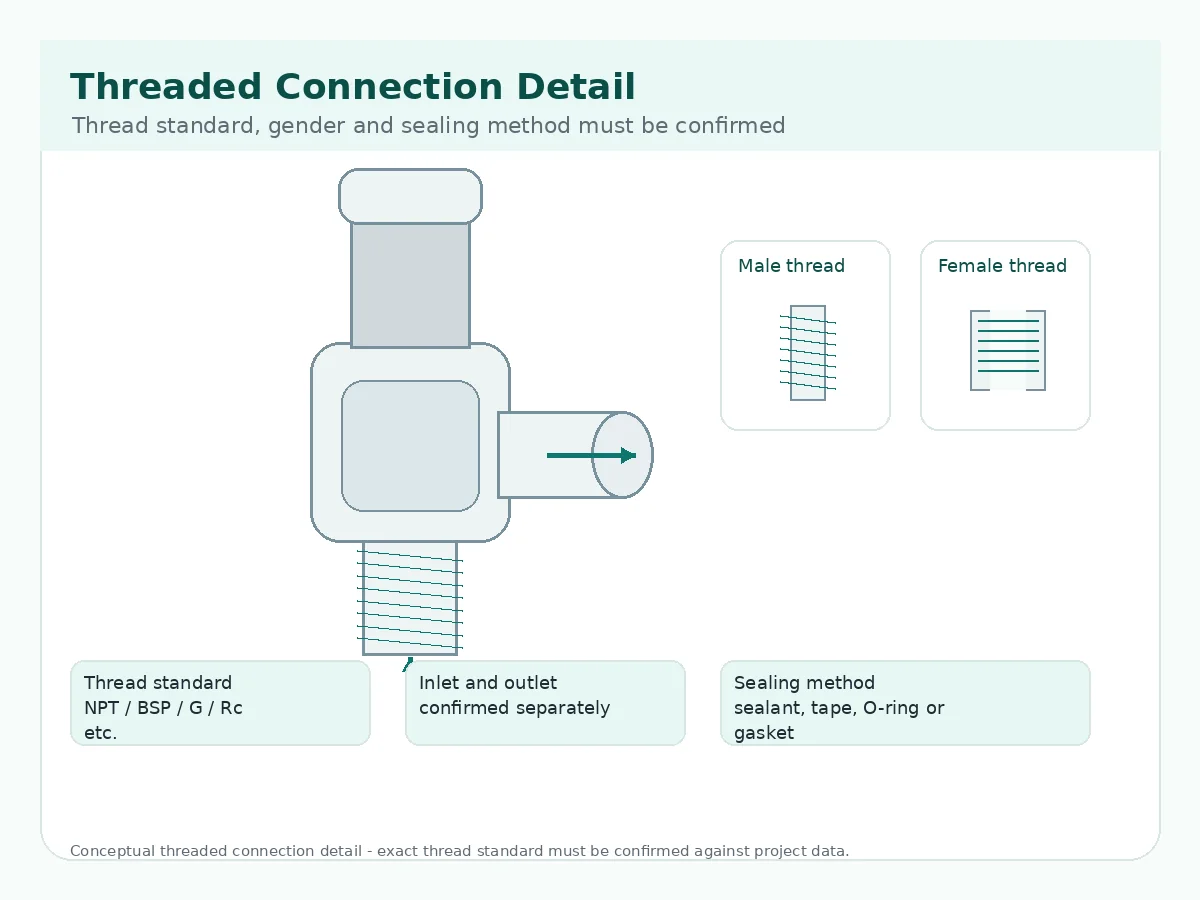
Male Thread vs Female Thread
Male thread and female thread are not interchangeable. The buyer must specify whether the inlet and outlet are male or female. For replacement, photos should show both the valve connection and the mating equipment or pipe connection.
Inlet Thread vs Outlet Thread
The inlet and outlet may have different connection requirements. The inlet is part of the pressure-containing path from the protected equipment. The outlet may connect to discharge piping, venting, a muffler, a safe discharge location or an open discharge arrangement depending on the application.
Sealant Cannot Compensate for the Wrong Connection
Using additional sealant, tape or force is not a safe solution for the wrong thread. If the thread standard or gender is wrong, the connection should be corrected. For site layout and piping context, see ZOBAI’s 安全阀安装指南.
Flanged Connection Confirmation: Standard, Gasket and Bolting
Flanged safety valve RFQs require complete flange information. A flanged connection can fail to match even when the nominal size appears correct.
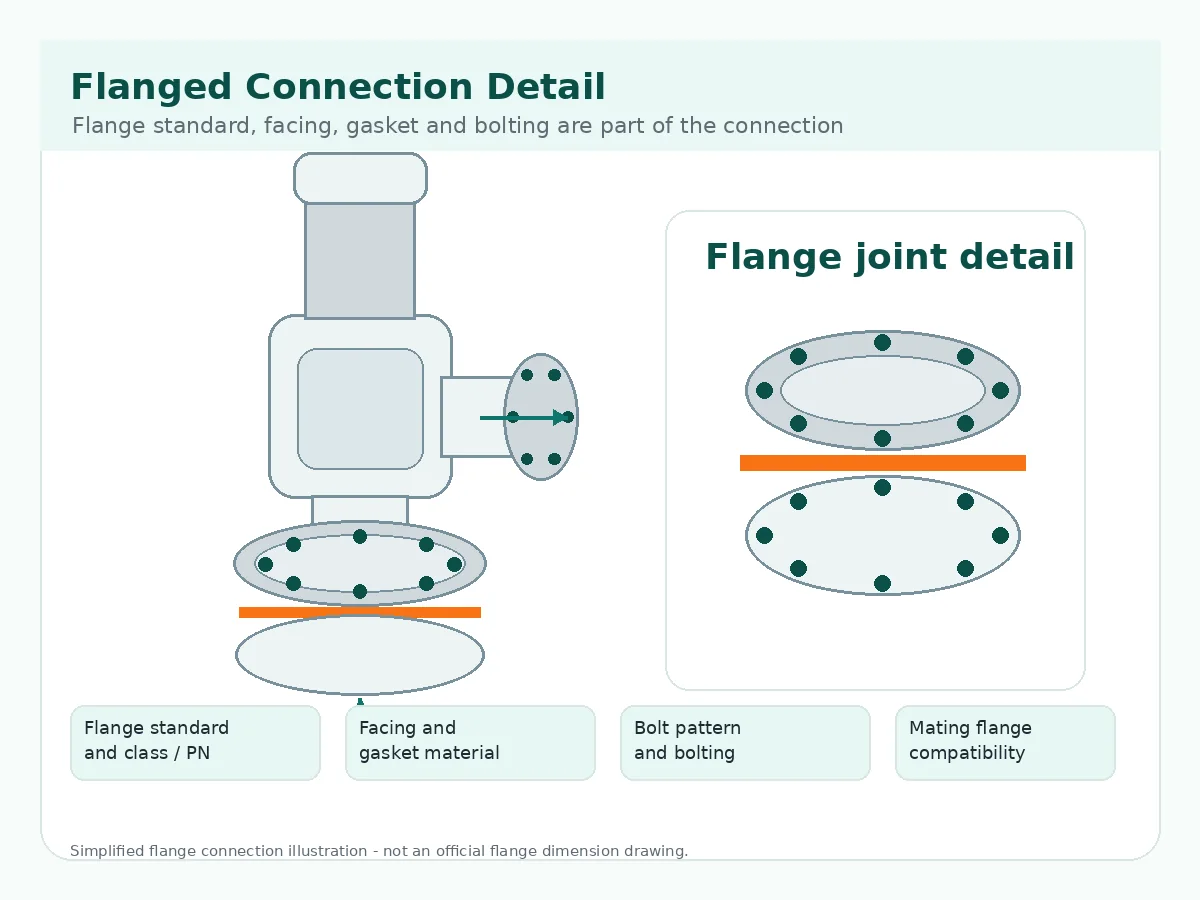
Flange Standard and Pressure Class
The RFQ should identify the flange standard and pressure class or PN rating. The mating flange and valve flange must be compatible. If the flange standard is unknown, the buyer should send the piping specification, equipment drawing or clear photos of the existing valve and flange.
Facing, Gasket and Bolt Pattern
The flange facing, gasket type and bolt pattern must match the mating connection. A mismatch can prevent assembly or cause leakage. Gasket selection also depends on medium, temperature, pressure and project specification. For flange dimension context, see ASME B16.5 法兰尺寸.
Why “DN50 Flange” Is Not Enough
“DN50 flange” or “2 inch flange” only identifies a nominal size. It does not identify the flange standard, rating/class, facing, bolt pattern, gasket type or bolting requirement. It also does not prove the valve capacity.
Installation Space, Maintenance Access and Replacement Risk
Connection type affects installation and maintenance. A buyer should review site layout before deciding whether a threaded or flanged safety valve is appropriate.
Compact Does Not Always Mean Easier
Threaded valves may be compact, but they still need space for wrench access, correct thread engagement, sealant application if required and safe orientation. A compact connection can still be difficult if the valve is close to a wall, skid frame, instrument tubing or discharge piping.
Bolt Access and Gasket Replacement
Flanged connections need enough clearance for bolts, nuts, tools and gasket replacement. If the valve is close to another component, it may be difficult to align the flange, insert bolts or remove the valve during maintenance.
Outlet Piping, Support and Back Pressure Review
If the outlet is piped, manifolded, routed to a header or connected to a long discharge line, the outlet arrangement may require additional review. Heavy outlet piping should not be left unsupported by the valve body. Discharge direction, drainage, reaction force, safe venting and superimposed or built-up back pressure can affect the valve configuration and installation requirements. If outlet piping is connected to a header or manifold, back pressure review may be required before final valve configuration.
Existing Valve Photos Reduce RFQ Risk
For replacement, buyers should send photos of the full valve body, nameplate, inlet connection, outlet connection, mating pipe or equipment connection, surrounding installation space, discharge piping, adapters, reducers and supports if present.
Pressure, Temperature, Medium and Material Still Control Final Selection
The final choice between threaded and flanged safety valves cannot be made by connection type alone. The valve must match the pressure relief duty and service environment.
Set Pressure Is Not the Same as Connection Rating
Set pressure is the pressure at which the safety valve is adjusted to open. Flange class, PN rating or thread connection rating does not automatically define set pressure. Buyers should provide operating pressure, MAWP or design pressure and required set pressure separately.
Required Relieving Capacity Is Not Proven by Connection Size
Required relieving capacity depends on the governing relief scenario, medium, relieving pressure, relieving temperature and selected valve design. Connection size alone cannot prove capacity. A valve with a certain threaded or flanged connection still needs capacity review against manufacturer data. For sizing context, see ZOBAI’s API 520 安全阀定径 指南。
Medium and Temperature Affect Material, Seat and Gasket Selection
Medium and temperature affect body material, seat material, seal material, gasket material, spring material and trim selection. Steam, gas, liquid, corrosive service, high temperature service and dirty service may require different construction details. For broader rating context, review ZOBAI’s 压力-温度额定值 指南。
Replacement Workflow Before RFQ
Replacement buyers often start with an old valve and a short request such as “same as existing.” This is not enough for a safety valve replacement. The existing valve may not have been correctly selected, the service conditions may have changed, or the original documentation may be missing.
Check the Nameplate and Existing Datasheet
The nameplate may show size, set pressure, material, model reference or manufacturer information. The old datasheet or purchase order may show connection type, flange standard, thread standard, material, test requirements and document scope.
Photograph the Connection and Installation Space
Photos should show the valve from multiple angles. For threaded valves, include the thread connection and mating connection. For flanged valves, include the flange, bolts, gasket area, mating flange and surrounding space.
Mark Unknown Items as “To Be Confirmed”
Unknown data should not be guessed. If the buyer does not know the flange standard, thread standard, set pressure, required capacity, material or document requirement, it should be marked as “to be confirmed.”
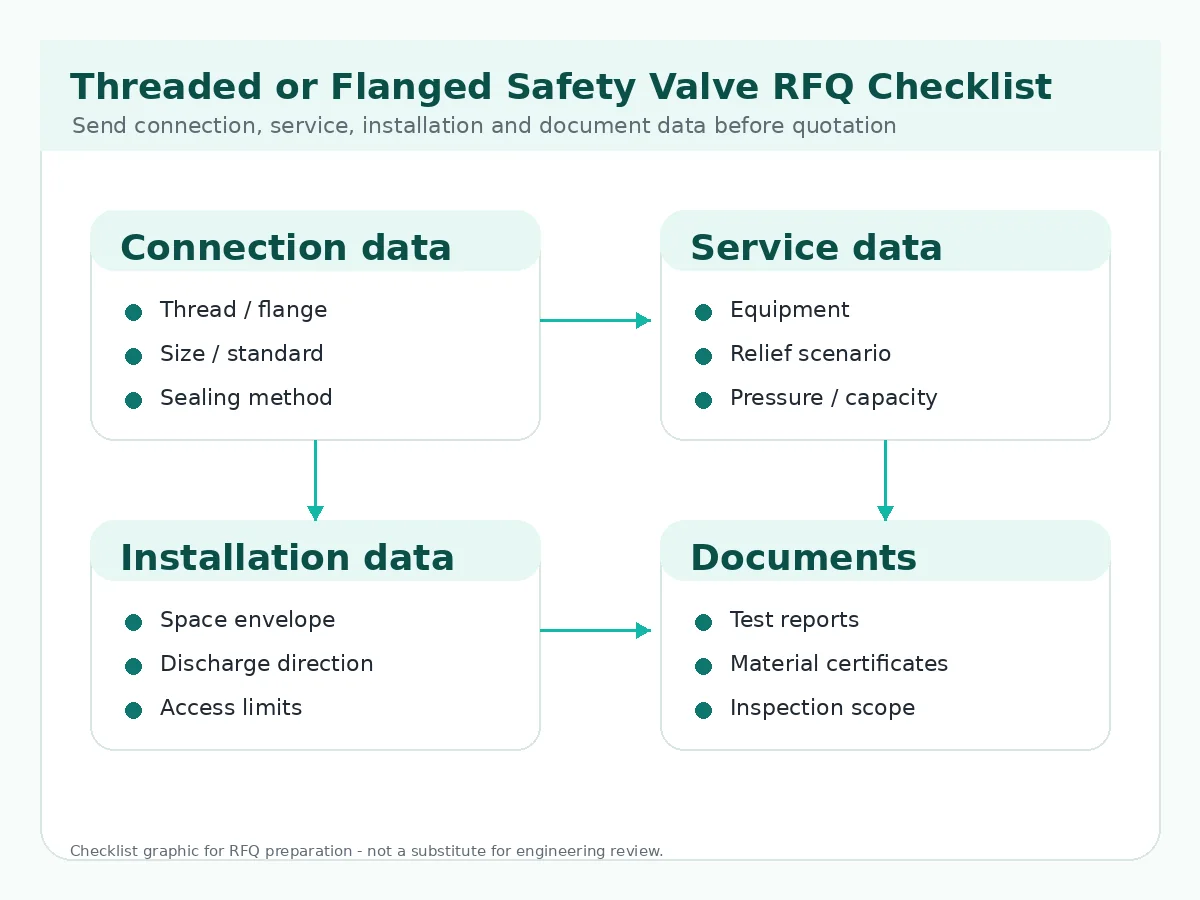
RFQ / Selection Parameters Checklist for Threaded or Flanged Safety Valves
A complete RFQ should include connection data, service data and document data. The following checklist can be used before sending a request to ZOBAI.
| 参数 | 需提供的信息 | 重要性 | 缺失数据的风险 |
|---|---|---|---|
| 受保护设备 | Vessel, tank, compressor, pipeline, skid, pump outlet or other equipment | Defines what the valve protects | Wrong protection basis |
| 泄放工况 | Thermal expansion, blocked outlet, regulator failure, fire case, process upset or project-defined scenario | Supports safety duty and capacity review | Incorrect selection assumption |
| 介质及相态 | Gas, vapor, steam, liquid, two-phase, corrosive, dirty or special service | Affects sizing, materials, seat/seal and discharge | Wrong material or valve configuration |
| 压力数据 | 工作压力、MAWP/设计压力及整定压力 | Separates service pressure, equipment basis and valve opening pressure | Wrong spring, setting or pressure basis |
| 所需泄放量 | Flow rate and calculation basis if available | Needed for final sizing and valve selection | Valve may fit but fail safety duty |
| 泄放温度 | Temperature during the relieving condition | Affects material, seal, gasket and pressure-temperature suitability | Wrong material or rating assumption |
| Threaded connection data | 螺纹标准、尺寸、公母接头、进口/出口及密封方式 | Confirms threaded fit and sealing | Wrong thread, leakage or no-fit |
| Flanged connection data | Flange standard, size, class/PN, facing, bolt pattern, gasket and bolting | Confirms flanged fit and sealing | Bolt mismatch, gasket issue or leakage |
| 安装数据 | Space limits, orientation, discharge direction, maintenance access and outlet piping | Confirms site fit and safe discharge routing | 无法安全安装或维护 |
| Back pressure / outlet piping | State whether the outlet is open, piped, manifolded or subject to superimposed pressure | May affect configuration, stability and discharge review | Wrong outlet arrangement or unreviewed back pressure |
| 材料 | Body, bonnet, seat, seal, spring, trim and gasket requirements | Affects service compatibility | Corrosion, leakage or unsuitable service |
| 文件资料 | Test report, material certificate, set pressure record, inspection scope and standard requirement | Defines approval and delivery documents | Missing documents or approval delay |
Standards and Documentation Buyers May Need to Confirm
Connection standards, safety valve standards and project specifications are related but not the same. A buyer should not assume that naming a flange standard or thread type completes the safety valve specification.
Connection Standard Is Not the Same as Safety Valve Standard
A thread or flange standard defines the connection interface. A safety valve standard or project specification may define other requirements such as pressure setting, capacity documentation, testing, material records, inspection scope and marking.
Flange Standard Does Not Prove Valve Certification
A flanged valve may use a certain flange standard, but that does not automatically prove that the valve has a specific certification or approval for every project. Compliance and certification depend on the selected model, manufacturing scope, testing, documentation and project requirements.
Request Documents Clearly at RFQ Stage
Document requirements should be stated before quotation. These may include material certificate, hydrostatic or shell test report, set pressure calibration record, seat tightness report if required, inspection release note, datasheet and nameplate information. For standards navigation, see ZOBAI’s 安全阀标准 页面。
Ask ZOBAI to Review Your Connection and Operating Parameters
Before choosing a threaded or flanged safety valve, send ZOBAI both the connection details and the operating conditions. A complete RFQ helps the engineering team check whether the inquiry is clear enough for quotation and whether additional data is required before selection.
- Connection type: threaded or flanged.
- Thread standard, size, male/female connection and sealing method if threaded.
- Flange standard, size, class/rating, facing, gasket and bolting if flanged.
- Protected equipment and relief scenario.
- Medium and phase.
- Operating pressure, MAWP/design pressure and set pressure.
- Required relieving capacity and capacity basis if available.
- Relieving temperature, material and document requirements.
- Installation envelope, discharge direction, outlet piping and back pressure condition if applicable.
- Existing valve photos, nameplate, datasheet or drawing for replacement.
ZOBAI can review the submitted parameter set before quotation. Final safety valve selection depends on the real operating conditions, relief scenario, manufacturer data, applicable standard version, project specification and local regulatory requirements.
FAQ About Threaded vs Flanged Safety Valves
螺纹安全阀与法兰安全阀有什么区别?
螺纹安全阀采用螺纹连接,而法兰安全阀采用螺栓法兰连接,并需满足垫片和螺栓要求。买方必须确认连接标准、尺寸、密封方式、安装空间、压力-温度等级、介质、材质及文件。
买家何时应选择螺纹安全阀?
A threaded safety valve may be considered when the equipment or piping connection is threaded and the service conditions, project specification, installation space and document requirements allow it. Buyers must still confirm thread standard, size, male/female connection, sealing method and service data before quotation.
买家何时应选择法兰安全阀?
当管道规范要求采用法兰连接、维护检修时便于螺栓拆卸,或项目要求明确法兰标准、密封面型式、垫片及螺栓连接方式时,可能需要选用法兰安全阀。
螺纹安全阀是否适用于高压工况?
这取决于所选阀门结构、连接形式、材质、工作温度、适用标准及项目规范。仅凭螺纹连接形式并不能证明其压力适用性。
法兰尺寸能证明安全阀的排量吗?
不。法兰尺寸不能证明安全阀的排量。排量取决于所需泄放量、泄放工况、介质特性、泄放压力、泄放温度、阀门设计及制造商数据。
法兰式安全阀询价时应提供哪些法兰信息?
请提供法兰标准、公称尺寸、压力等级或PN额定值、密封面型式、螺栓孔分布、垫片要求、螺栓要求、配对法兰详细信息以及项目管道规范(如有)。
螺纹安全阀询价时应提供哪些螺纹信息?
请提供螺纹标准、公称螺纹尺寸、外螺纹或内螺纹连接、进口和出口螺纹详情、密封方式、现场管道连接方式,如为替换阀请提供现有阀门照片。
为什么ZOBAI需要垫片和螺栓信息?
对于法兰连接,垫片、法兰密封面及螺栓连接均属于密封系统的组成部分。若缺少垫片或螺栓连接要求,报价可能与项目规格书不符,或阀门可能无法按预期安装。
能否用螺纹安全阀替代法兰安全阀?
可能可以,但不能仅凭连接方式名称来判断。将螺纹安全阀更换为法兰安全阀可能需要管道改造、空间复核、新配对法兰、垫片、螺栓、排放布置以及工程审批。
订购安全阀前应索取哪些文件?
文件要求可包括数据表、材质证明、整定压力校准记录、试验报告、检验记录、如要求且适用时的密封性报告,以及经确认的适用标准声明。具体文件包应在询价阶段明确。
Technical Review Focus
The technical review focus for this page is RFQ communication around threaded and flanged safety valve connection selection. The reviewed engineering boundaries include connection type, thread or flange data, sealing method, set pressure versus MAWP/design pressure, connection size versus required relieving capacity, installation envelope, outlet piping, back pressure review trigger, material inputs and document requirements.
This page does not verify a specific valve model, certification scope, certified relieving capacity or project approval. Those items must be confirmed against the selected valve model, manufacturer data, applicable standard version, project specification and local regulatory requirements.
工程说明
This article supports buyer communication and RFQ preparation. It does not replace project engineering review, manufacturer datasheet verification, formal relief calculation, code review or local regulatory approval. Final selection depends on actual operating conditions, relief scenario, manufacturer data, applicable standard version, project specification and local regulatory requirements.