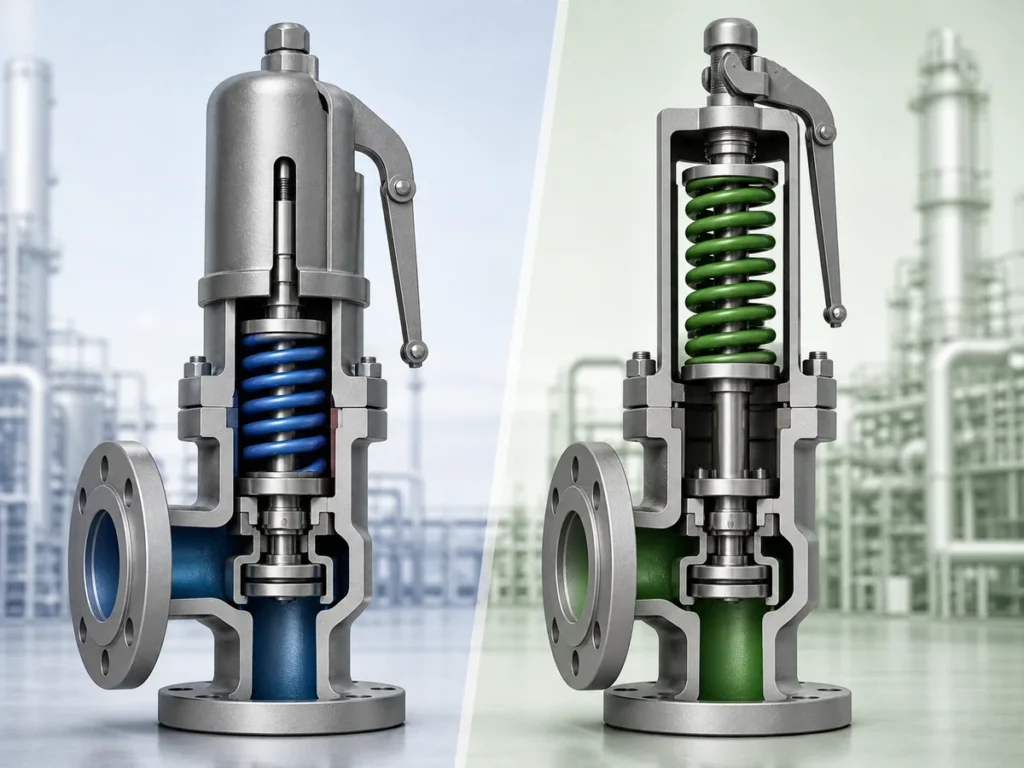
Поиск и оценка поставщиков предохранительных клапанов в Китае. Китайский производитель предохранительных клапанов должен оцениваться на основе инженерных данных, а не только по стране происхождения, размеру каталога или цене. Перед утверждением проверьте, может ли поставщик правильно интерпретировать защищаемое оборудование, управляющий сценарий сброса, среду и фазу, максимальное допустимое рабочее давление или расчетное давление, давление срабатывания, требуемую производительность сброса, температуру сброса, ...

Поиск и оценка поставщиков предохранительных клапанов в Китае
Китайский производитель предохранительных клапанов должен оцениваться на основе инженерных данных, а не только по стране происхождения, размеру каталога или цене. Перед утверждением проверьте, может ли поставщик правильно интерпретировать защищаемое оборудование, управляющий сценарий сброса, среду и фазу, максимальное допустимое рабочее давление или расчетное давление, давление срабатывания, требуемую производительность сброса, температуру сброса, противодавление, материалы, соединения и требования стандартов в предложении для конкретной модели, подкрепленном чертежами, протоколами испытаний и прослеживаемыми документами.
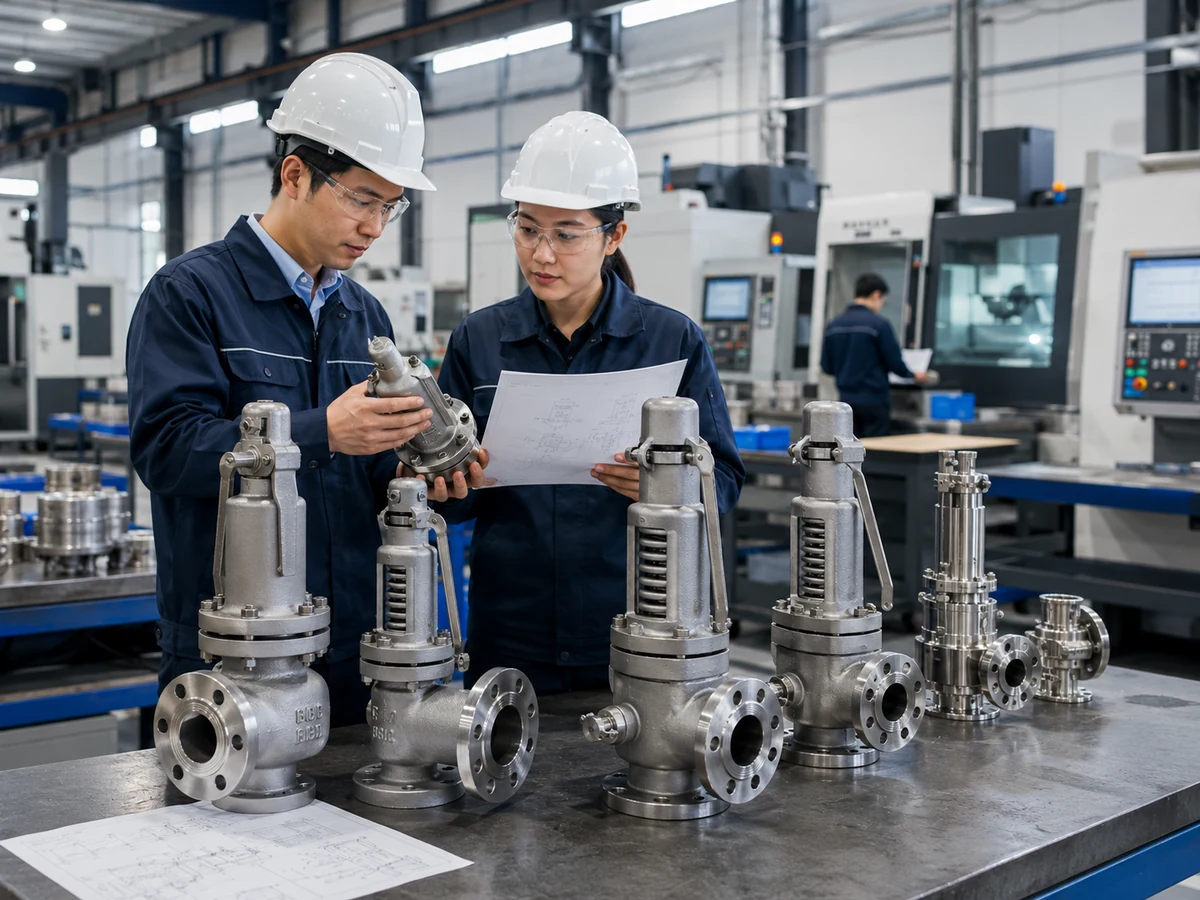
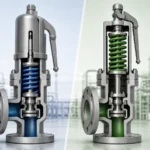
Иллюстративное промышленное изображение; оно не является свидетельством конкретного аудита завода ZOBAI, проекта заказчика, сертификации или результата испытаний.
Как оценить китайского производителя предохранительных клапанов?
Используйте двухэтапную проверку. Во-первых, убедитесь, что производитель может подобрать и документально оформить клапан для фактической задачи защиты. Во-вторых, убедитесь, что завод и система качества могут воспроизвести утвержденную конфигурацию и последовательно ее тестировать.
Минимальная проверка должна охватывать юридическую идентификацию, специализацию на предохранительных клапанах, ограничения продуктовой линейки, понимание сценариев сброса давления, основу для расчета производительности, контроль материалов, конфигурацию пружины и седла, механическую обработку и сборку, калибровку давления срабатывания, проверку герметичности седла, прослеживаемость, чертежи, сертификаты и коммуникацию по проекту. Начните с ZOBAI центр промышленных предохранительных клапанов, затем предоставьте реальные данные эксплуатации для рассмотрения.
Критическая граница: Клапан, соответствующий размеру фланца и давлению срабатывания, все же может быть непригодным, если его эффективное проходное сечение, номинальная производительность, тип среды, предельное противодавление, материалы или условия установки в трубопроводе неверны.
Производитель, торговая компания или общий завод клапанов?
Специализированный производитель предохранительных клапанов
Обычно контролирует конфигурацию модели, выбор пружины, сборку, калибровку, тестирование, данные на шильдике и техническую документацию. Покупатель по-прежнему должен проверять точную модель и объем проекта.
Завод общепромышленных клапанов
Может производить множество запорных или регулирующих клапанов, но иметь ограниченную глубину инжиниринга в области предохранительных клапанов. Широкий каталог не доказывает производственные мощности или возможности калибровки.
Торговая или экспортная компания
Может обеспечить полезную коммуникацию и поиск поставщиков, но покупатель должен идентифицировать фактического производителя, место производства, ответственность за испытания и эмитента документов.
Попросите поставщика указать наименование юридического производителя, адрес завода, ответственность за испытания и эмитента документов. Котировка, чертеж, отчет об испытаниях, паспорт и комплект сертификатов должны совпадать.
Проверяйте охват продуктовой линейки, не предполагая, что каждая модель имеет одинаковые ограничения
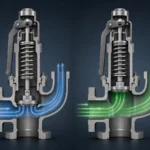
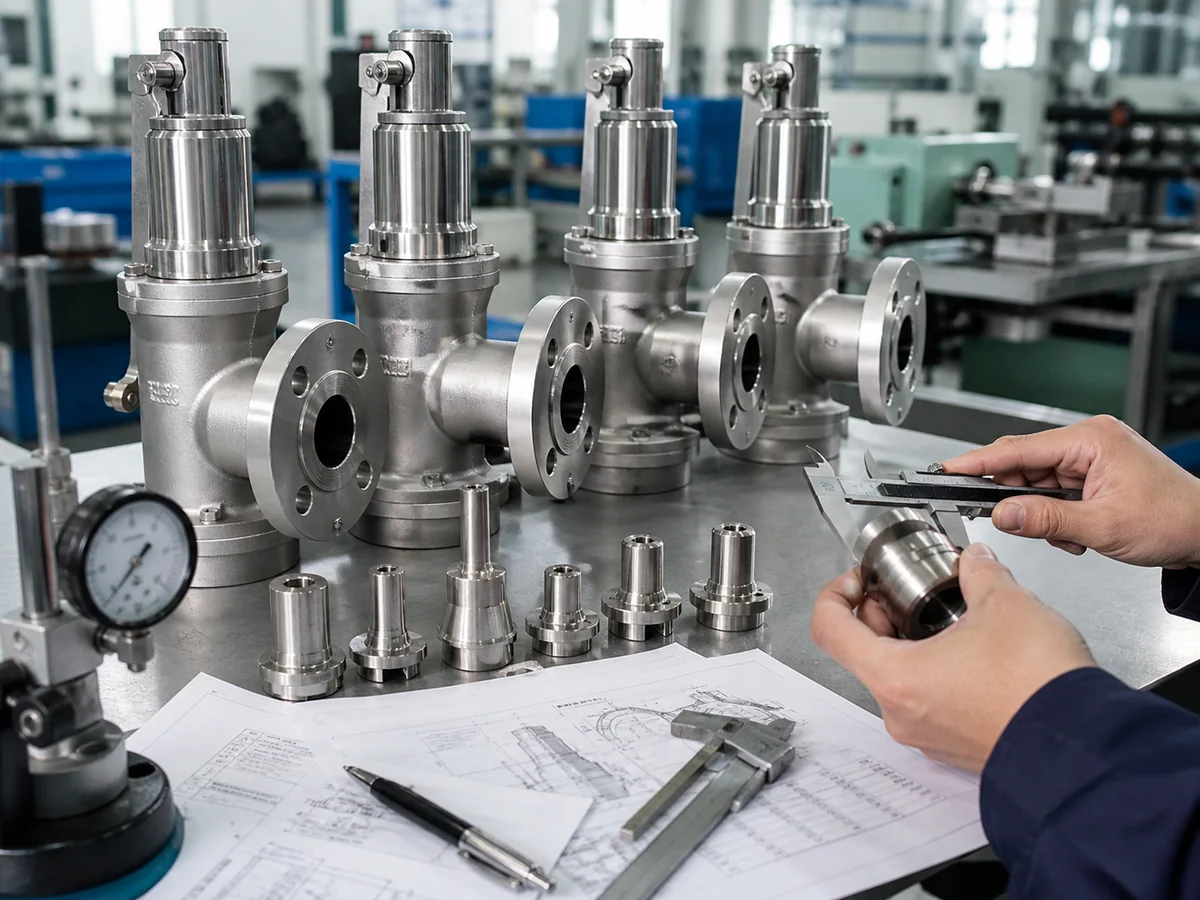
Компетентный поставщик может охватывать пружинный, с пилотным управлением и сильфонные предохранительные клапаны, а также резьбовые, фланцевые, с открытой/закрытой крышкой, рычажные и конфигурации для специальных применений.
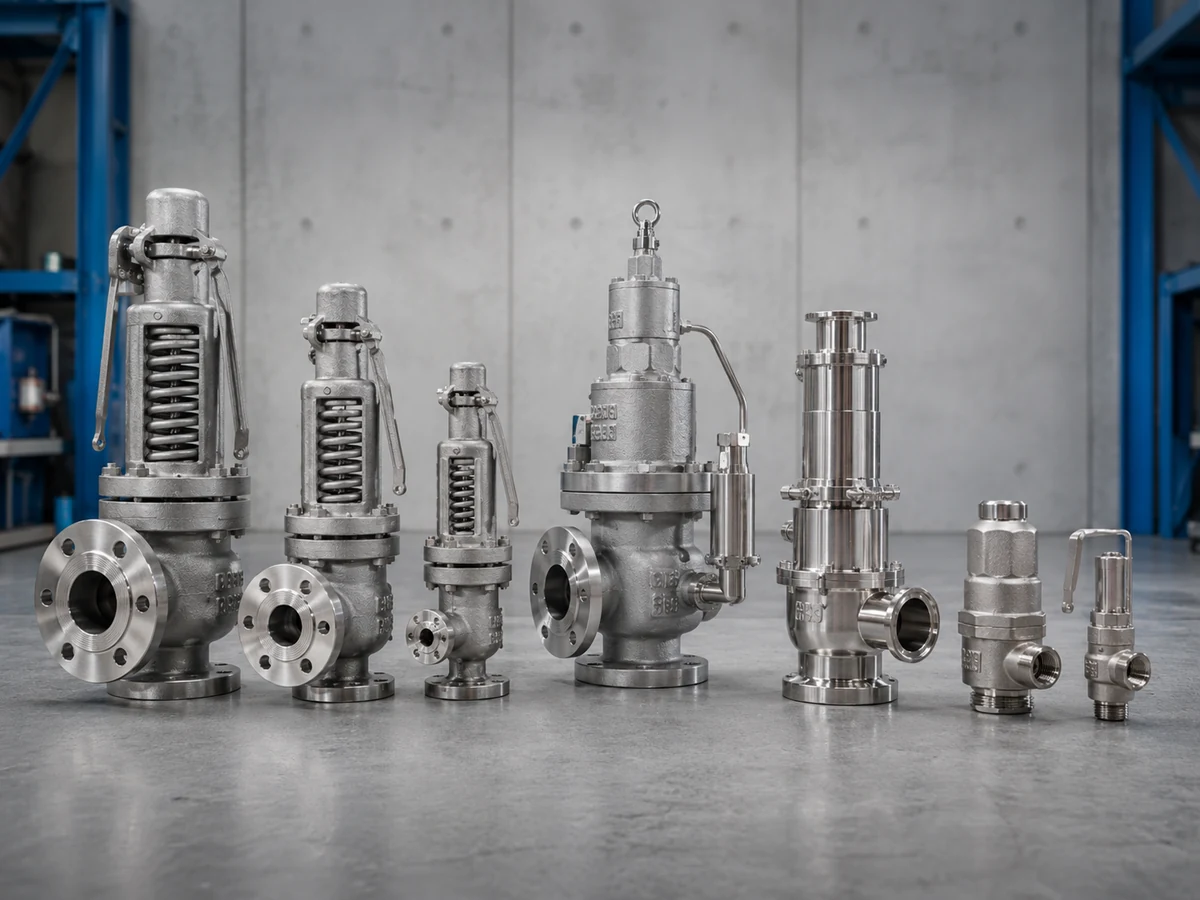
Иллюстративное изображение продуктовой линейки. Наличие конечной модели, размеры, материалы, давление, температура и сертификация должны быть подтверждены для выбранной серии.
Диапазон портфолио является лишь инструментом первичного отбора. Подтвердите выбранную серию, типоразмер, класс давления или PN, эффективное сечение, диапазон уставок давления, предел температуры сброса, материалы, конструкцию седла, диапазон пружины, возможности по противодавлению и основу документации.
| Вопрос | Доказательство | Риск при предположении |
|---|---|---|
| Какой тип клапана предлагается? | Код модели, чертеж разреза и технический паспорт | Изображение из каталога может не соответствовать указанной конструкции |
| Что такое эффективное сечение? | Данные производителя и основа для расчета производительности | Размер присоединения может быть ошибочно принят за производительность |
| Какие ограничения применяются? | Ограничения по давлению, температуре и материалам для конкретной серии | Заявления, касающиеся всего портфолио, могут быть применены к неверной модели |
| Какие испытания/маркировки применяются? | Матрица инспекций и сертификации для конкретного проекта | Наименование стандарта может рассматриваться как подтверждение непроверенной сертификации |
Инженерные возможности должны начинаться до выставления коммерческого предложения
Производитель должен уточнить, что защищает клапан и почему может повыситься давление. Оборудованием может быть котел, сосуд, теплообменник, компрессор, трубопровод, реактор, резервуар или установка. Управляющим случаем может быть заблокированный выход, пожар, отказ регулятора, отказ регулирующего клапана, разрыв трубы, тепловое расширение или другой сценарий, определенный проектом.
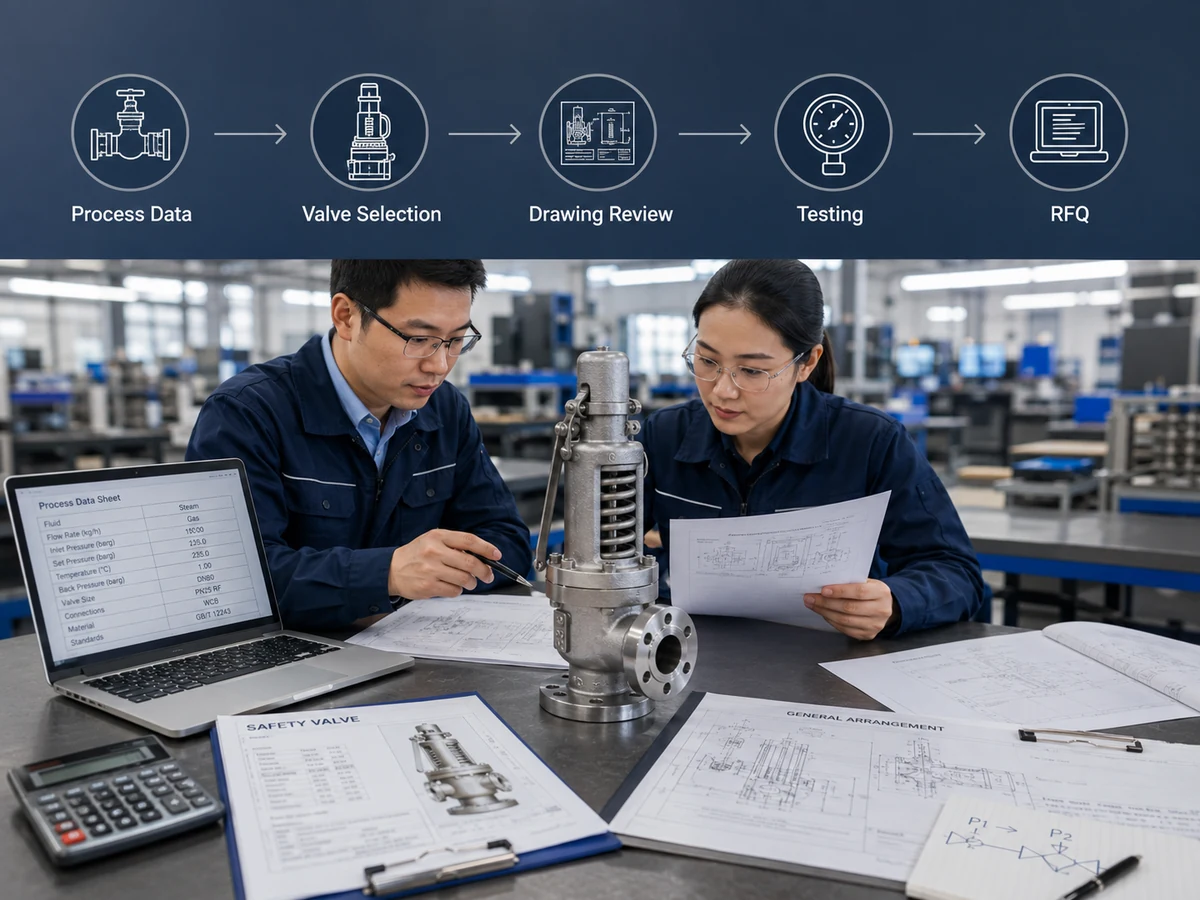
Иллюстративная схема инженерного рабочего процесса; отображаемые экраны и документы не являются фактическими записями проекта или утвержденными расчетами.
Укажите рабочее давление, максимальное допустимое рабочее давление (MAWP) или расчетное давление, давление настройки, требуемую производительность, условия сброса, наложенное и нарастающее противодавление, входной/выходной трубопровод, материалы и принятые стандарты. Широкая логика принятия решений объясняется в руководство по выбору предохранительных клапанов.
Требуемая производительность, эффективное проходное сечение и номинальная производительность должны быть разделены
Требуемая производительность сброса определяется управляющим сценарием. Выбранное эффективное проходное сечение и номинальная или сертифицированная производительность определяются предлагаемой конфигурацией клапана и базисом производительности. Паровые, газовые, жидкостные и двухфазные среды не могут быть взаимозаменяемы без применимого метода и свойств.
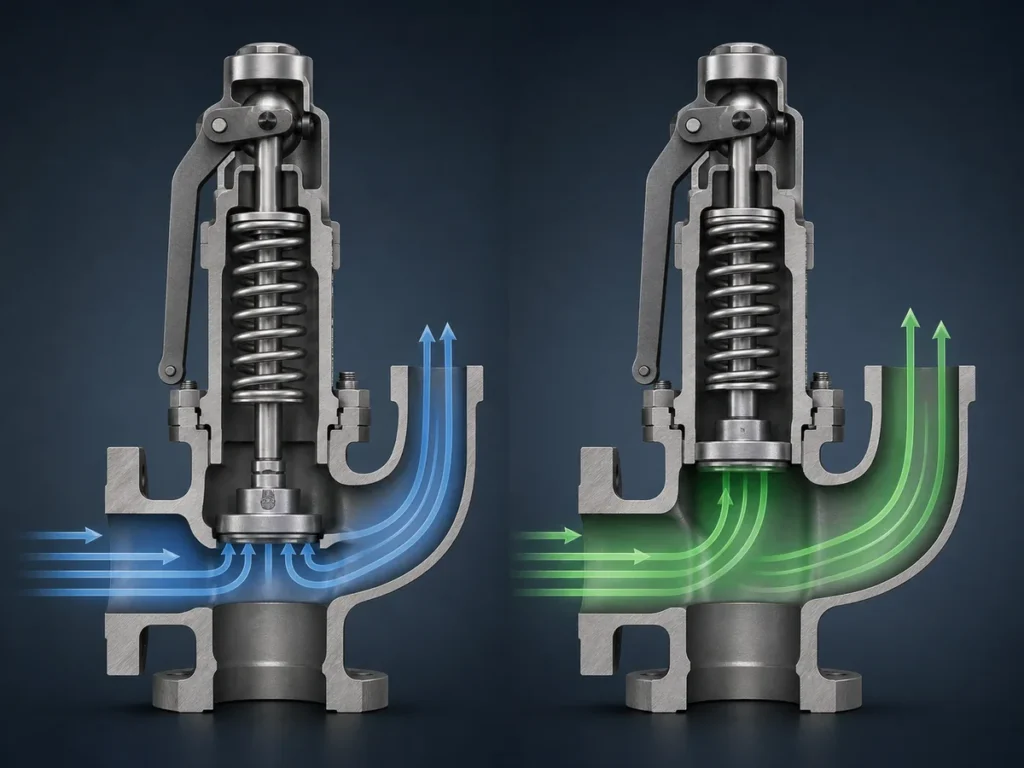
Упрощенная инженерная иллюстрация. Размер присоединения не определяет эффективное проходное сечение или производительность сброса; используйте сертифицированные или документированные данные производителя. .
Размер присоединения описывает интерфейс трубопровода; он не подтверждает пропускную способность. Просмотрите расчету предохранительных клапанов и сертифицированной пропускной способности и расчету по API 520.
| Term | Что это подтверждает | Что это не доказывает |
|---|---|---|
| Давление настройки | Отсылка к давлению открытия при определенных условиях | Требуемая или расчетная производительность |
| Размер присоединения | Физический интерфейс | Эффективное проходное сечение или сертифицированная производительность |
| Расчетная/сертифицированная производительность | Документально подтвержденные характеристики для указанных условий | Корректность сценария сброса давления у заказчика |
| Результат герметичности седла | Характеристики герметичности согласно методу испытаний | Соответствие расчетной производительности |
Противодавление, среда и температура сброса — изменение выбора
Укажите наложенное противодавление до открытия и нарастающее противодавление при сбросе. Различайте постоянные и переменные условия. Конструкции с обычным, уравновешенным сильфоном и с пилотным управлением имеют разные пределы.
Среда и фазовое состояние влияют на расчет производительности, выбор материалов, конструкцию седла и поведение при сбросе. Температура сброса — не только нормальная рабочая температура — должна использоваться для соответствующего анализа материалов, пружины, сильфона и уплотнения. Используйте руководство ZOBAI Руководство по системам API 521 и руководство по установке для системного обзора.
Материалы должны рассматриваться не только для корпуса клапана
Запросите информацию о материалах компонентов корпуса, крышки, сопла, диска, направляющей, штока, пружины, сильфона, прокладки и седла/уплотнения. Коррозионностойкий материал корпуса не защищает несовместимые детали, сильфон или уплотнения.
| Компонент | Основная проблема | Полезное свидетельство |
|---|---|---|
| Корпус/крышка | Номинальные характеристики давления-температуры и среда | Марка, номер плавки и основание для номинальных характеристик |
| Сопло/диск | Коррозия, эрозия и утечка седла | Материал и спецификация поверхности деталей |
| Направляющая/шпиндель | Прикипание, заедание и отложения | Сопряжение материалов и записи размеров |
| Пружина | Температура, коррозия и стабильность настройки | Запись материалов, диапазона и конфигурации |
| Сильфон | Перепад давления, коррозия и усталость | Пределы, зависящие от материала и модели |
| Седло/уплотнение | Химическая совместимость и старение | Декларация материалов и пределы эксплуатации |
Что должно охватывать заводское аудирование?
Входной материал
- утвержденные спецификации;
- идентификация тепла/партии;
- разделение аналогичных сплавов;
- проверка сертификатов (MTC) и прослеживаемость;
- PMI (позитометрический анализ) при необходимости.
Механическая обработка и размеры
- контроль ревизии чертежей;
- геометрия седла/сопла;
- размеры направляющих и штока;
- проверка фланцев/резьбы;
- калиброванные приборы.
Контроль сборки
- проверка модели и спецификации (BOM);
- идентификация пружины;
- контроль комплектации, сильфона и седла;
- чистота;
- контроль шильдика и пломбы.
Испытания и выпуск
- пригодность испытательной среды;
- калибровка манометра;
- записи установочного давления;
- метод герметичности седла;
- окончательное оформление документов.
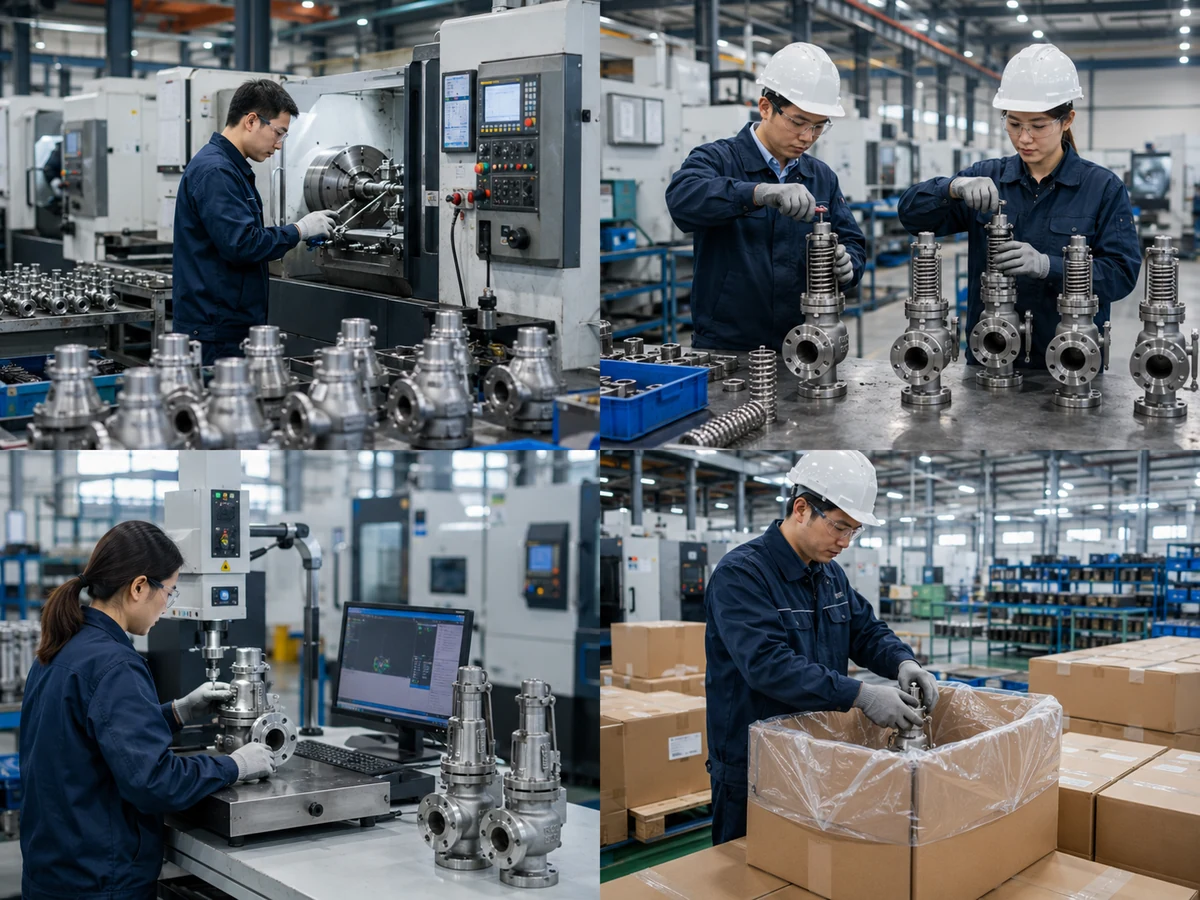
Иллюстративная производственная сцена; она не должна интерпретироваться как доказательство наличия конкретной машины, производственной линии, мощности или заказа клиента.
Испытание установочного давления, герметичность седла и подтверждение производительности являются различными этапами
Калибровка давления настройки подтверждает поведение при открытии в определенных условиях испытаний. Испытание на герметичность седла оценивает утечку. Испытание корпуса оценивает целостность границы давления. Данные о производительности подтверждают пропускную способность. Запросите метод, среду, давление, критерии приемки, диапазон приборов и серийную привязку.
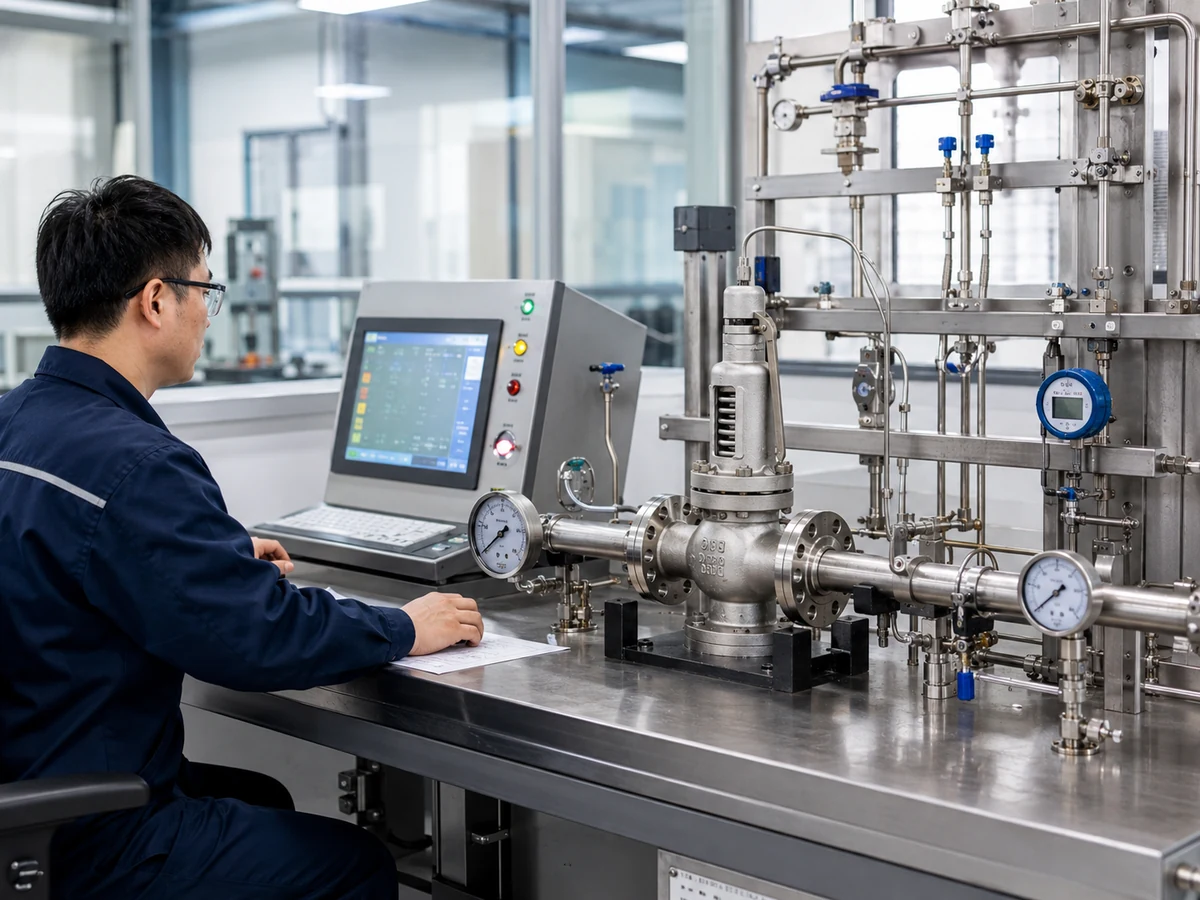
Иллюстративная сцена испытательного стенда; это не фактический сертификат калибровки, испытание в присутствии заказчика или сертифицированная запись о производительности.
ZOBAI Руководство по герметичности седла API 527 объясняет, почему допустимая утечка не является стандартом для расчета размера.
Комбинированный сценарий: отчет о калибровке без данных о производительности
Поставщик представляет четкий отчет о давлении настройки для заменяемого клапана, но не имеет документа об эффективном проходном сечении или производительности. Отчет показывает, что клапан открылся при запрошенном давлении; он не показывает, что он может сбросить расчетную нагрузку.
Стандарты и сертификаты должны соответствовать модели и проекту
Разделяйте стандарт на продукт, метод расчета размера, руководство по установке, метод испытаний, нормативное обозначение юрисдикции и область действия сертификата. Проверяйте принятую редакцию, применимость, производителя/завод, модель и требуемые результаты.
- API 520 Часть I, 10-е издание рассматривает расчет размера и выбор в рамках заявленной области.
- Стандарт API 521 рассматривает системы сброса давления и разгрузки.
- ISO 4126-1:2013 является стандартом для продукта предохранительного клапана, а не стандартом применения.
- NBIC охватывает руководство по установке, инспекции и ремонту устройств сброса давления в процессе эксплуатации.
Ссылка на стандарт не доказывает, что производитель имеет все сертификаты для каждой модели. Проверьте выбранный продукт и фактический объем поставки.
Прослеживаемость и управление документацией определяют возможность одобрения клапана
| Документ | Что проверить | Общий пробел |
|---|---|---|
| Паспорт изделия | Данные по эксплуатации, модель, давление настройки, проходное сечение, материалы и противодавление | Общие данные без проектных входных параметров |
| Общий вид/разрез | Размеры, присоединения и конфигурация | Чертеж не соответствует указанной модели |
| Сертификаты на материалы | Состав комплектующих, номер плавки и прослеживаемость | Только сертификат на корпус |
| Протоколы испытаний | Серийная привязка, метод, приборы и приемка | Отсутствие идентификации клапана или основания для испытаний |
| Подтверждение производительности | Рабочая среда, условия эксплуатации, коэффициент/эффективная площадь и основание для одобрения | Отчет о калибровке заменяет данные о расходе |
| Паспортная табличка/маркировка | Производитель, модель, давление настройки, размер и требуемая маркировка | Расхождения с техническим описанием или чертежом |
Цену и сроки поставки следует сравнивать при одинаковом техническом объеме работ
Более низкая котировка может исключать инженерный обзор, специальные материалы, документы по производительности, испытания в присутствии заказчика, экспортную упаковку, запасные части или требуемые сертификаты. Нормализуйте конфигурацию клапана, испытания, документы, объем инспекции и условия поставки перед сравнением цены.
График поставки должен включать инженерные уточнения, утверждение чертежей, закупку материалов, производство, испытания, утверждение документов и отгрузку. Быстрая отгрузка, которая прибывает с неправильной производительностью или неполными документами, не означает сокращение общего срока проекта.
Замена клапанов требует большего, чем простое соответствие размеру по паспортной табличке
Отправьте существующую паспортную табличку, фотографии, техническое описание, общие виды, технологические данные, историю обслуживания и причину замены. Сравните давление настройки, эффективное отверстие, производительность, размеры, присоединения, класс давления, материалы, седло, диапазон пружины, компоновку крышки/рычага, пределы противодавления и маркировку.
Комбинированный сценарий: одинаковые фланцы, разные задачи защиты
Предлагаемый клапан подходит к трубопроводу, но имеет меньшее эффективное проходное сечение и другую базу расчета производительности. Совместимость размеров не делает его безопасной функциональной заменой.
Оценка поставщика предохранительных клапанов из Китая
| Область | Предлагаемый вес | Доказательство |
|---|---|---|
| Инженерный ответ | 20% | Сценарий сброса, производительность, давление, противодавление и материалы |
| Данные по конкретной модели | 15% | Технический паспорт, чертеж, проходное сечение и рабочие пределы |
| Данные о производительности/испытаниях | 15% | База расчета производительности, калибровка и отчеты об утечках |
| Материалы/прослеживаемость | 12% | Объем поставки компонентов, контроль термообработки/партий и сертификаты |
| Заводской контроль | 10% | Механическая обработка, сборка, контрольно-измерительные приборы и процедуры выпуска |
| Точность стандартов | 10% | Подтверждение для конкретной модели без преувеличений |
| Документация | 8% | Контроль ревизий, серийная привязка и область применения MDR |
| Коммуникация | 5% | Четкие отклонения и ответственность за действия |
| Коммерческая ясность | 5% | Нормализованная область применения, основа сроков поставки и поддержка |
Это рамочное соглашение по закупкам, а не требование кода. Адаптируйте его к проектным рискам и юрисдикции.
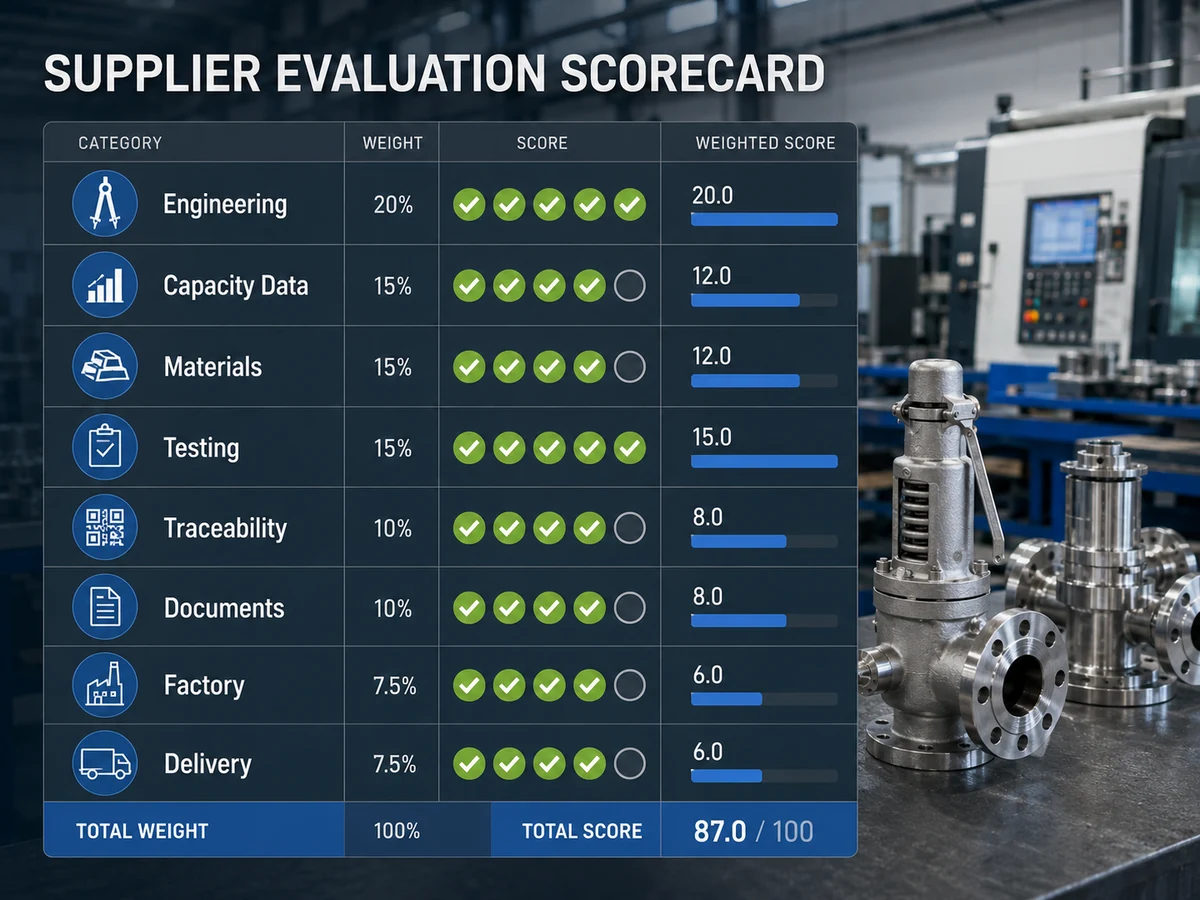
Иллюстративная система оценки поставщиков; веса и баллы не являются требованиями кода или аудированной оценкой для конкретного производителя.
Типичные «красные флаги»
- Расчет стоимости только по размеру и настроенному давлению.
- Отсутствие спецификации модели или информации о проходном сечении.
- Производительность, испытание настроенного давления и герметичность седла рассматриваются как одно и то же доказательство.
- Все продукты заявлены как соответствующие всем требованиям API, ASME, ISO, PED, CE и GB.
- Идентичность производителя, завода, отчета об испытаниях и паспортной таблички не совпадают.
- Сертификаты на материалы не идентифицируют покрываемые компоненты.
- Чертежи и отчеты используют несогласованные коды моделей или ревизии.
- Отсутствие вопросов о противодавлении, фазовом состоянии или температуре сброса.
- “Нулевая утечка” или “гарантированное одобрение” без определенного доказательства.
- Замена по внешнему виду, а не по производительности и конфигурации.
Чек-лист запроса предложения для китайского производителя предохранительных клапанов
| Поле | Информация |
|---|---|
| Защищаемое оборудование | Котлы, сосуды, теплообменники, трубопроводы, компрессоры, установки или другое |
| Сценарий сброса давления | Заблокированный выход, пожар, отказ регулятора, разрыв трубы, тепловое расширение или другое |
| Рабочая среда/фаза | Состав; пар, газ, пар, жидкость, вскипание или двухфазный поток |
| Основа давления | Рабочее давление, максимальное допустимое рабочее давление/расчетное давление, давление настройки и избыточное давление/накопление |
| Требуемая производительность | Производительность сброса, основание для расчета, давление сброса и температура |
| Противодавление | Наложенные и нарастающие условия |
| Присоединения | Размер/номинал входного/выходного патрубка, тип присоединения/резьбы и размеры |
| Материалы | Корпус, плунжерная пара, пружина, сильфон, прокладка и седло/уплотнение |
| Конфигурация | Пружинный, сильфонный уравновешенный, с пилотным управлением, рычажный, крышка и седло |
| Стандарты/маркировка | Принятый кодекс, редакция, юрисдикция и область сертификации |
| Испытания/документы | Калибровка, испытание на прочность корпуса, герметичность седла, чертежи, сертификат на материал, производительность и комплект исполнительной документации |
| Коммерческие условия | Количество, запасные части, условия поставки, упаковка и пункт назначения |
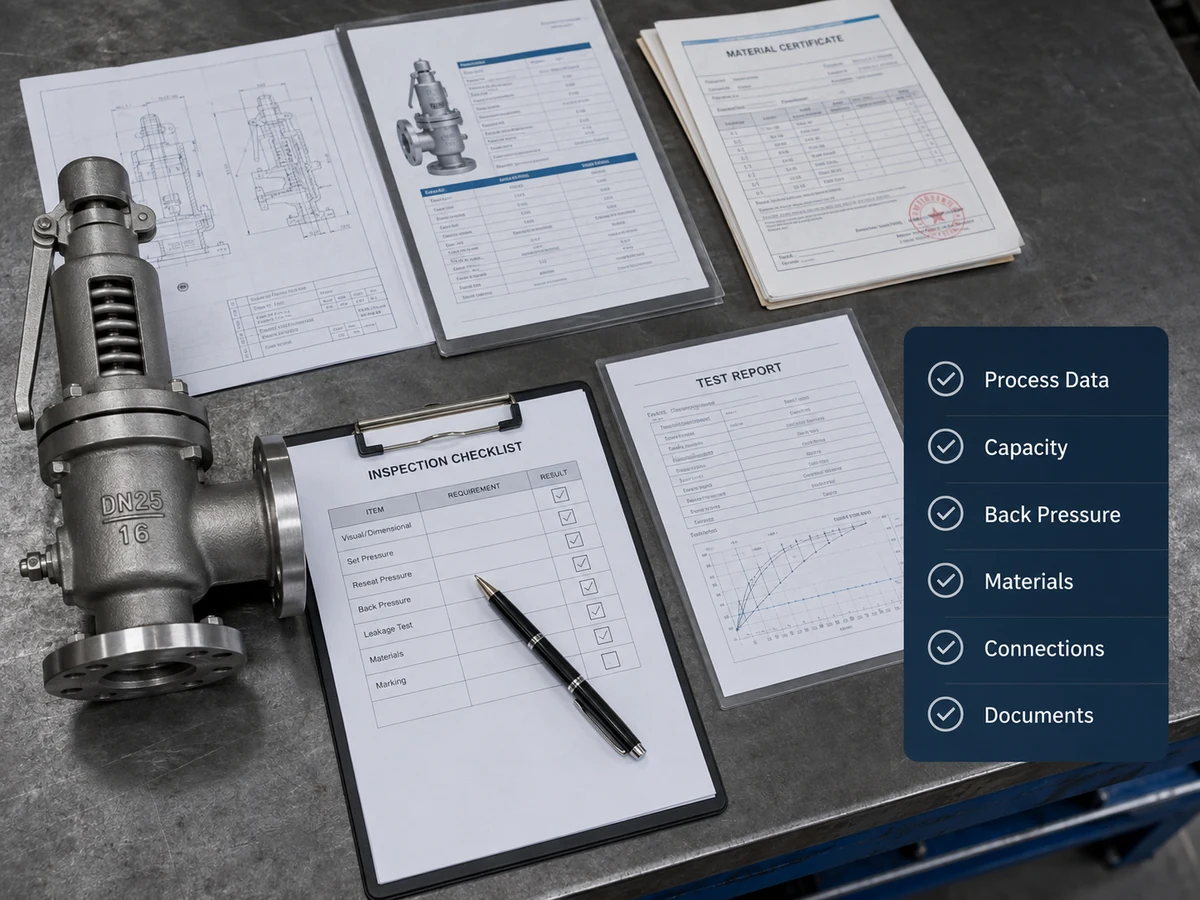
Иллюстративный макет документа; это не фактический сертификат материала, разрешение на отгрузку или отчет об испытаниях.
ZOBAI - производитель предохранительных клапанов из Китая
Компания ZOBAI Valve Co., Ltd. была основана в 2010 году и осуществляет свою деятельность на производственной базе в Лишуй, Чжэцзян, Китай. Опубликованный профиль компании указывает на базу площадью 20 046 м², поддерживающую разработку продукции, механическую обработку, сборку, испытания и поставку для международных проектов. Ознакомьтесь с проверенными деталями на О ZOBAI.
Опубликованный портфель охватывает пружинные, пилотные, сильфонные, пищевые, обогреваемые, для СПГ/СУГ, паровые, для высокого давления и для высоких температур. Диапазоны на уровне портфеля не должны автоматически применяться к выбранной модели. Окончательное давление, температура, размер, материал, производительность, стандарт и объем документов остаются предметом рассмотрения конкретной серии и проекта.
Часто задаваемые вопросы
Как выбрать надежного китайского производителя предохранительных клапанов?
Проверяйте инженерные возможности в области предохранительных клапанов, данные о производительности конкретных моделей, контроль материалов, записи о калибровке и испытаниях, прослеживаемость, заводской контроль процессов, точность документации и коммуникацию по проекту. Не выбирайте только по цене или размеру каталога.
Надежны ли предохранительные клапаны китайского производства?
Они могут быть надежными при условии проверки конкретного производителя, завода, модели, материалов, расчетной производительности, испытаний, документации и применимых сертификатов. Страна происхождения сама по себе не является ни доказательством качества, ни доказательством низкого качества.
В чем разница между производителем предохранительных клапанов и общим поставщиком клапанов?
Производитель предохранительных клапанов должен контролировать проектирование, связанное со сбросом давления, конфигурацию пружины и внутренних компонентов, калибровку, испытания, данные на паспортной табличке и документацию по производительности. Общий поставщик клапанов может не контролировать все эти виды деятельности.
Могу ли я купить предохранительный клапан только по размеру и давлению настройки?
Нет. Вам также необходимы: определяющий сценарий сброса, требуемая производительность, среда и фаза, температура сброса, противодавление, эффективное проходное сечение, материалы, присоединения, нормативный документ и сопроводительная документация.
Какие документы должен предоставить китайский поставщик предохранительных клапанов?
В зависимости от проекта, запросите утвержденный паспорт изделия, габаритный чертеж, сертификаты на материалы, отчет об установке давления, отчет о герметичности седла, отчет об испытаниях под давлением, подтверждение производительности, информацию на табличке, документы о соответствии и акты приемки инспекции.
Подтверждает ли API 527 достаточную пропускную способность клапана?
№ API 527 касается испытаний герметичности седла. Производительность должна быть подтверждена соответствующим расчетом размеров и нормативной или сертифицированной основой производительности.
Как сравнивать цены от разных производителей?
Нормализовать модель, эффективное сечение, материалы, испытания, сертификацию, комплект документов, объем инспекции, запасные части, условия упаковки и поставки перед сравнением цен.
Как проверить сертификаты производителя?
Проверьте эмитента сертификата, имя держателя, местоположение завода, область применения, охватываемую модель или семейство продуктов, срок действия и требуемую маркировку в соответствии с кодом. Логотип или общее заявление о соответствии недостаточны.
Может ли китайский предохранительный клапан заменить существующий европейский или американский клапан?
Возможно, но замена должна быть проверена на установочное давление, требуемую и расчетную производительность, эффективное проходное сечение, размеры, присоединения, материалы, конструкцию седла, пределы противодавления, маркировку по стандартам и требования к документации.
Какую информацию следует отправить в ZOBAI для получения коммерческого предложения?
Отправьте информацию о защищаемом оборудовании, сценарии сброса, среде и фазе, рабочем давлении, максимальном допустимом рабочем давлении/расчетном давлении, давлении настройки, требуемой производительности, температуре сброса, противодавлении, присоединениях, материалах, принятом коде, документах, количестве и существующем клапане.
Запрос на инженерный обзор предохранительных клапанов из Китая
Укажите защищаемое оборудование, управляющий сценарий сброса, среду и фазу, рабочее давление, максимальное рабочее давление/расчетное давление, давление срабатывания, требуемую производительность, температуру сброса, противодавление, присоединения, материалы, принятый стандарт и необходимые документы.
Область технического рассмотрения: Оценка поставщика, сценарий сброса, основа производительности, терминология давления и противодавления, материалы, испытания, прослеживаемость, стандарты и документация для запроса ценового предложения. Окончательный выбор зависит от реальных условий эксплуатации, данных конкретного производителя, спецификаций проекта, принятых стандартов и местных нормативных требований.